Amber baltic trade
1344×768 · AVIF · CC BY 4.0
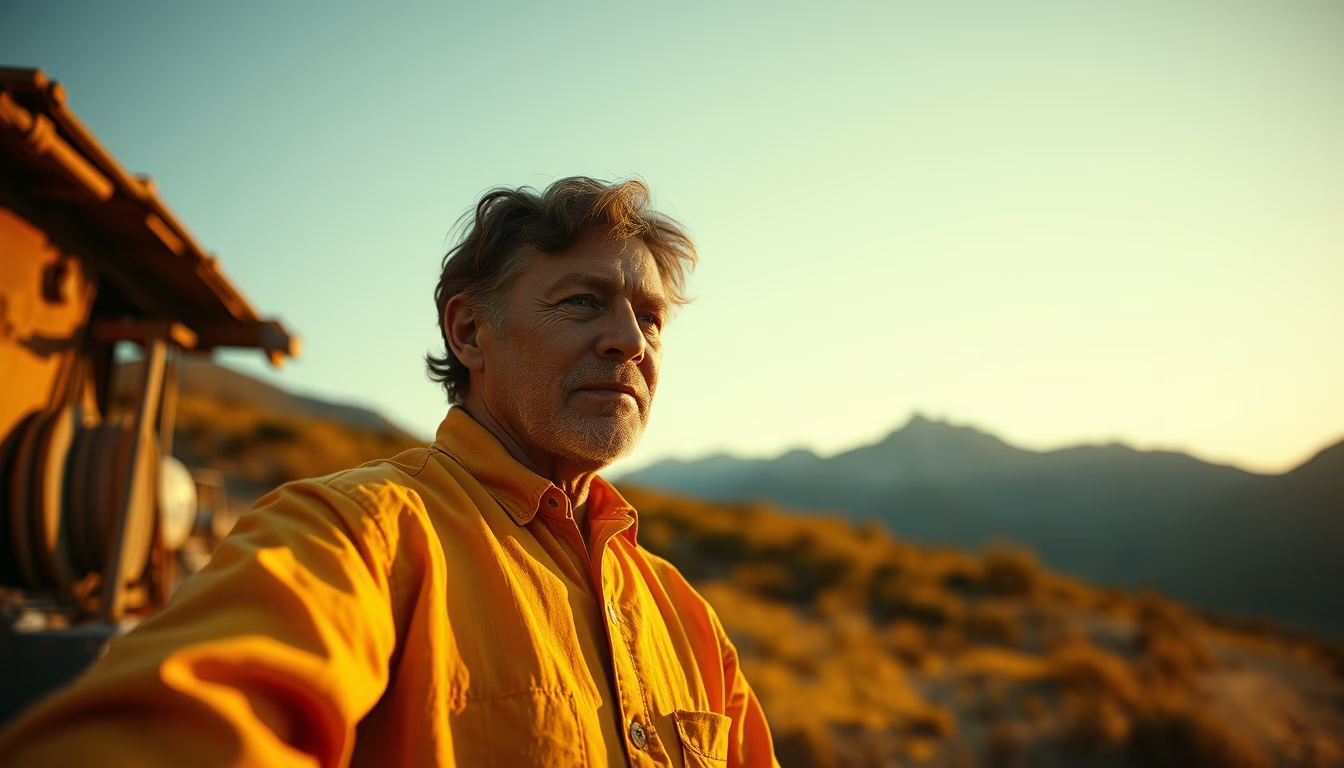
Baltic amber: the fossilized resin that shaped trade routes from medieval Europe to global luxury.
About this subject
Baltic amber, known as the gold of the north, is a fossilized resin from prehistoric pines dating back 40 to 50 million years. Its primary source lies in the Baltic Sea region, particularly along the coasts of Poland, Russia (Kaliningrad), Lithuania, and Latvia. Since the Stone Age, amber was collected on beaches and used as ornament, amulet, and trade good. Over time, it became one of the most valuable commodities in European commerce, driving the famous Amber Road, a network of routes connecting the Baltic to the Adriatic and Mediterranean seas. Cities like Gdańsk in Poland and Palanga in Lithuania became centers of processing and trade. Amber was not only an object of beauty; it was believed to have healing and protective properties, used in jewelry, religious artifacts, and even potions. During the Middle Ages, monopolies over amber were held by knightly orders such as the Teutonic Order, who extracted and traded the resin across Europe. Today, Baltic amber remains a cultural and economic symbol. About 90% of the world's amber comes from this region, and pieces with inclusions of insects or plants are especially valuable. Sustainable harvesting and local craftsmanship keep this ancient tradition alive, attracting tourists and collectors worldwide. The Amber Road, now a recognized tourist itinerary by the European Union, connects countries and tells the story of a natural resource that united continents and cultures.
Frequently Asked Questions
What makes Baltic amber special compared to other ambers?
Baltic amber is one of the oldest and most abundant in the world, up to 50 million years old. Its high concentration of succinic acid (between 3% and 8%) is unique, giving it aromatic and therapeutic properties valued since antiquity.
How did the Amber Road function in medieval Europe?
The Amber Road was a network of roads and river routes connecting the Baltic Sea to the Adriatic Sea, passing through cities like Gdańsk, Warsaw, Kraków, and Vienna. Merchants transported raw and worked amber south, exchanging for spices, glass, and textiles. The route was crucial for European economy and culture.
Is Baltic amber still traded today?
Yes, Baltic amber trade continues actively. Over 30 tons are extracted annually in Kaliningrad, the world's largest deposit. The material is used in jewelry, decoration, and cosmetics, with strong demand from Asia and North America. Authenticity is guaranteed by certificates of origin.
Direct URL
https://pub-c7d6a6ea828543ac903a74a341ccb2e1.r2.dev/imagens/amber-baltic-trade-cinematic-wide-shot-fresh5.avifHow to credit
Include a visible link back to UtilizAí. Copy one of the snippets below:
<a href="https://xn--utiliza-eza.com/en/midia/imagens/amber-baltic-trade-cinematic-wide-shot-fresh5">Amber baltic trade</a> by <a href="https://xn--utiliza-eza.com">UtilizAí</a>, licensed under <a href="https://creativecommons.org/licenses/by/4.0/">CC BY 4.0</a>.
[Amber baltic trade](https://xn--utiliza-eza.com/en/midia/imagens/amber-baltic-trade-cinematic-wide-shot-fresh5) by [UtilizAí](https://xn--utiliza-eza.com), CC BY 4.0
License: CC-BY-4.0