Amber baltic trade
1344×768 · AVIF · CC BY 4.0
Amber trade in the Baltic Sea has a history spanning over 5,000 years, connecting Northern Europe to the Mediterranean via the ancient Amber Road.
About this subject
Baltic amber, scientifically known as succinite, is a fossilized tree resin from the Eocene epoch, about 44 million years old. More than 90% of the world's amber is extracted from the Baltic Sea region, especially along the coasts of Poland, Lithuania, Latvia, and Russia (Kaliningrad Oblast). This fossilized resin often contains inclusions of insects, plants, and other organisms, providing a valuable paleontological record.
The Amber Road was one of Europe's earliest trade networks, used since the Neolithic period. It connected the Baltic coasts to the Roman Empire, passing through the Vistula and Danube rivers to reach Aquileia (modern Italy). Pliny the Elder wrote about the amber trade and its value in ancient Rome. During the Middle Ages, the Teutonic Knights controlled production and trade, establishing monopolies and fortresses like Malbork Castle. Amber was used in jewelry, medicine, and as an amulet.
Today, Baltic amber remains an important economic resource for the Baltic countries. Mining is mainly done in Kaliningrad, where the state-owned Kaliningrad Amber Combine extracts thousands of tons annually. Amber is also a cultural symbol, featured in festivals and handicrafts. However, industrial mining causes environmental impacts such as coastal erosion and habitat destruction. The global amber market faces challenges from counterfeiting and competition from synthetic resins.
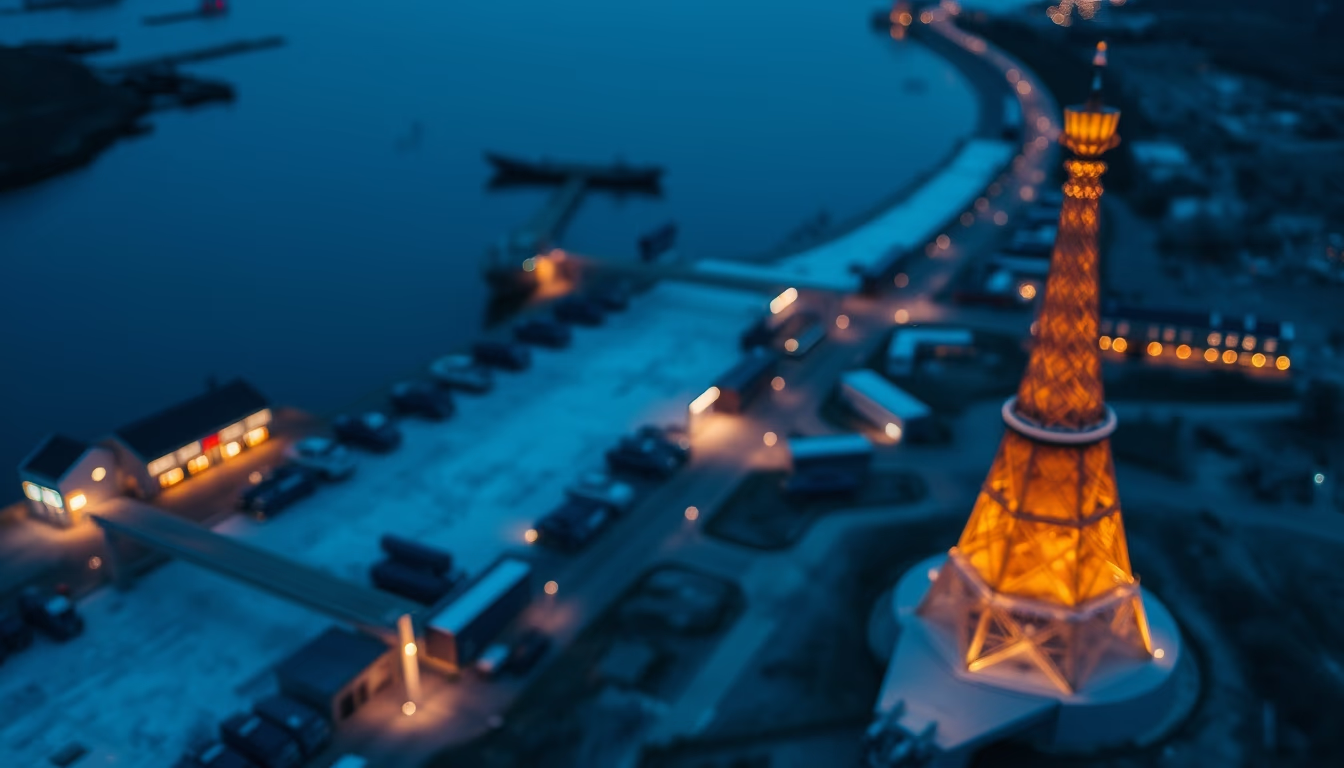
The aerial drone shot captures the vast coastal expanse of the Baltic Sea, where amber deposits are found after storms. These areas are monitored by collectors and researchers studying the origin and distribution of amber. The image reinforces the connection between landscape, history, and trade that amber represents.
Frequently Asked Questions
What is Baltic amber and why is it so famous?
Baltic amber is a fossilized tree resin from the Eocene epoch, famous for its quality and abundance of inclusions of ancient organisms. Over 90% of the world's amber comes from the Baltic Sea region, especially the coast of Kaliningrad.
What was the importance of the Amber Road in antiquity?
The Amber Road was a trade network connecting the Baltic Sea to the Mediterranean, used since the Neolithic period. Amber was highly prized in the Roman Empire for jewelry and medicinal purposes.
How is amber mined today and what are the environmental impacts?
Amber is mainly mined in open-pit mines near Kaliningrad, using water jets to separate the resin from sand. The activity causes coastal erosion and habitat destruction, raising environmental concerns.
Direct URL
https://pub-c7d6a6ea828543ac903a74a341ccb2e1.r2.dev/imagens/amber-baltic-trade-aerial-drone-shot-fresh7.avifHow to credit
Include a visible link back to UtilizAí. Copy one of the snippets below:
<a href="https://xn--utiliza-eza.com/en/midia/imagens/amber-baltic-trade-aerial-drone-shot-fresh7">Amber baltic trade</a> by <a href="https://xn--utiliza-eza.com">UtilizAí</a>, licensed under <a href="https://creativecommons.org/licenses/by/4.0/">CC BY 4.0</a>.
[Amber baltic trade](https://xn--utiliza-eza.com/en/midia/imagens/amber-baltic-trade-aerial-drone-shot-fresh7) by [UtilizAí](https://xn--utiliza-eza.com), CC BY 4.0
License: CC-BY-4.0