Amalfi coast cliffs
1344×768 · AVIF · CC BY 4.0
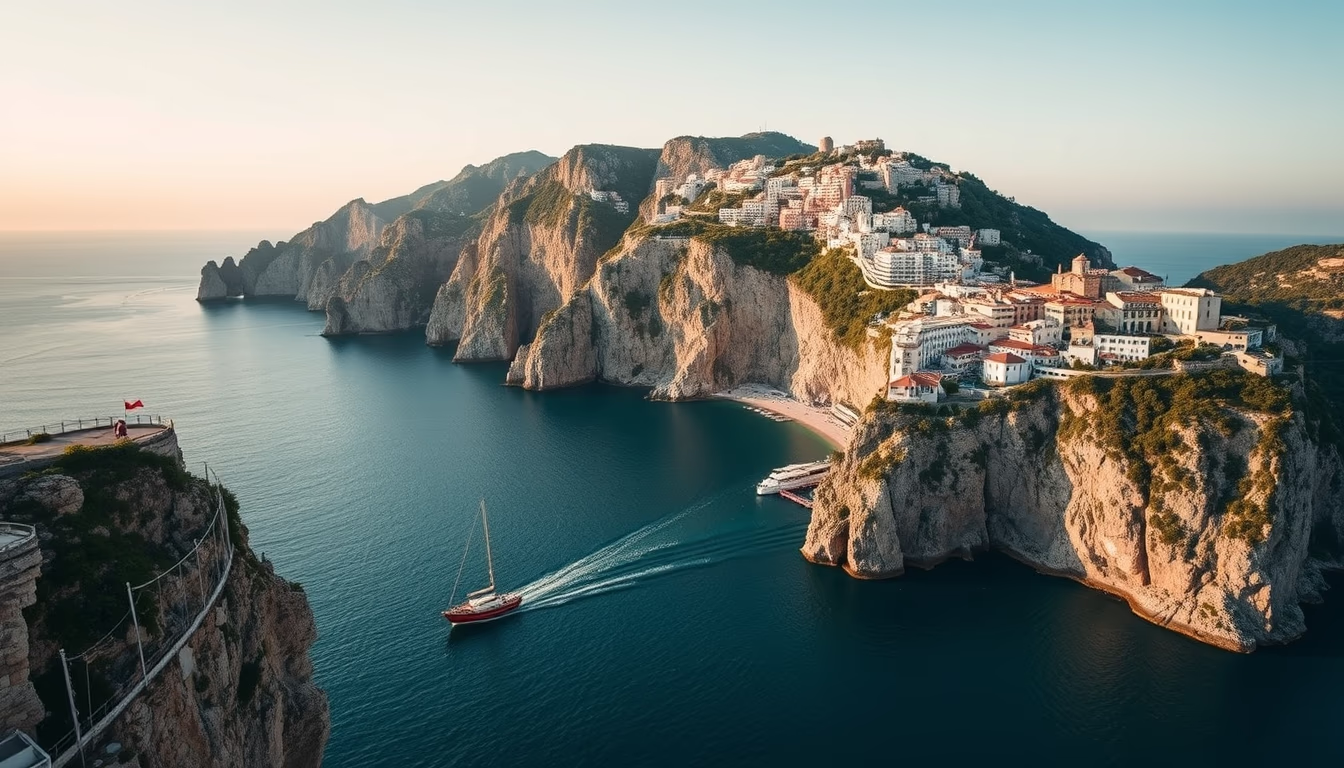
The cliffs of the Amalfi Coast in Italy create a dramatic landscape of steep precipices over the Tyrrhenian Sea, dotted with colorful villages and ancient history.
About this subject
The Amalfi Coast is a stretch of about 50 km of coastline in the province of Salerno, southern Italy, recognized as a UNESCO World Heritage site since 1997. Its cliffs are composed of limestone and marl, shaped by marine erosion and weathering over millions of years, resulting in vertical walls that reach up to 600 meters in height. This unstable geology requires constant monitoring and reinforcement works to protect roads and buildings.
The villages clinging to the slopes, such as Positano, Amalfi, and Ravello, flourished since the Middle Ages as maritime republics. The difficulty of land access made the sea the main trade route, fostering exchanges with the Middle East. Today, the cultivation of Sicilian lemons on terraces supported by dry stone walls is a hallmark, producing the liqueur limoncello. The region is also famous for handmade paper production, a tradition dating back to the 13th century.
Tourism is the main economic activity, attracting millions of visitors annually to enjoy panoramic views, pebble beaches, and Mediterranean architecture. State Road 163, known as the Amalfi Drive, winds along the cliffs, offering breathtaking viewpoints. However, overtourism has created sustainability challenges, leading to measures such as limiting cruise ships and promoting hiking trails like the Path of the Gods.
The cliffs also host unique biodiversity, with endemic vegetation such as Salvia officinalis and sea lavender. Seabirds like the yellow-legged gull nest in rock crevices. The Mediterranean climate, with mild winters and dry summers, favors viticulture on steep slopes, producing DOC wines such as Costa d'Amalfi.
Frequently Asked Questions
What makes the Amalfi Coast cliffs so special?
The combination of dramatic geology, historic colorful villages perched on the slopes, and the Tyrrhenian Sea setting creates a unique landscape. The region also has a rich maritime and cultural history, with traditions like lemon cultivation and papermaking.
What are the best towns to visit on the Amalfi Coast?
Positano is famous for its pastel houses and beach; Amalfi boasts the cathedral and republican history; Ravello offers gardens and panoramic views. Other notable towns include Atrani, Minori, and Maiori.
How were the Amalfi Coast cliffs formed?
They result from marine erosion and wind action on limestone and marl rocks over millions of years, combined with tectonic uplift that raised the region.
Direct URL
https://pub-c7d6a6ea828543ac903a74a341ccb2e1.r2.dev/imagens/amalfi-coast-cliffs-studio-editorial-portrait-p3.avifHow to credit
Include a visible link back to UtilizAí. Copy one of the snippets below:
<a href="https://xn--utiliza-eza.com/en/midia/imagens/amalfi-coast-cliffs-studio-editorial-portrait-p3">Amalfi coast cliffs</a> by <a href="https://xn--utiliza-eza.com">UtilizAí</a>, licensed under <a href="https://creativecommons.org/licenses/by/4.0/">CC BY 4.0</a>.
[Amalfi coast cliffs](https://xn--utiliza-eza.com/en/midia/imagens/amalfi-coast-cliffs-studio-editorial-portrait-p3) by [UtilizAí](https://xn--utiliza-eza.com), CC BY 4.0
License: CC-BY-4.0