Air plants tillandsia
1344×768 · AVIF · CC BY 4.0
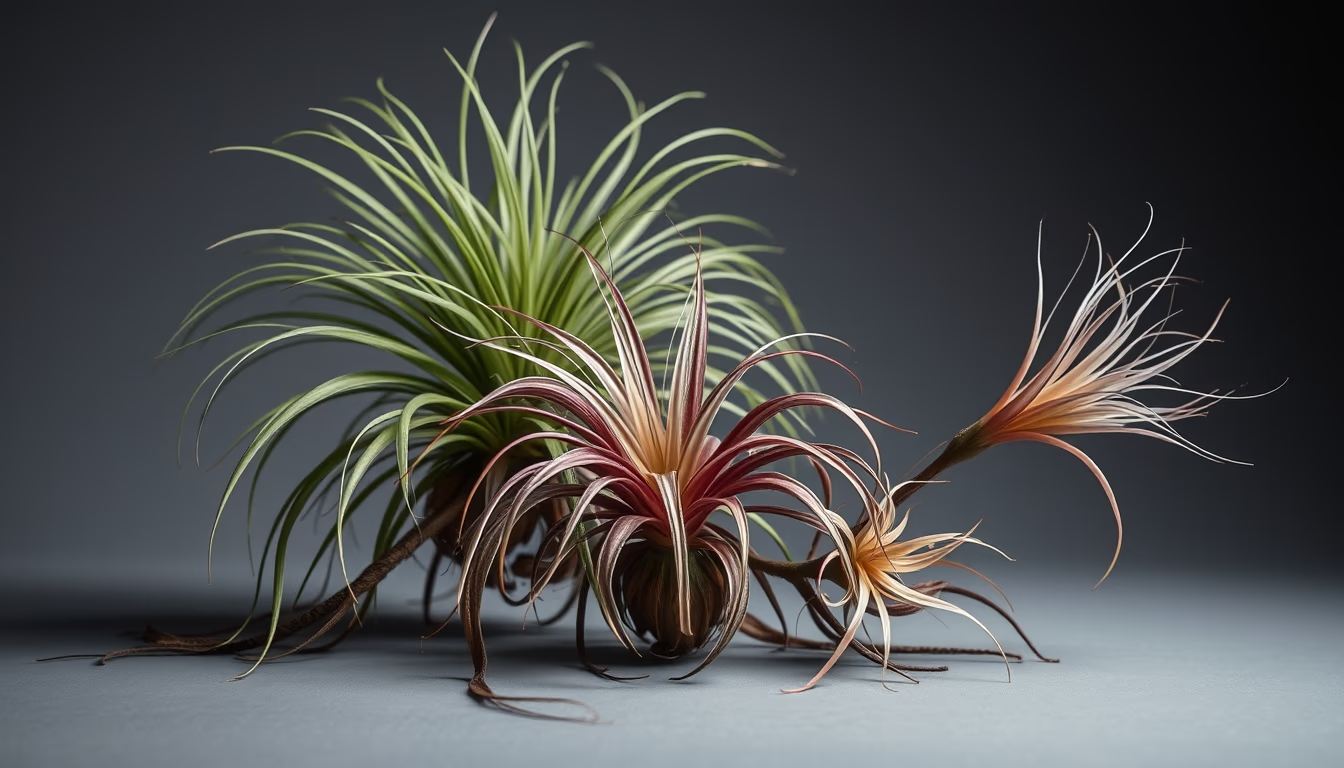
Tillandsia, conhecidas como air plants, são bromélias epífitas que não precisam de solo, absorvendo nutrientes pelo ar.
Sobre o tema
As Tillandsias, popularmente chamadas de air plants ou plantas aéreas, pertencem à família Bromeliaceae e são nativas principalmente das Américas, desde o sul dos Estados Unidos até a Argentina. Diferentemente da maioria das plantas, elas não dependem de solo para crescer: suas raízes servem apenas como fixação em troncos, rochas ou fios, enquanto as folhas escamosas (tricomas) captam água e nutrientes diretamente da atmosfera. Esse mecanismo as torna ideais para cultivo em terrários, troncos decorativos e paredes verdes, sendo muito procuradas por entusiastas da jardinagem criativa.
Existem mais de 600 espécies de Tillandsia, com ampla variação de tamanho, forma e cor. Algumas, como a Tillandsia ionantha, formam rosetas compactas e avermelhadas quando florescem, enquanto a Tillandsia usneoides (conhecida como barba-de-velho) cresce em longas cascatas cinzentas. As flores são geralmente vistosas, em tons de rosa, roxo, vermelho ou amarelo, e atraem beija-flores e polinizadores no ambiente original. Em cultivo, a principal exigência é boa circulação de ar e luminosidade indireta, com regas por imersão ou borrifamento semanal.
Historicamente, as Tillandsias têm papel simbólico em culturas indígenas americanas, usadas em rituais e como adorno. No mercado contemporâneo, sua popularidade cresceu no design de interiores por exigirem baixa manutenção e oferecerem formas escultóricas. Devido à absorção de poluentes atmosféricos, algumas espécies são usadas como bioindicadores de qualidade do ar em estudos ambientais. A conservação é importante, pois muitas espécies estão ameaçadas pela perda de habitat e coleta ilegal.
Perguntas frequentes
Como cuidar de uma Tillandsia (air plant)?
Regue por imersão em água filtrada por 20-30 minutos a cada 1-2 semanas, ou borrife bem uma vez por semana. Deixe secar completamente em local ventilado. Evite luz solar direta intensa; prefira luz indireta brilhante.
Tillandsia precisa de fertilizante?
Sim, mas com moderação. Use fertilizante líquido específico para bromélias ou orquídeas diluído a 1/4 da dose, aplicado durante a rega, uma vez por mês na primavera e verão. No outono e inverno, suspenda a adubação.
As Tillandsias podem ser plantadas no solo?
Não. Tillandsias são epífitas e não toleram solo úmido, que apodrece suas raízes. Devem ser fixadas em suportes como casca de árvore, pedras ou argila expandida, com as raízes expostas ao ar.
URL direta
https://pub-c7d6a6ea828543ac903a74a341ccb2e1.r2.dev/imagens/air-plants-tillandsia-studio-still-life-fresh2.avifComo creditar
Inclua um link visível de volta pro UtilizAí. Copie um dos snippets abaixo:
<a href="https://xn--utiliza-eza.com/midia/imagens/air-plants-tillandsia-studio-still-life-fresh2">Air plants tillandsia</a> by <a href="https://xn--utiliza-eza.com">UtilizAí</a>, licensed under <a href="https://creativecommons.org/licenses/by/4.0/">CC BY 4.0</a>.
[Air plants tillandsia](https://xn--utiliza-eza.com/midia/imagens/air-plants-tillandsia-studio-still-life-fresh2) by [UtilizAí](https://xn--utiliza-eza.com), CC BY 4.0
Licença: CC-BY-4.0