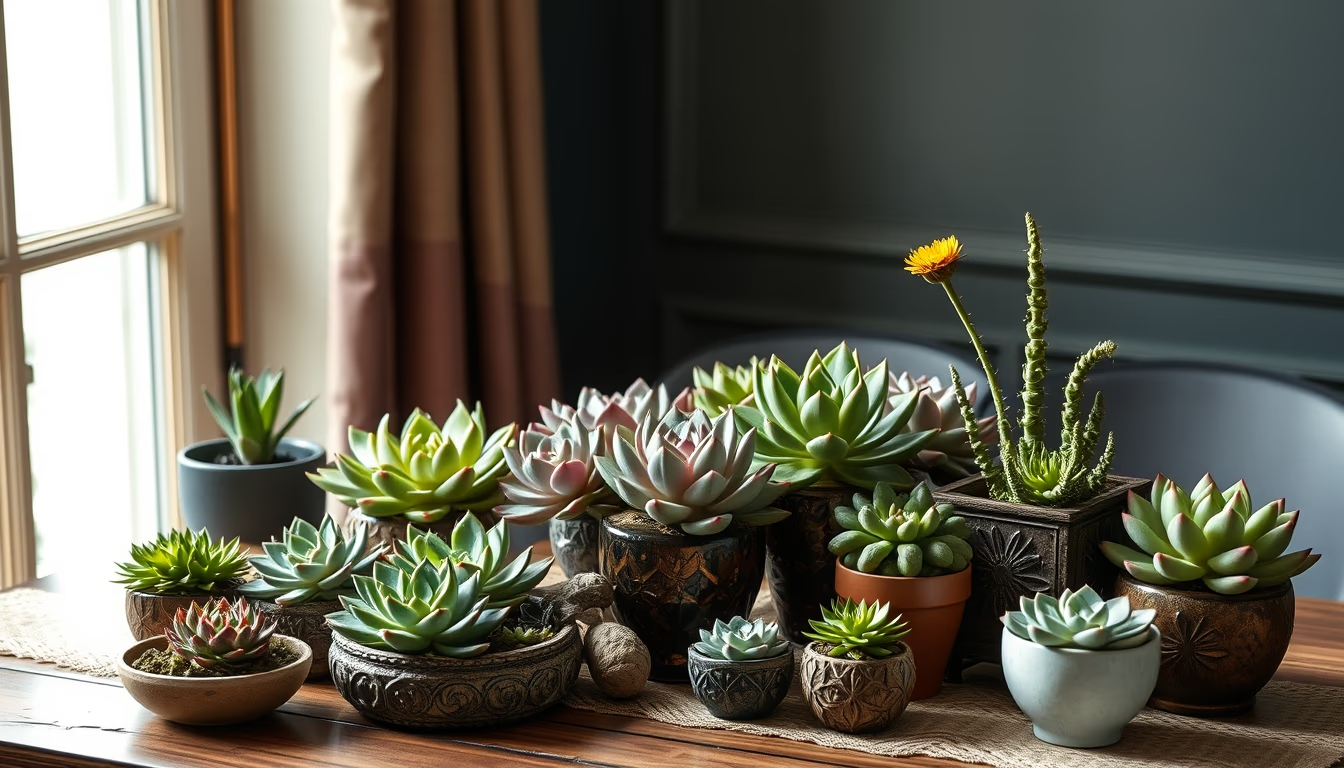
Air plants tillandsia
1344×768 · AVIF · CC BY 4.0
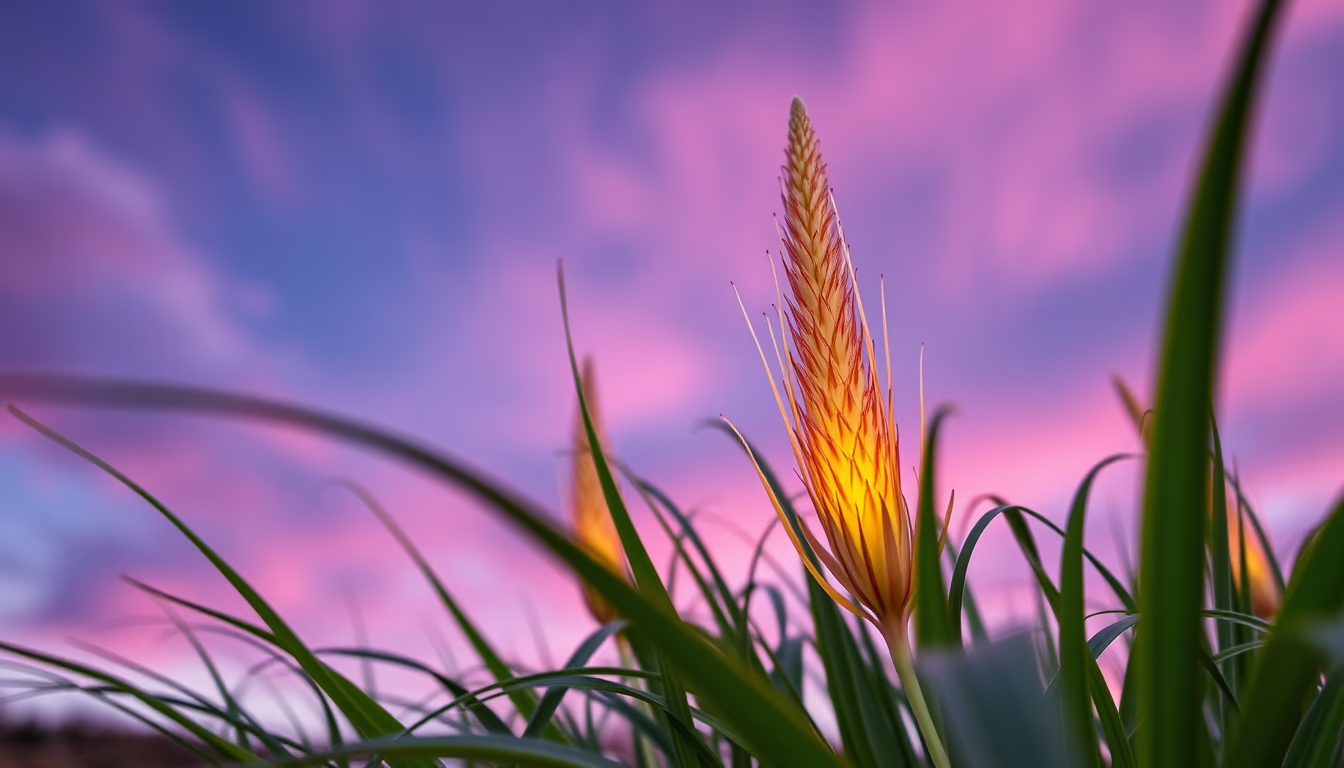
Tillandsias are air plants from the Bromeliaceae family that absorb water and nutrients through their leaves, requiring no soil.
About this subject
Tillandsias, commonly known as air plants, belong to the Bromeliaceae family and the genus Tillandsia, which comprises over 650 species native to the Americas, from the southern United States to Argentina. Unlike most plants, they do not rely on soil for growth: their roots serve only for attachment to trunks, rocks, or other supports. Water and nutrient absorption occurs through trichomes, scale-like structures on the leaves that also help reflect light and reduce water loss.
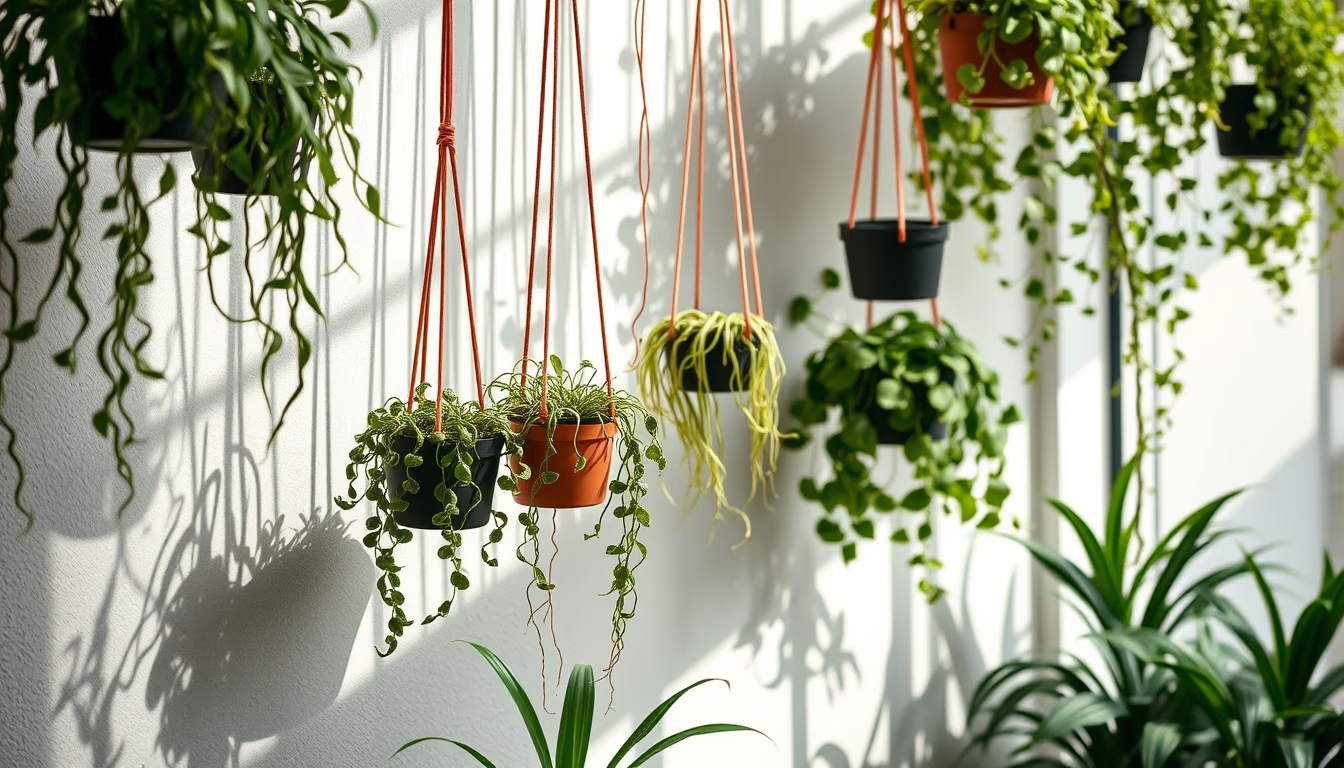
These plants are epiphytic, meaning they live on other plants without parasitizing them. In nature, they are found in tropical forests, deserts, and mountains, adapting to extreme conditions. Some species, such as Tillandsia usneoides (known as Spanish moss), form long hanging curtains. Others, like Tillandsia ionantha, exhibit leaves that change color during flowering, acquiring reddish or orange hues.
In home cultivation, tillandsias require good air circulation, bright indirect light, and watering by soaking or misting. They are popular in terrariums, kokedamas, and hanging arrangements. Because they need no soil, they are ideal for creative decor and small spaces. Their ability to filter air pollutants is also studied, albeit on a modest scale.
A curious fact: some tillandsia species are monocarpic, meaning they bloom only once and then die, but they produce offsets (pups) that perpetuate the plant. This phenomenon is common in bromeliads and makes flowering an even more special event.
Frequently Asked Questions
How to care for a tillandsia at home?
Tillandsias need bright indirect light, good air circulation, and watering by soaking in filtered or rainwater for 20 to 30 minutes every 5 to 10 days, depending on humidity. After watering, shake off excess water and place the plant in a well-ventilated area to dry.
Do tillandsias need fertilizer?
Yes, but sparingly. Use a liquid fertilizer formulated for bromeliads or air plants, diluted to one-quarter the recommended strength, applied once a month during spring and summer.
Why is my tillandsia dying after blooming?
Many tillandsias are monocarpic: they bloom once and then die. However, before dying, the plant usually produces offsets (pups) that can be separated and grown. Continue caring for the mother plant until the pups reach one-third of its size.
Direct URL
https://pub-c7d6a6ea828543ac903a74a341ccb2e1.r2.dev/imagens/air-plants-tillandsia-long-exposure-fresh3.avifHow to credit
Include a visible link back to UtilizAí. Copy one of the snippets below:
<a href="https://xn--utiliza-eza.com/en/midia/imagens/air-plants-tillandsia-long-exposure-fresh3">Air plants tillandsia</a> by <a href="https://xn--utiliza-eza.com">UtilizAí</a>, licensed under <a href="https://creativecommons.org/licenses/by/4.0/">CC BY 4.0</a>.
[Air plants tillandsia](https://xn--utiliza-eza.com/en/midia/imagens/air-plants-tillandsia-long-exposure-fresh3) by [UtilizAí](https://xn--utiliza-eza.com), CC BY 4.0
License: CC-BY-4.0