Air plants tillandsia
1344×768 · AVIF · CC BY 4.0
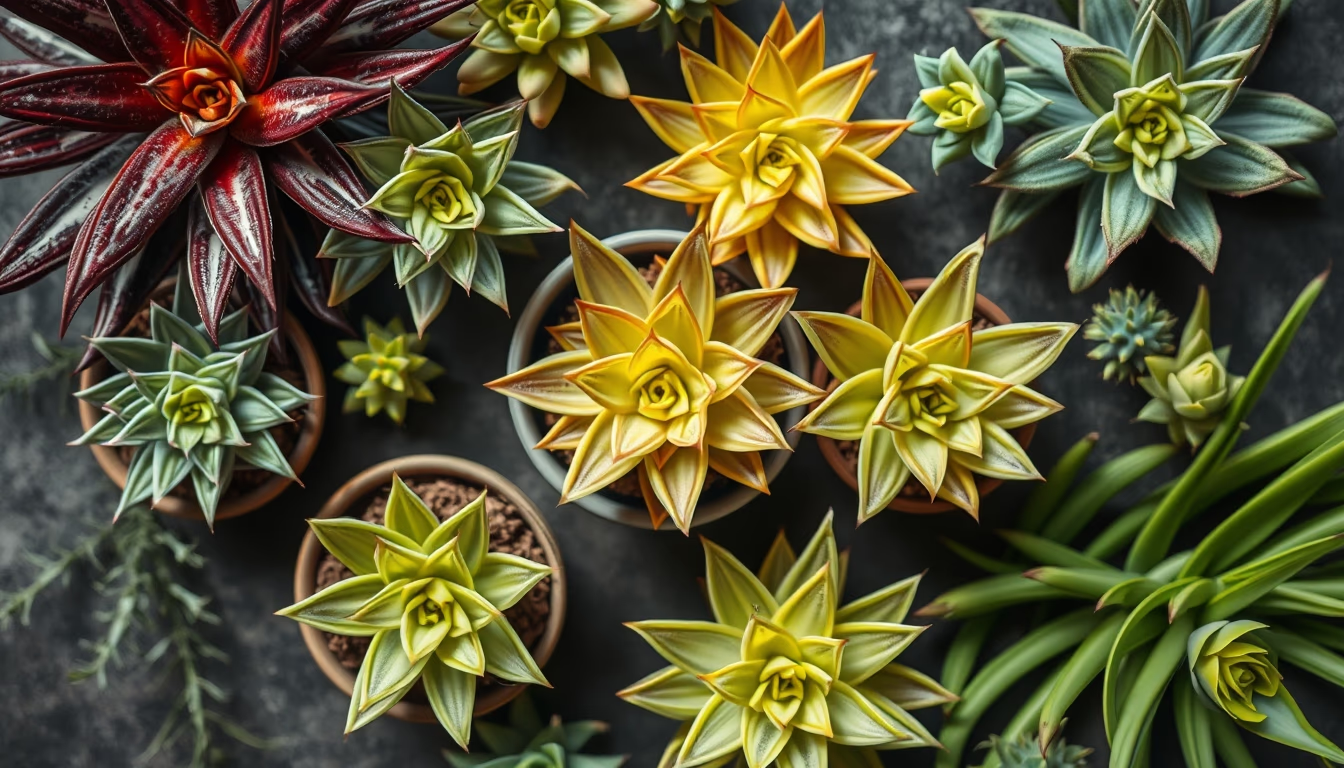
Tillandsia, commonly known as air plants, are epiphytes that grow without soil, absorbing nutrients through their leaves.
About this subject
Tillandsias belong to the Bromeliaceae family and are native to the Americas, ranging from the southeastern United States to Argentina. There are over 650 recognized species, adapted to climates from tropical rainforests to arid deserts. These epiphytic plants attach themselves to trees, rocks, or even electrical wires, using their roots only for support, not for nutrient uptake. Water and mineral absorption occurs through trichomes, specialized leaf structures that capture atmospheric moisture.
In nature, Tillandsias play important ecological roles, providing shelter for small insects and amphibians. Many species produce showy inflorescences with colorful bracts that attract pollinators like hummingbirds and butterflies. The species Tillandsia usneoides, known as Spanish moss, is famous for forming hanging curtains on trees in the Southern United States.
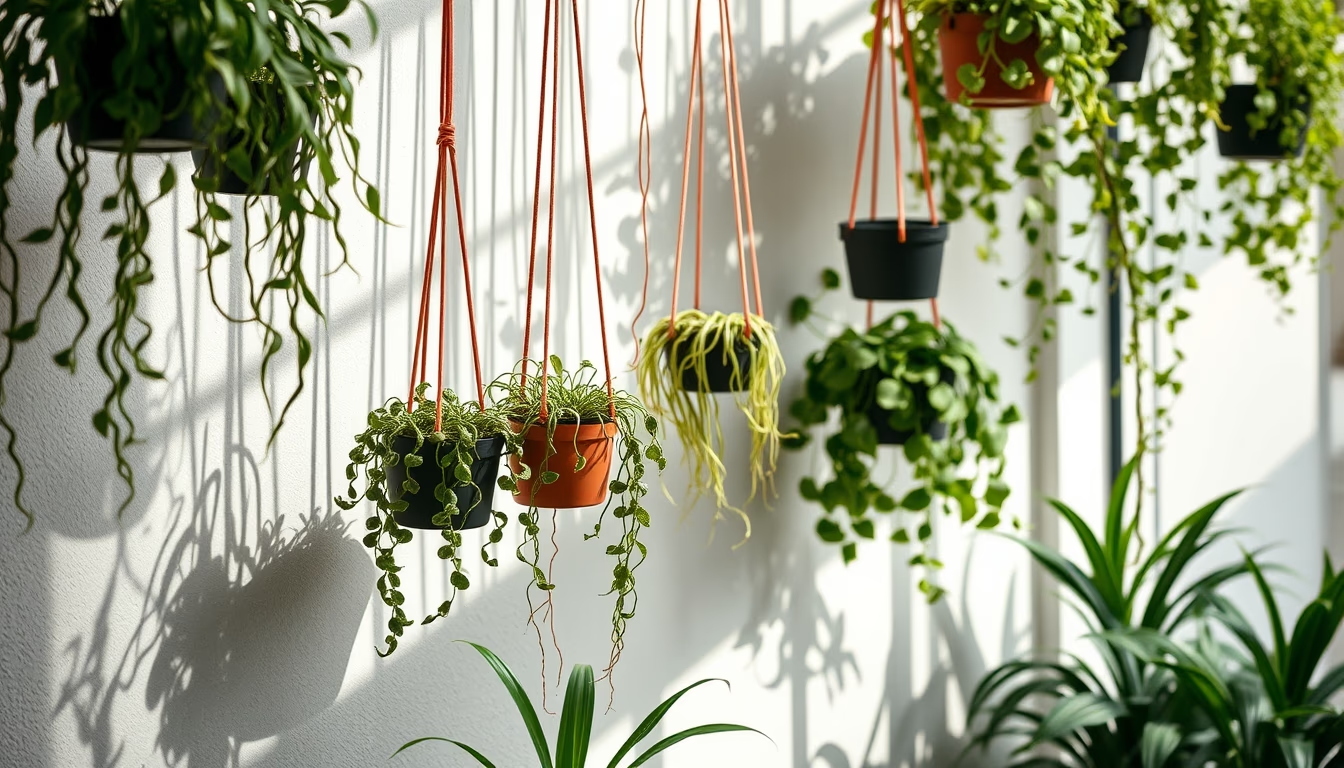
In home cultivation, air plants have gained popularity for their low maintenance. They require bright indirect light, good air circulation, and watering by soaking or misting, avoiding water accumulation in the center of the rosette to prevent rot. They are commonly used in terrariums, arrangements with gravel or wood, and vertical decor projects. Their ability to survive indoors with low humidity makes them ideal for apartments.
Botanical research continues to reveal new species, especially in South America. Some Tillandsias exhibit extreme adaptations, such as Tillandsia landbeckii, which forms dense mats in the Chilean desert by capturing coastal fog. The ease of propagation through offsets allows collectors to multiply specimens without complex techniques.
Frequently Asked Questions
Do air plants need soil to live?
No, Tillandsias are epiphytes and do not require soil. They absorb water and nutrients through their leaves via trichomes.
How often should I water an air plant?
The general recommendation is to mist the plant 2-3 times per week or soak it in water for 20-30 minutes every 7-10 days, depending on the ambient humidity.
What is the best lighting for Tillandsias indoors?
Bright indirect light is ideal, such as near an east- or west-facing window. Avoid prolonged direct sunlight, which can scorch the leaves.
Direct URL
https://pub-c7d6a6ea828543ac903a74a341ccb2e1.r2.dev/imagens/air-plants-tillandsia-isometric-flat-lay-fresh4.avifHow to credit
Include a visible link back to UtilizAí. Copy one of the snippets below:
<a href="https://xn--utiliza-eza.com/en/midia/imagens/air-plants-tillandsia-isometric-flat-lay-fresh4">Air plants tillandsia</a> by <a href="https://xn--utiliza-eza.com">UtilizAí</a>, licensed under <a href="https://creativecommons.org/licenses/by/4.0/">CC BY 4.0</a>.
[Air plants tillandsia](https://xn--utiliza-eza.com/en/midia/imagens/air-plants-tillandsia-isometric-flat-lay-fresh4) by [UtilizAí](https://xn--utiliza-eza.com), CC BY 4.0
License: CC-BY-4.0