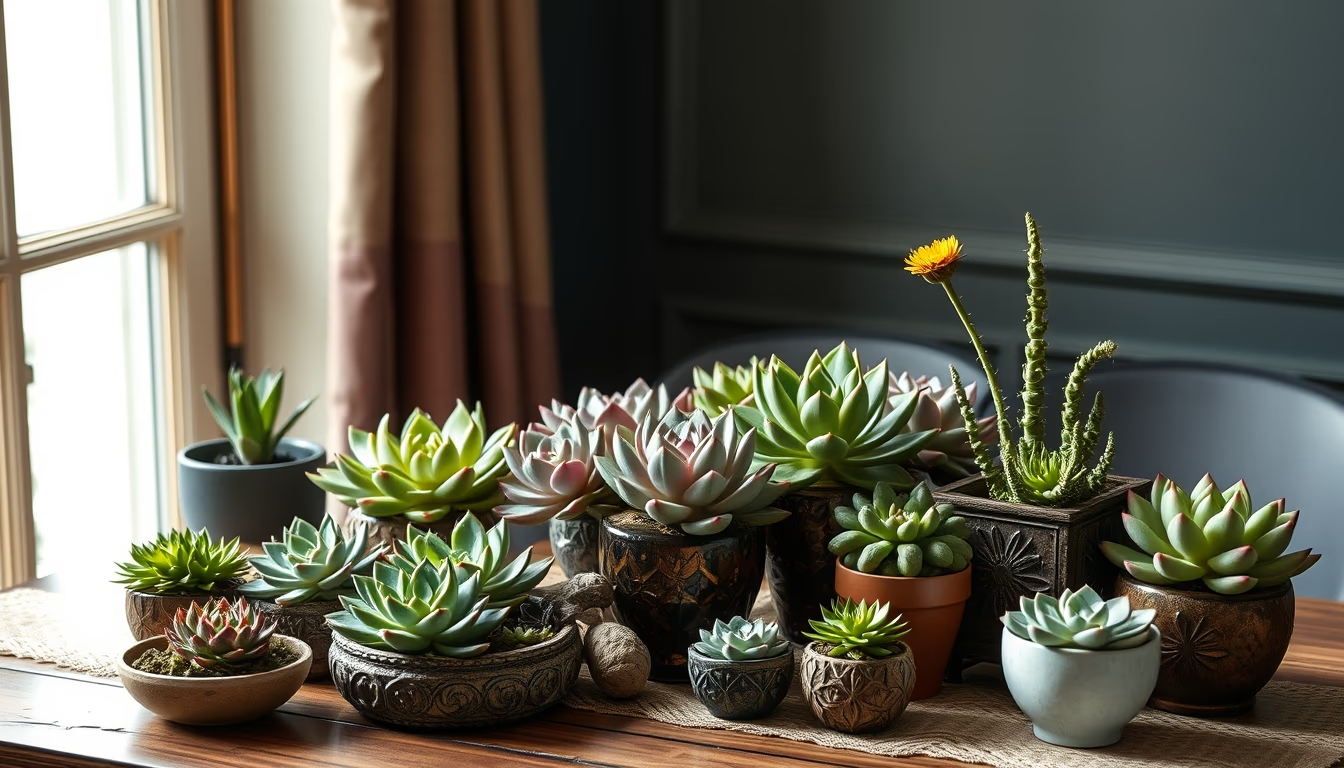
Air plants tillandsia
1344×768 · AVIF · CC BY 4.0
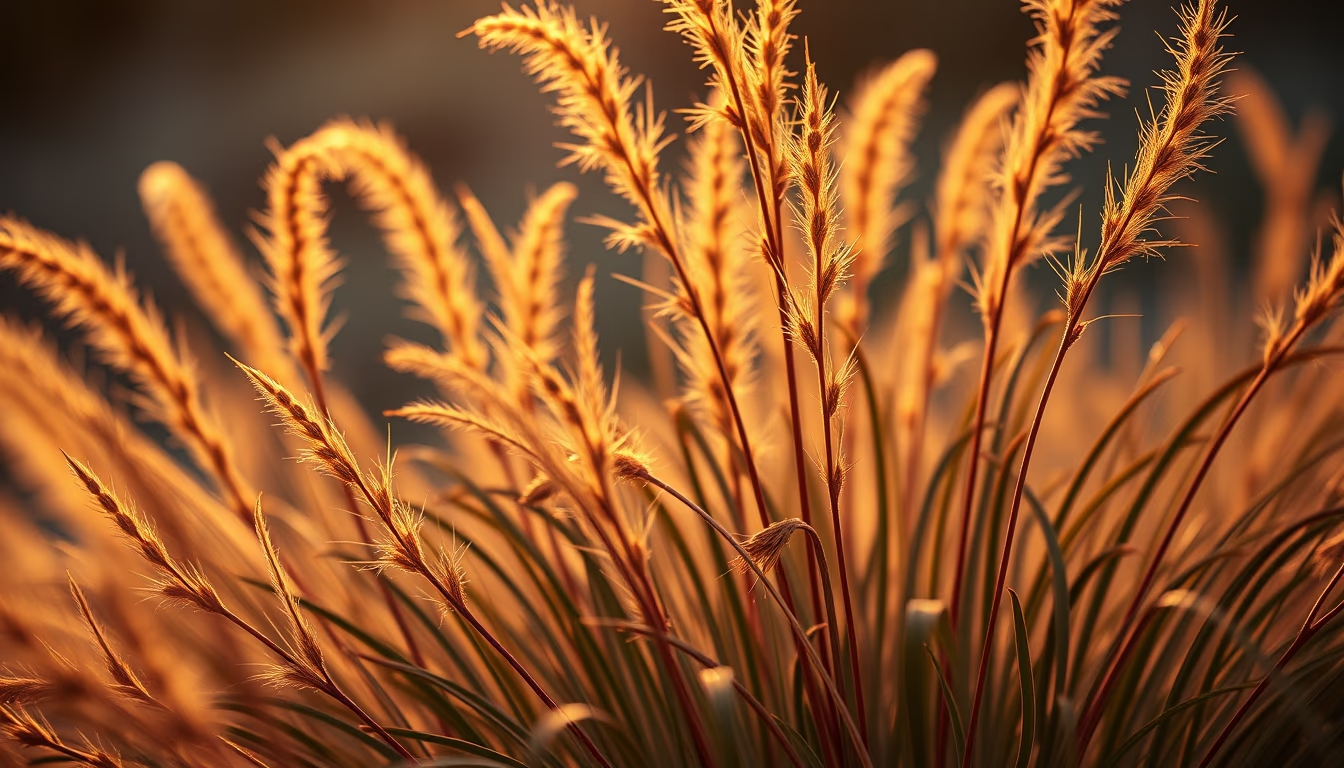
Tillandsia, commonly known as air plants, are epiphytic bromeliads that grow without soil, absorbing nutrients and water through specialized scales on their leaves.
About this subject
Tillandsia, commonly known as air plants, belong to the Bromeliaceae family and are native to the Americas, ranging from the southern United States to Argentina. Unlike most plants, they do not require soil to survive. Their roots serve only for attachment to trees, rocks, or utility wires, while the leaves are covered with trichomes (scales) that capture moisture and organic particles from the air. This adaptation allows them to inhabit environments from humid rainforests to arid deserts.
There are over 650 species of Tillandsia, varying in size from a few centimeters to over a meter tall. Popular cultivated species include Tillandsia ionantha, whose leaves turn red during flowering, and Tillandsia xerographica, with a rounded, silvery appearance. Flowering is a significant event: the plant produces a colorful inflorescence (often pink, red, or purple), and after blooming, the mother rosette dies, leaving side shoots that perpetuate the colony.
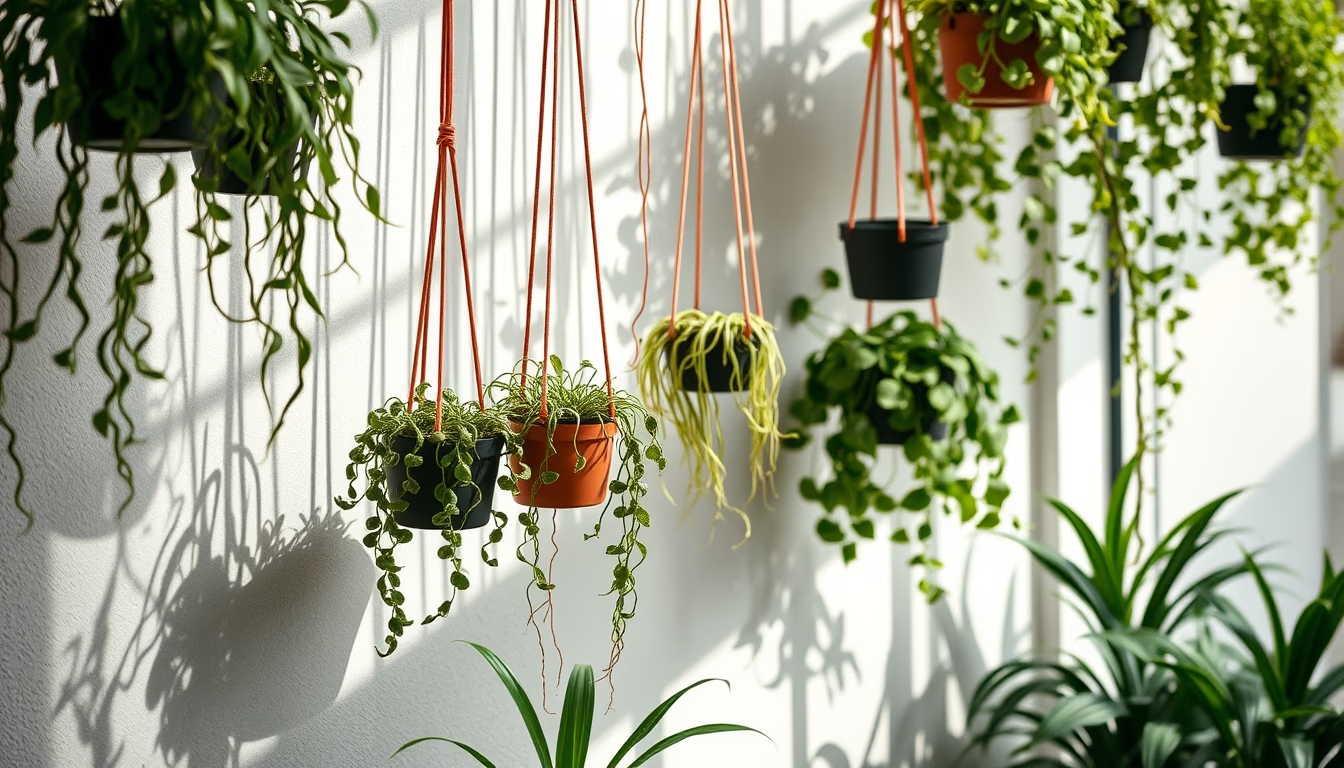
In Brazil, Tillandsias are found in several biomes, such as the Atlantic Forest and the Cerrado. An emblematic species is Tillandsia usneoides, Spanish moss, which forms dense hanging curtains on trees and is often mistaken for lichen. Due to their ease of care and exotic look, air plants have become popular in terrariums and hanging arrangements, requiring only indirect light and weekly misting.
A fascinating fact: Tillandsias are pollinated by hummingbirds and bats, and some species can survive for weeks without water. They are also used in air quality research, as they accumulate atmospheric pollutants in their trichomes, acting as bioindicators.
Frequently Asked Questions
How do you care for a Tillandsia (air plant)?
Tillandsias need bright indirect light and good air circulation. Water by misting 2-3 times per week in dry climates, or soak the plant in water for 20-30 minutes every 10 days. Let it dry completely before placing it back.
Why is my air plant dying after flowering?
It's normal: Tillandsias are monocarpic, meaning the mother rosette dies after blooming. However, it usually produces side shoots (pups) that can be separated once they reach about one-third the size of the mother plant.
Can air plants be grown in any climate?
Yes, but they need protection from frost and extreme heat. In cold regions, grow indoors near a window. In very dry areas, increase misting frequency to prevent desiccation.
Direct URL
https://pub-c7d6a6ea828543ac903a74a341ccb2e1.r2.dev/imagens/air-plants-tillandsia-cinematic-wide-shot-fresh9.avifHow to credit
Include a visible link back to UtilizAí. Copy one of the snippets below:
<a href="https://xn--utiliza-eza.com/en/midia/imagens/air-plants-tillandsia-cinematic-wide-shot-fresh9">Air plants tillandsia</a> by <a href="https://xn--utiliza-eza.com">UtilizAí</a>, licensed under <a href="https://creativecommons.org/licenses/by/4.0/">CC BY 4.0</a>.
[Air plants tillandsia](https://xn--utiliza-eza.com/en/midia/imagens/air-plants-tillandsia-cinematic-wide-shot-fresh9) by [UtilizAí](https://xn--utiliza-eza.com), CC BY 4.0
License: CC-BY-4.0