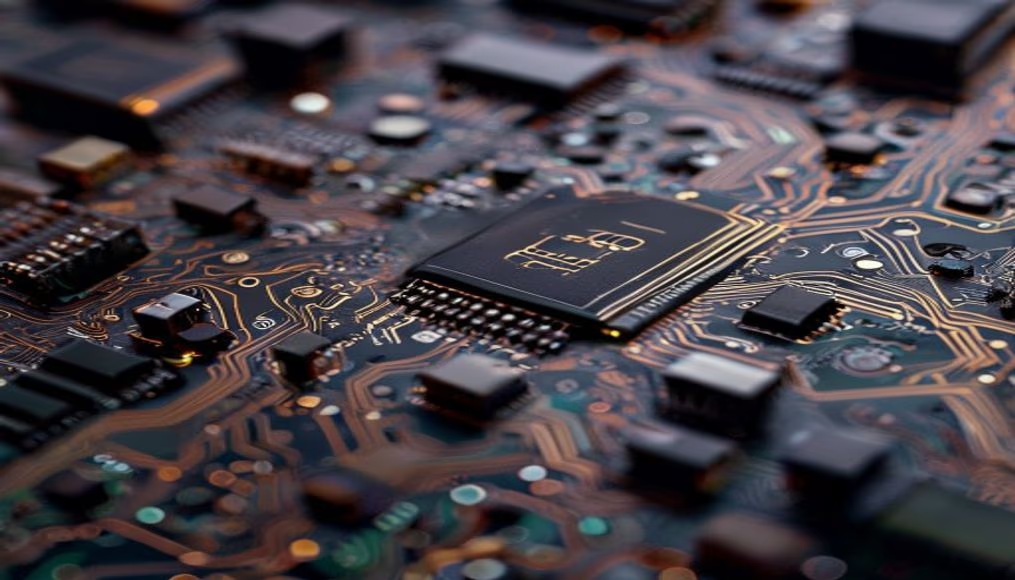
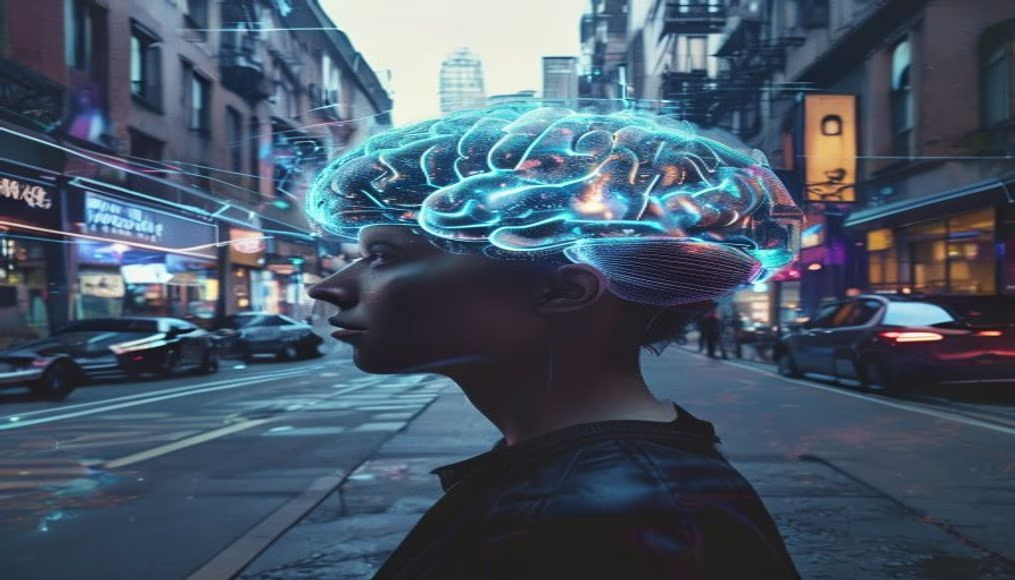
AI neural network glowing nodes and connections in 3D space
1344×768 · AVIF · CC BY 4.0
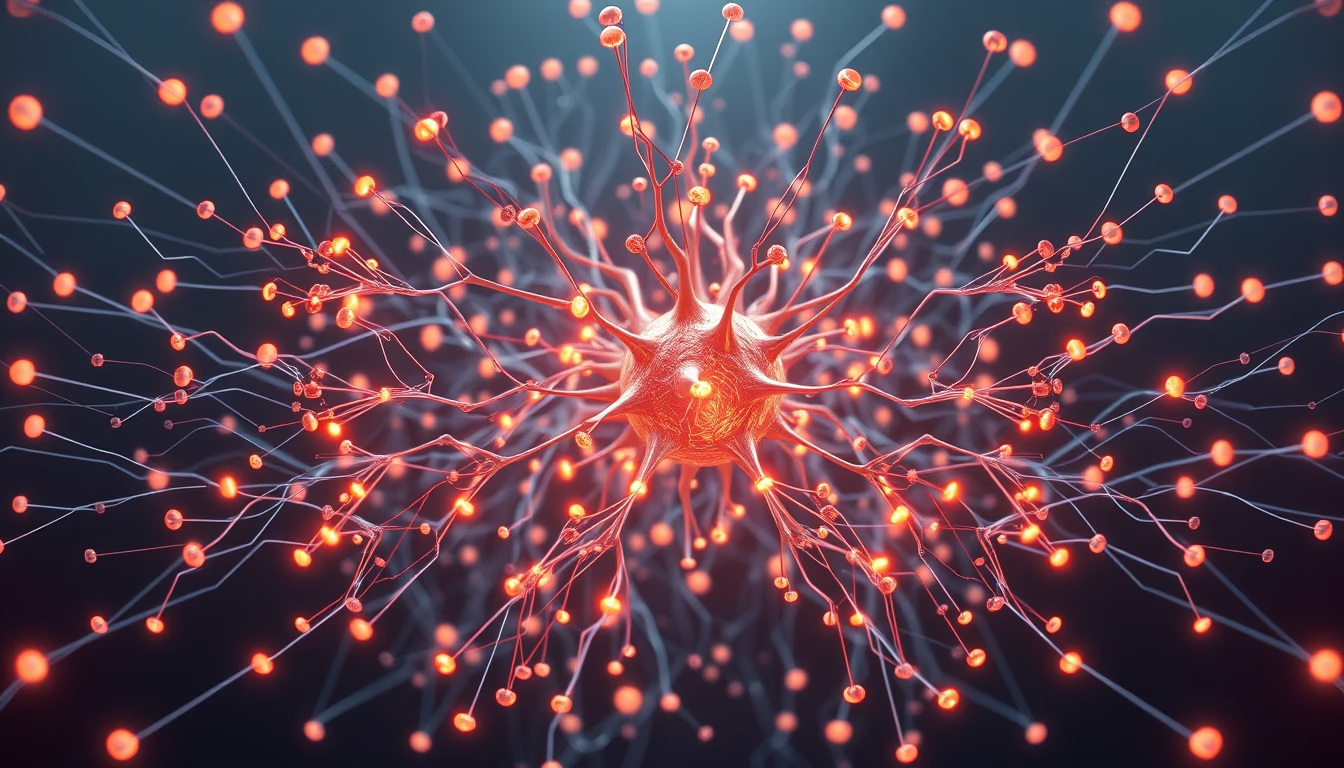
Artificial neural networks are computational models inspired by the human brain, capable of learning complex patterns from data.
About this subject
An artificial neural network is an information processing system that mimics the functioning of biological neurons. Composed of layers of interconnected nodes, each connection has a weight that is adjusted during training. The concept emerged in the 1940s with the McCulloch-Pitts model, but gained momentum in the 1980s with the backpropagation algorithm. Today, deep neural networks revolutionize fields such as computer vision, natural language processing, and speech recognition.
Neural networks are trained with large volumes of data, adjusting connection weights to minimize prediction error. This process, called supervised learning, requires significant computational power, often using GPUs. Examples of architectures include convolutional networks (CNNs) for images and recurrent networks (RNNs) for sequences. Despite success, challenges such as interpretability and algorithmic bias remain.
In Brazil, the use of neural networks has grown in sectors like agribusiness, healthcare, and finance. For instance, Brazilian startups apply CNNs to detect diseases in crops or to diagnose diabetic retinopathy from retinal images. Academic research at universities such as USP and Unicamp also contributes to advances in the field.
Interestingly, the term "neural network" was coined by Warren McCulloch and Walter Pitts in 1943. The first practical implementation, the perceptron, was developed by Frank Rosenblatt in 1958. The resurgence of neural networks in the 2000s is due to increased computational power and the availability of large datasets.
Frequently Asked Questions
What is an artificial neural network?
It is a computational model inspired by the brain, composed of layers of interconnected nodes that learn patterns from data.
How does a neural network learn?
During training, the network adjusts connection weights to minimize the error between predicted and desired output, using algorithms like backpropagation.
What are practical applications of neural networks?
They are used in image recognition, natural language processing, medical diagnosis, autonomous vehicles, and many other fields.
Direct URL
https://pub-c7d6a6ea828543ac903a74a341ccb2e1.r2.dev/imagens/ai-neural-network-glowing-nodes-and-connections-in-3d-space-symmetric-composition-overcast-soft-daylight.avifHow to credit
Include a visible link back to UtilizAí. Copy one of the snippets below:
<a href="https://xn--utiliza-eza.com/en/midia/imagens/ai-neural-network-glowing-nodes-and-connections-in-3d-space-symmetric-composition-overcast-soft-daylight">AI neural network glowing nodes and connections in 3D space</a> by <a href="https://xn--utiliza-eza.com">UtilizAí</a>, licensed under <a href="https://creativecommons.org/licenses/by/4.0/">CC BY 4.0</a>.
[AI neural network glowing nodes and connections in 3D space](https://xn--utiliza-eza.com/en/midia/imagens/ai-neural-network-glowing-nodes-and-connections-in-3d-space-symmetric-composition-overcast-soft-daylight) by [UtilizAí](https://xn--utiliza-eza.com), CC BY 4.0
License: CC-BY-4.0