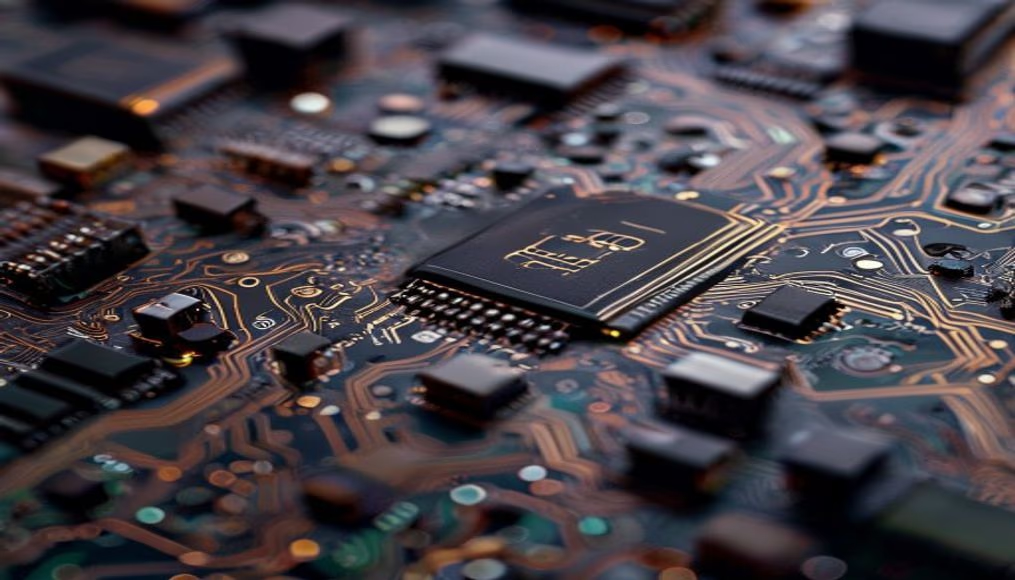
AI engineer training neural network on workstation
1344×768 · AVIF · CC BY 4.0
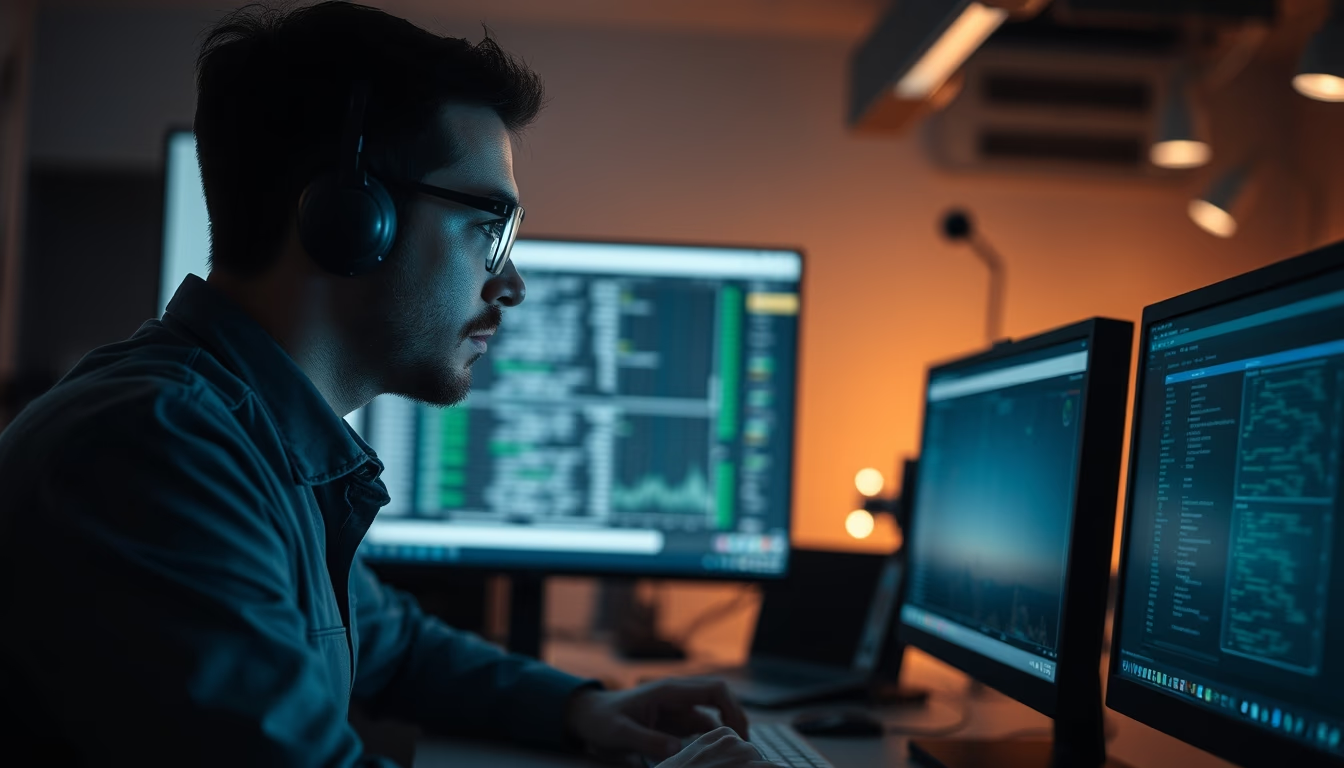
AI engineer training a neural network on a workstation at twilight, a scene that combines cutting-edge technology with the atmosphere of the day's end.
About this subject
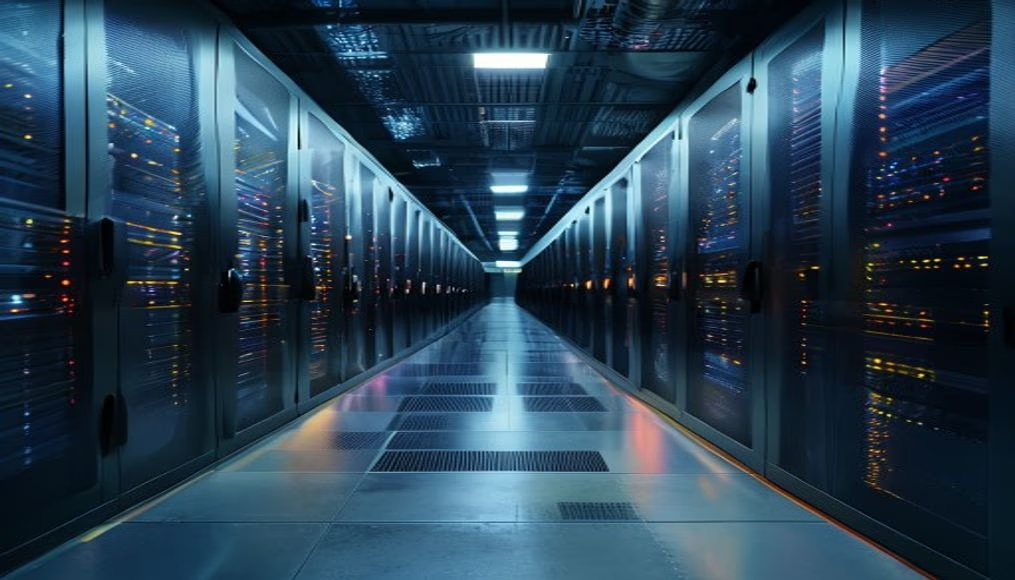
Training neural networks is a critical step in developing artificial intelligence systems. This process involves feeding a model with large volumes of data so it learns to recognize patterns and make decisions. AI engineers use workstations equipped with powerful GPUs, such as NVIDIA RTX or AMD Radeon Pro series, to accelerate computations. During twilight, many professionals take advantage of the quieter environment to conduct experiments that require intense focus. Common libraries like TensorFlow, PyTorch, or Keras are used, allowing the engineer to adjust hyperparameters and monitor metrics such as loss and accuracy in real time. The nighttime setting is not merely aesthetic: many tech companies operate globally, and remote or flexible working hours enable collaboration across time zones. The image captures this moment of technical immersion, where every detail, from monitor lighting to organized cables, reflects the precision demanded by the field. Interestingly, training deep networks can take days or weeks, consuming significant electrical energy. Therefore, there is a growing movement to optimize algorithms and use more efficient hardware, such as Google TPUs or specialized chips. The engineer in the image is likely monitoring training progress on a dashboard, ready to halt the process if overfitting or divergence occurs. The choice of twilight may indicate a pause for reflection after a day of coding, or the start of a night shift in a data center.
Frequently Asked Questions
What is needed to train a neural network?
You need a computer with a powerful GPU, deep learning libraries (like TensorFlow or PyTorch), and a labeled dataset. The process requires hyperparameter tuning and constant monitoring.
Why does training neural networks consume so much energy?
Deep neural networks perform billions of mathematical operations. GPUs process these operations in parallel, but training large models can still take days and consume energy equivalent to a household.
What is the difference between training a neural network and using it for inference?
Training is the learning phase, where the model adjusts its weights based on data. Inference is when the trained model makes predictions on new data, requiring less computational power.
Direct URL
https://pub-c7d6a6ea828543ac903a74a341ccb2e1.r2.dev/imagens/ai-engineer-training-neural-network-on-workstation-closeup-twilight-3.avifHow to credit
Include a visible link back to UtilizAí. Copy one of the snippets below:
<a href="https://xn--utiliza-eza.com/en/midia/imagens/ai-engineer-training-neural-network-on-workstation-closeup-twilight-3">AI engineer training neural network on workstation</a> by <a href="https://xn--utiliza-eza.com">UtilizAí</a>, licensed under <a href="https://creativecommons.org/licenses/by/4.0/">CC BY 4.0</a>.
[AI engineer training neural network on workstation](https://xn--utiliza-eza.com/en/midia/imagens/ai-engineer-training-neural-network-on-workstation-closeup-twilight-3) by [UtilizAí](https://xn--utiliza-eza.com), CC BY 4.0
License: CC-BY-4.0