AI brain visualization holographic
1344×768 · AVIF · CC BY 4.0
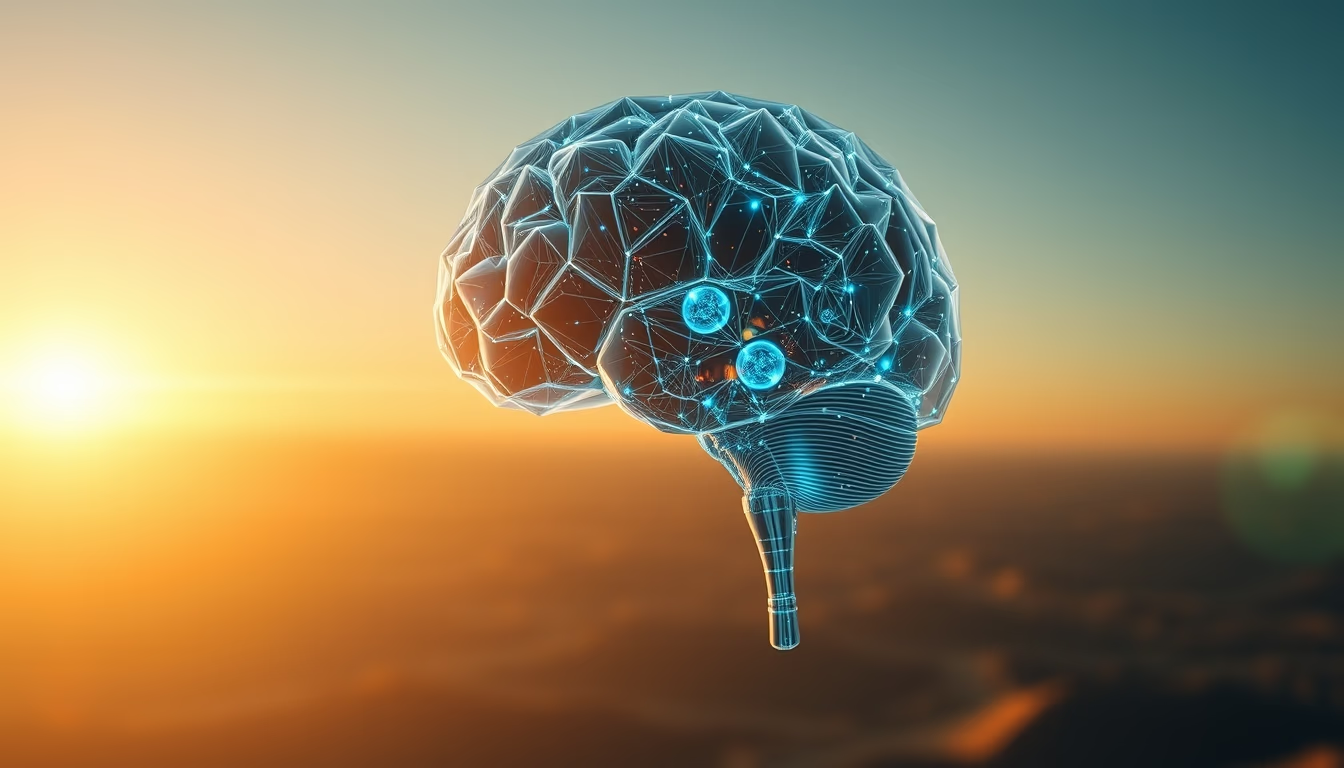
Visualização holográfica de um cérebro humano com conexões neurais em estilo futurista, representando inteligência artificial e neurociência.
Sobre o tema
A representação holográfica de um cérebro humano com conexões neurais ativas é uma imagem icônica no campo da inteligência artificial e neurociência. Este tipo de visualização é frequentemente utilizado para ilustrar conceitos como redes neurais artificiais, que são inspiradas na estrutura do cérebro biológico. As redes neurais artificiais são a base de muitos sistemas de IA modernos, como os utilizados em reconhecimento de fala, visão computacional e processamento de linguagem natural.
A imagem remete ao trabalho de pesquisadores como Geoffrey Hinton e Yann LeCun, que popularizaram o aprendizado profundo (deep learning). O cérebro humano possui aproximadamente 86 bilhões de neurônios, e as redes neurais artificiais tentam simular essa complexidade em escala reduzida. A holografia, por sua vez, é uma técnica de imagem tridimensional que está sendo explorada para armazenamento de dados e interfaces cérebro-computador.
No Brasil, instituições como o Instituto de Ciências Matemáticas e de Computação (ICMC-USP) e a Universidade Federal do Rio de Janeiro (UFRJ) desenvolvem pesquisas em IA e neurociência. A visualização holográfica também aparece em exposições de arte e tecnologia, como no Museu do Amanhã, no Rio de Janeiro, que aborda temas de futuro e inovação.
Curiosamente, a ideia de um cérebro holográfico foi proposta pelo neurocientista Karl Pribram na década de 1960, sugerindo que a memória poderia ser armazenada de forma holográfica no cérebro. Embora essa teoria não seja amplamente aceita hoje, ela influenciou a cultura pop e a ficção científica, como no filme "Matrix" e na série "Westworld".
Perguntas frequentes
O que é uma rede neural artificial?
Uma rede neural artificial é um modelo computacional inspirado no cérebro humano, composto por camadas de neurônios artificiais que processam informações. Ela é usada em tarefas como reconhecimento de padrões e aprendizado de máquina.
Como a holografia é usada na neurociência?
A holografia é usada em técnicas como a microscopia holográfica para visualizar neurônios em 3D e em interfaces cérebro-computador para transmitir informações visuais diretamente ao cérebro.
Qual a relação entre o cérebro humano e a inteligência artificial?
A inteligência artificial se inspira na estrutura e funcionamento do cérebro humano para criar algoritmos de aprendizado, como as redes neurais. No entanto, a IA atual ainda é muito menos complexa que o cérebro biológico.
URL direta
https://pub-c7d6a6ea828543ac903a74a341ccb2e1.r2.dev/imagens/ai-brain-visualization-holographic-cinematic-wide-shot-v2.avifComo creditar
Inclua um link visível de volta pro UtilizAí. Copie um dos snippets abaixo:
<a href="https://xn--utiliza-eza.com/midia/imagens/ai-brain-visualization-holographic-cinematic-wide-shot-v2">AI brain visualization holographic</a> by <a href="https://xn--utiliza-eza.com">UtilizAí</a>, licensed under <a href="https://creativecommons.org/licenses/by/4.0/">CC BY 4.0</a>.
[AI brain visualization holographic](https://xn--utiliza-eza.com/midia/imagens/ai-brain-visualization-holographic-cinematic-wide-shot-v2) by [UtilizAí](https://xn--utiliza-eza.com), CC BY 4.0
Licença: CC-BY-4.0