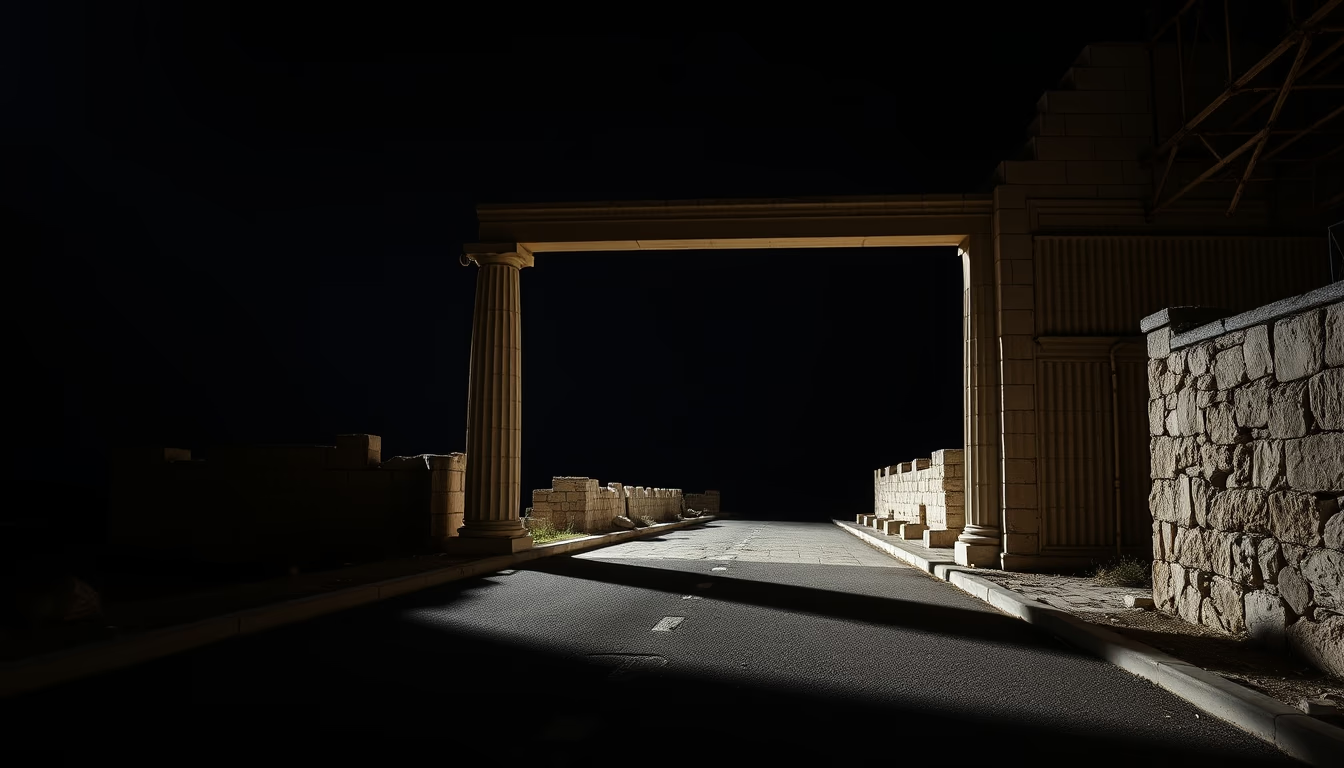
Agincourt field england
1344×768 · AVIF · CC BY 4.0

The field of Agincourt in northern France was the site of one of the most famous battles of the Hundred Years' War in 1415.
About this subject
The field of Agincourt, located in the Pas-de-Calais department in northern France, became a historical symbol of the Hundred Years' War. It was here that, on October 25, 1415, the English army led by King Henry V faced a numerically superior French force. The battle is famous for the decisive use of the English longbow, which, combined with muddy terrain and defensive formation, resulted in an overwhelming English victory.
The significance of the Battle of Agincourt extends beyond military outcome. It represented the peak of English military power in the war and cemented Henry V's reputation as a great commander. Approximately 6,000 English soldiers, many of them archers, faced between 20,000 and 30,000 Frenchmen. French casualties were catastrophic, with thousands of nobles killed, while English losses numbered only a few hundred. The field became a place of memory, with monuments and a visitor center.
Culturally, Agincourt was immortalized by William Shakespeare in his play "Henry V," especially in the St. Crispin's Day speech. The phrase "We few, we happy few, we band of brothers" became an icon of military heroism. The field also attracts tourists and historians, serving as a study site for medieval tactics, logistics, and the role of the longbow in warfare.
Today, the Agincourt field is a preserved site with a memorial and a museum explaining the battle details. It stands as a testament to medieval history and a reminder of war's consequences. Visitors can walk the field and visualize army positions thanks to informative panels.
Frequently Asked Questions
Why was the Battle of Agincourt important?
The battle was a decisive English victory against a much larger French army during the Hundred Years' War, showcasing the effectiveness of the longbow and cementing Henry V's military reputation.
Where exactly is the Agincourt field located?
The field is located near the village of Azincourt in the Pas-de-Calais department, northern France, about 50 kilometers from Calais.
What was the role of the longbow in the battle?
The English longbow, with its superior range and rate of fire, decimated the French cavalry stuck in the mud, becoming the decisive factor in the English victory.
Direct URL
https://pub-c7d6a6ea828543ac903a74a341ccb2e1.r2.dev/imagens/agincourt-field-england-lo-fi-disposable-camera-fresh10.avifHow to credit
Include a visible link back to UtilizAí. Copy one of the snippets below:
<a href="https://xn--utiliza-eza.com/en/midia/imagens/agincourt-field-england-lo-fi-disposable-camera-fresh10">Agincourt field england</a> by <a href="https://xn--utiliza-eza.com">UtilizAí</a>, licensed under <a href="https://creativecommons.org/licenses/by/4.0/">CC BY 4.0</a>.
[Agincourt field england](https://xn--utiliza-eza.com/en/midia/imagens/agincourt-field-england-lo-fi-disposable-camera-fresh10) by [UtilizAí](https://xn--utiliza-eza.com), CC BY 4.0
License: CC-BY-4.0