Accordion bellows old
1344×768 · AVIF · CC BY 4.0
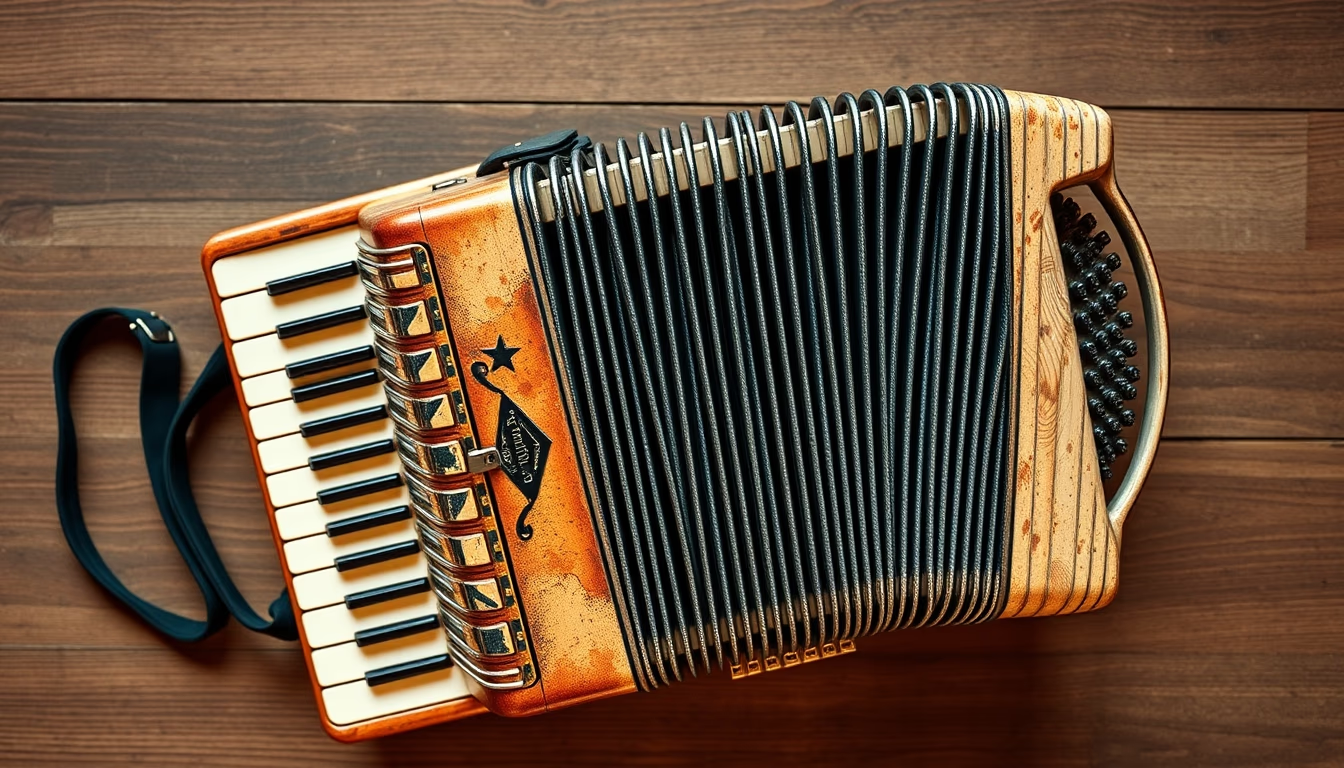
The accordion bellows, an essential component of the instrument, reveals mechanical complexity and musical tradition spanning generations.
About this subject
The accordion bellows are the heart of the instrument, generating the airflow that vibrates metal reeds. Handcrafted from cardboard, fabric, and leather, they expand and contract in folds, requiring perfect sealing to prevent air leaks. The mechanics are simple: opening draws air in; closing forces air over the reeds, producing sound. Design varies between piano and button accordions, and the number of folds directly affects air capacity and note sustain.
Historically, the accordion emerged in early 19th-century Europe, with patents by Cyrill Demian and others. It quickly spread, becoming a symbol of folk music in Germany, Italy, France, and later the Americas. In Brazil, the accordion (known as sanfona) is central to forró, baião, and xote, immortalized by Luiz Gonzaga. Bellows manufacturing evolved with modern materials like aluminum and plastic, but vintage models remain prized for their unique sound.
Technical curiosities: longer bellows with more folds allow greater air volume and sustained notes. Maintenance is critical, holes or wear degrade sound, requiring specialist restoration. In vintage accordions, original bellows can indicate authenticity and value. An isometric top-down view reveals the bellows' symmetric structure and precise folds, highlighting the engineering behind the music.
Frequently Asked Questions
How do accordion bellows work?
The bellows work like fireplace bellows: expanding draws air in, compressing forces air over metal reeds, which vibrate to produce sound. A tight seal ensures air only passes through the reeds.
What is the importance of the accordion in Brazilian music?
The accordion (sanfona) is central to forró, baião, and xote, especially in the Northeast. Artists like Luiz Gonzaga and Dominguinhos popularized it, making it a symbol of Northeastern culture.
How to preserve an old bellows?
Avoid humidity and direct sunlight, which dry out leather and cardboard. Store the accordion in a hard case with silica gel to control moisture. For leaks or holes, consult a specialized luthier for restoration.
Direct URL
https://pub-c7d6a6ea828543ac903a74a341ccb2e1.r2.dev/imagens/accordion-bellows-old-isometric-flat-lay-p6.avifHow to credit
Include a visible link back to UtilizAí. Copy one of the snippets below:
<a href="https://xn--utiliza-eza.com/en/midia/imagens/accordion-bellows-old-isometric-flat-lay-p6">Accordion bellows old</a> by <a href="https://xn--utiliza-eza.com">UtilizAí</a>, licensed under <a href="https://creativecommons.org/licenses/by/4.0/">CC BY 4.0</a>.
[Accordion bellows old](https://xn--utiliza-eza.com/en/midia/imagens/accordion-bellows-old-isometric-flat-lay-p6) by [UtilizAí](https://xn--utiliza-eza.com), CC BY 4.0
License: CC-BY-4.0