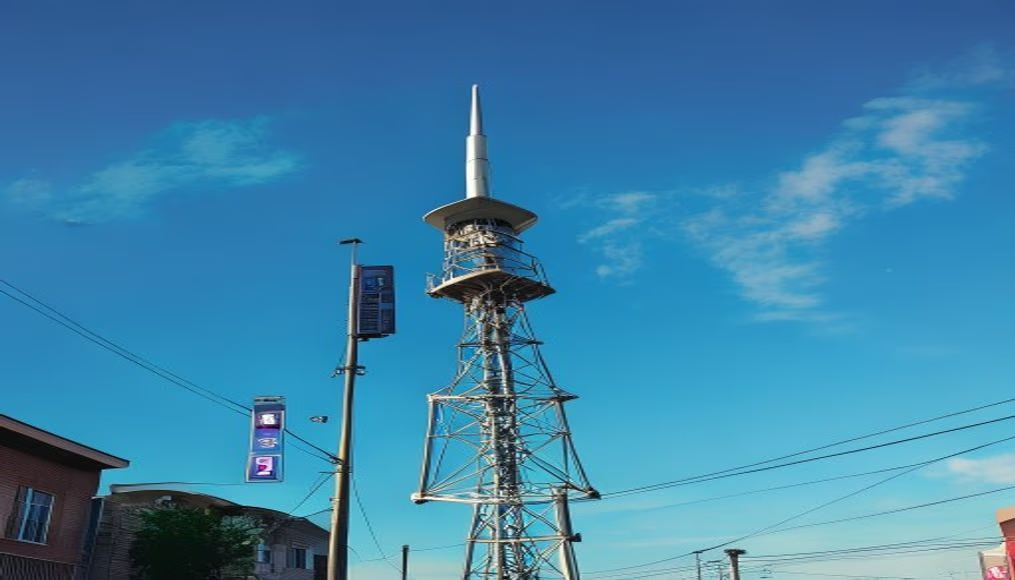
5G tower against blue sky
1344×768 · AVIF · CC BY 4.0
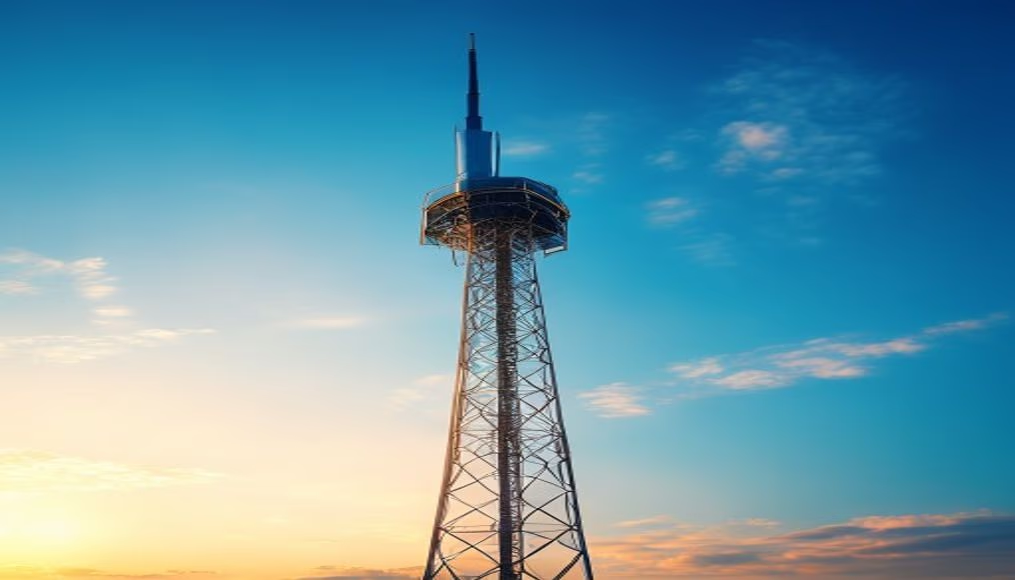
5G towers, pillars of new connectivity, spread worldwide with the promise of ultra-fast speed and low latency.
About this subject
5G towers represent the fifth generation of mobile networks, succeeding 4G LTE. They operate in three frequency bands: low-band (sub-1 GHz), mid-band (1-6 GHz), and high-band (millimeter waves, above 24 GHz). The high band offers speeds up to 20 Gbps but with limited range, requiring more antennas installed on poles, rooftops, and towers. Thus, densification of infrastructure is a key feature of 5G, with smaller cells closer to each other.
Commercial 5G deployment began in 2019, led by countries like South Korea, the United States, and China. In Brazil, the technology was activated in 2022 after Anatel's auction, with plans to cover all state capitals by 2023 and cities with over 30,000 inhabitants by 2029. Towers incorporate technologies such as beamforming (signal direction) and massive MIMO (multiple antennas) to optimize transmission.
Besides speed, 5G promises latency under 1 ms, essential for applications like autonomous cars, remote surgery, and immersive virtual reality. The technology is estimated to generate $13.2 trillion in global economic value by 2035, according to an IHS Markit report. Tower infrastructure also supports the Internet of Things (IoT), connecting billions of devices simultaneously.
Frequently Asked Questions
What differentiates a 5G tower from 4G towers?
5G towers use higher frequencies, beamforming, and massive MIMO, enabling greater speed and capacity. They also require smaller antennas placed closer together, known as small cells.
Does 5G pose health risks to humans?
According to the World Health Organization (WHO) and the International Commission on Non-Ionizing Radiation Protection (ICNIRP), there is no evidence of adverse health effects as long as exposure levels are within established limits. 5G frequencies are non-ionizing.
How long does it take to install a 5G tower?
Installation time varies by location and licensing. In urban areas, a small cell installation can take a few weeks, while traditional towers may take months due to municipal regulations and environmental studies.
Direct URL
https://pub-c7d6a6ea828543ac903a74a341ccb2e1.r2.dev/imagens/5g-tower-against-blue-sky-travel-photography-v10.avifHow to credit
Include a visible link back to UtilizAí. Copy one of the snippets below:
<a href="https://xn--utiliza-eza.com/en/midia/imagens/5g-tower-against-blue-sky-travel-photography-v10">5G tower against blue sky</a> by <a href="https://xn--utiliza-eza.com">UtilizAí</a>, licensed under <a href="https://creativecommons.org/licenses/by/4.0/">CC BY 4.0</a>.
[5G tower against blue sky](https://xn--utiliza-eza.com/en/midia/imagens/5g-tower-against-blue-sky-travel-photography-v10) by [UtilizAí](https://xn--utiliza-eza.com), CC BY 4.0
License: CC-BY-4.0