5G antenna tower silhouette against deep blue crepúsculo sky
1344×768 · AVIF · CC BY 4.0
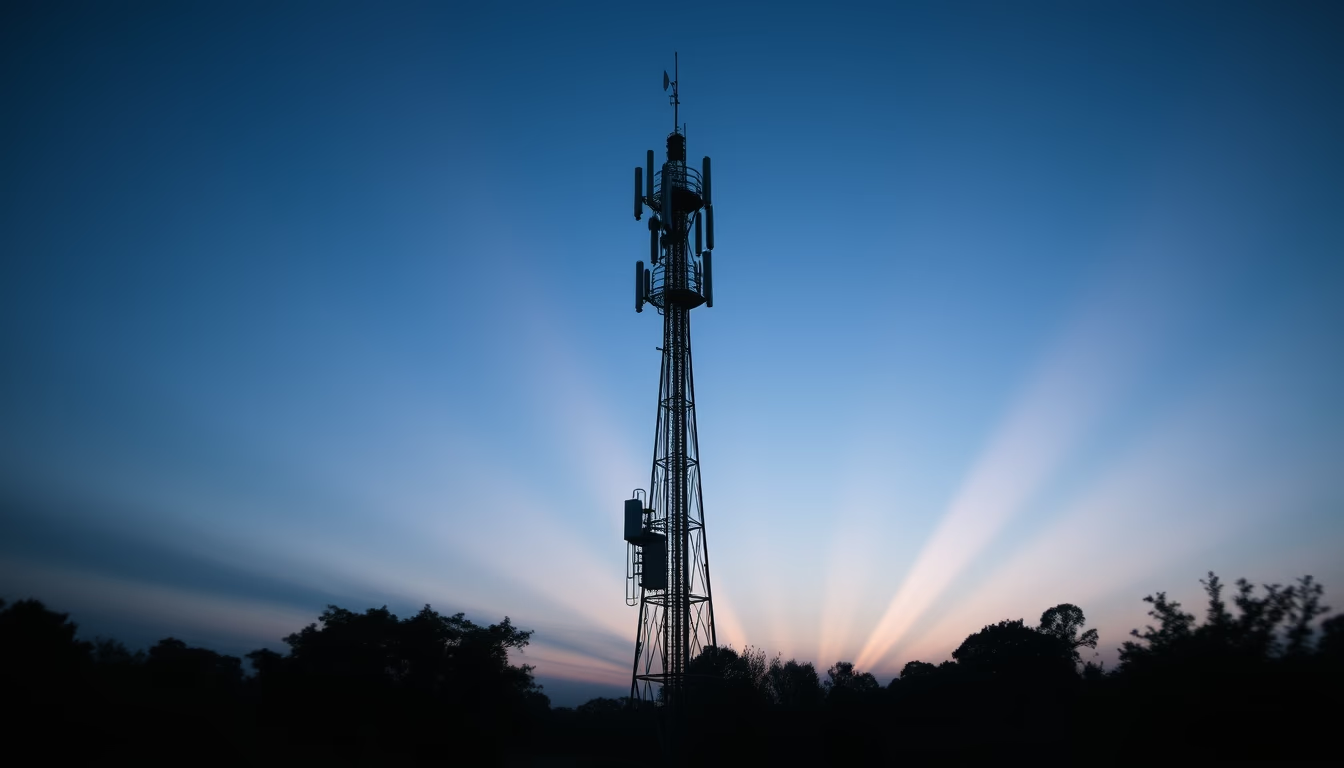
Torre de antena 5G em silhueta contra o céu azul profundo do crepúsculo, simbolizando a expansão da conectividade móvel de quinta geração no Brasil.
Sobre o tema
A torre de antena 5G, recortada contra o céu azul profundo do crepúsculo, representa um marco na evolução das telecomunicações brasileiras. O 5G, ou quinta geração de redes móveis, começou a ser implantado no Brasil em 2022, após o leilão de frequências realizado pela Anatel. Diferente do 4G, o 5G oferece latência ultrabaixa (cerca de 1 milissegundo), velocidades de download que podem chegar a 20 Gbps e capacidade para conectar até 1 milhão de dispositivos por quilômetro quadrado. Essa tecnologia é fundamental para impulsionar a Internet das Coisas (IoT), veículos autônomos, cidades inteligentes e telemedicina.
A silhueta da torre destaca a infraestrutura necessária para suportar as ondas milimétricas do 5G, que exigem estações-base mais próximas umas das outras em comparação com gerações anteriores. No Brasil, a implementação enfrenta desafios como a necessidade de fibra óptica para backhaul, a regulamentação municipal para instalação de antenas e a adaptação de dispositivos. Apesar disso, capitais como Brasília, São Paulo e Rio de Janeiro já contam com cobertura 5G em áreas centrais.
O horário do crepúsculo, com o céu em transição entre o dia e a noite, evoca o momento de transformação digital que o país vive. A antena 5G, muitas vezes instalada em torres já existentes de rádio ou TV, torna-se um símbolo da conectividade moderna. Dados da Agência Nacional de Telecomunicações indicam que, em 2024, mais de 200 municípios brasileiros já possuíam antenas 5G ativadas, um número que cresce rapidamente.
Curiosamente, a primeira transmissão 5G no Brasil ocorreu em 2019, durante um teste em Brasília, mas a comercialização em larga escala começou apenas em julho de 2022. A tecnologia promete não apenas internet mais rápida para celulares, mas também aplicações industriais, como fábricas inteligentes e agricultura de precisão, que dependem da baixa latência e alta confiabilidade da rede.
Perguntas frequentes
O que é necessário para um celular funcionar com 5G no Brasil?
É preciso ter um smartphone compatível com as frequências do 5G (como a faixa de 3,5 GHz) e estar em uma área com cobertura da rede. A operadora também deve oferecer o serviço, e o chip (SIM) precisa ser habilitado para 5G.
Quais são as principais diferenças entre 4G e 5G?
O 5G oferece velocidades muito maiores (até 20 Gbps contra 1 Gbps do 4G), latência muito menor (1 ms contra 30-50 ms) e capacidade de conectar muito mais dispositivos simultaneamente. Isso permite aplicações como carros autônomos e cirurgias remotas.
O 5G substituirá completamente o 4G no Brasil?
Não imediatamente. O 4G continuará operando por muitos anos, especialmente em áreas rurais e menos densas. O 5G será inicialmente implantado em grandes centros urbanos, complementando o 4G para aplicações que exigem alta velocidade e baixa latência.
URL direta
https://pub-c7d6a6ea828543ac903a74a341ccb2e1.r2.dev/imagens/5g-antenna-tower-silhouette-against-deep-blue-twilight-sky-editorial-overcast-daytime-5.avifComo creditar
Inclua um link visível de volta pro UtilizAí. Copie um dos snippets abaixo:
<a href="https://xn--utiliza-eza.com/midia/imagens/5g-antenna-tower-silhouette-against-deep-blue-twilight-sky-editorial-overcast-daytime-5">5G antenna tower silhouette against deep blue crepúsculo sky</a> by <a href="https://xn--utiliza-eza.com">UtilizAí</a>, licensed under <a href="https://creativecommons.org/licenses/by/4.0/">CC BY 4.0</a>.
[5G antenna tower silhouette against deep blue crepúsculo sky](https://xn--utiliza-eza.com/midia/imagens/5g-antenna-tower-silhouette-against-deep-blue-twilight-sky-editorial-overcast-daytime-5) by [UtilizAí](https://xn--utiliza-eza.com), CC BY 4.0
Licença: CC-BY-4.0