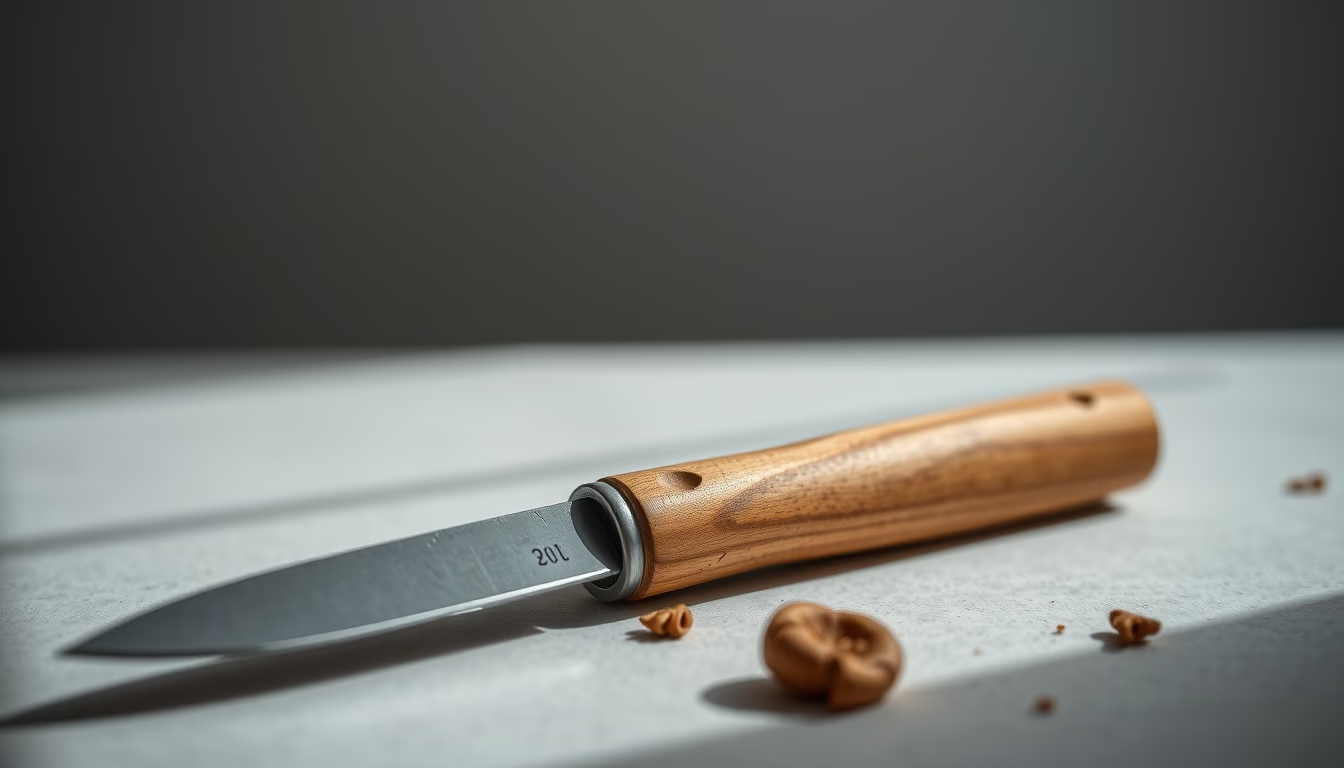
Wood carving knife
1344×768 · AVIF · CC BY 4.0
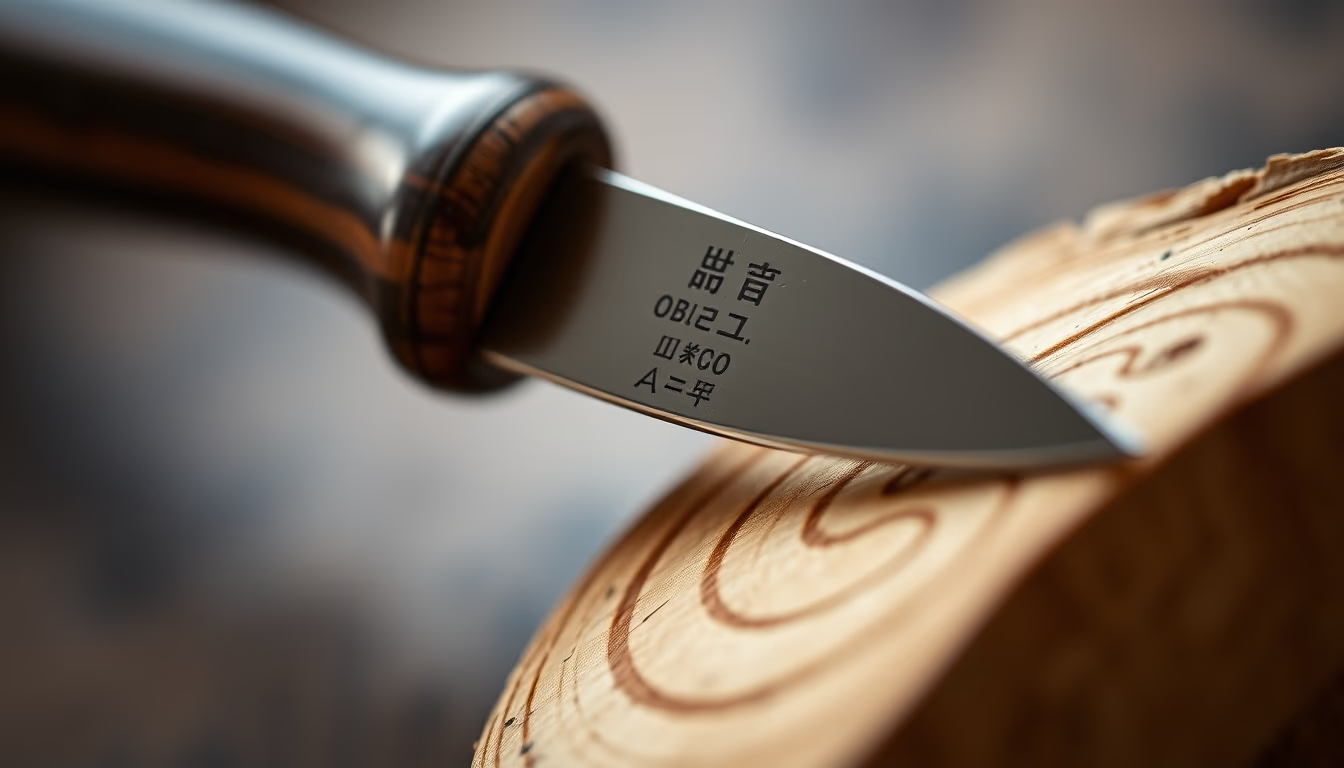
The wood carving knife is an essential hand tool for sculptors, enabling precise and detailed cuts in soft to hard woods.
About this subject
The wood carving knife is an ancient tool, used for millennia by diverse cultures worldwide. From primitive stone implements to modern carbon or stainless steel blades, its evolution reflects a quest for greater precision and durability. Different blade profiles exist: straight for linear cuts, curved for rounded shapes, and hook for deep cavities, each designed for specific carving techniques.
In Brazil, wood carving tradition is strong, especially in Northeastern crafts like woodcut prints and figurines. Artisans often prefer knives with short blades and ergonomic handles, enabling fine control and reducing muscle fatigue. The wood used can range from soft (pine, balsa) to dense (oak, walnut), requiring different edge angles and sharpening methods.
A notable fact: wood carving knives differ from common pocketknives because their blade geometry is optimized for precision grip, usually with the thumb resting on the blade's spine to guide the cut. Maintenance includes periodic sharpening with fine-grit stones and corrosion protection with mineral oil. Beginners are advised to start with soft woods and fixed-blade knives to avoid injury.
Beyond artistic use, carving knives are employed in fine woodworking, model making, and even orthopedic surgery (sterilized versions). Choosing the right knife depends on the project: tiny details require narrow, pointed blades, while rough shaping calls for wider, sturdier ones. The market ranges from hand-forged artisan pieces to high-precision industrial lines.
Frequently Asked Questions
Which wood carving knife is recommended for beginners?
For beginners, a fixed-blade knife with an ergonomic handle and a straight blade about 3 to 5 cm long is recommended. Soft woods like pine or balsa are ideal for practice.
How should I sharpen a wood carving knife?
Use sharpening stones from medium to fine grit (around 1000 to 6000). Maintain a constant angle of 20 to 25 degrees and finish with a polishing stone or abrasive paste for a keen edge.
What are the main differences between carving knives and common pocketknives?
Carving knives have fixed or folding blades specialized for sculpture, with varied profiles (straight, curved, hook) and handles designed for precision grip, while common pocketknives have generic blades for everyday use.
Direct URL
https://pub-c7d6a6ea828543ac903a74a341ccb2e1.r2.dev/imagens/wood-carving-knife-macro-closeup-fresh17.avifHow to credit
Include a visible link back to UtilizAí. Copy one of the snippets below:
<a href="https://xn--utiliza-eza.com/en/midia/imagens/wood-carving-knife-macro-closeup-fresh17">Wood carving knife</a> by <a href="https://xn--utiliza-eza.com">UtilizAí</a>, licensed under <a href="https://creativecommons.org/licenses/by/4.0/">CC BY 4.0</a>.
[Wood carving knife](https://xn--utiliza-eza.com/en/midia/imagens/wood-carving-knife-macro-closeup-fresh17) by [UtilizAí](https://xn--utiliza-eza.com), CC BY 4.0
License: CC-BY-4.0