Voting booth with Brazilian electronic ballot machine
1344×768 · AVIF · CC BY 4.0
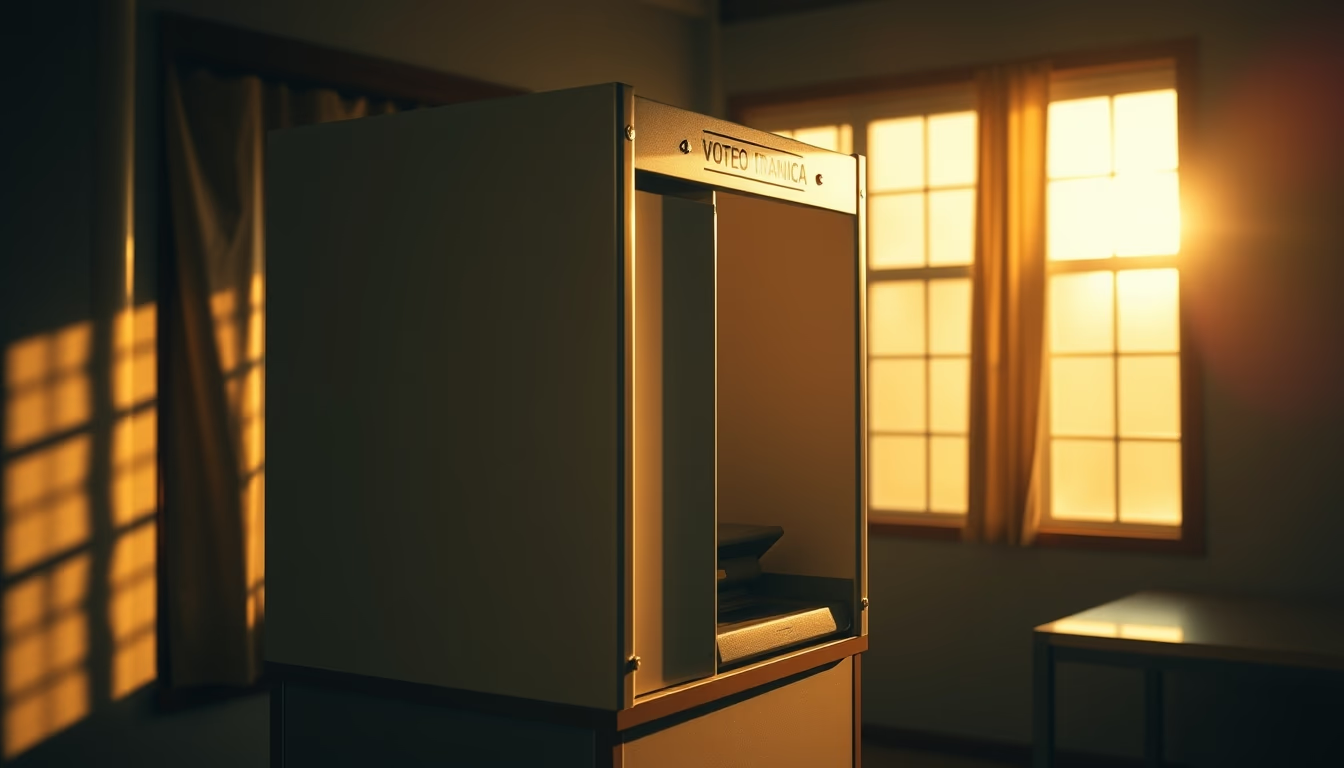
Brazilian electronic ballot machine in a voting booth: a symbol of security and speed in the country's elections.
About this subject
The Brazilian electronic ballot machine, introduced in 1996, is a milestone in the country's electoral history. Developed by the Superior Electoral Court (TSE) in partnership with the Center for Research and Development in Telecommunications (CPqD), it replaced paper ballots, drastically reducing fraud and vote counting time. Currently, over 150 million voters use the system across Brazil, with official results announced within hours after polls close.
The equipment operates autonomously, without internet connection during voting, ensuring inviolability. Each machine has its own operating system and stores votes on encrypted media. Before and after elections, public security tests are conducted, where experts attempt to breach the system to identify vulnerabilities. Since its implementation, no proven fraud has occurred in the electronic voting process.
The voting booth, typically made of opaque material with a curtain, ensures ballot secrecy, a fundamental democratic principle. The voter types the candidate or party number on a numeric keypad, confirms the choice on a screen, and the vote is recorded. The latest model, the 2020 urn, features a color display and biometric reader for fingerprint identification, adopted in about 60% of polling stations.
Trivia: Brazil is the only country in the world that conducts fully computerized elections, with electronic counting and real-time results release. The system has inspired other nations, such as Paraguay and Argentina, which tested Brazilian machines in municipal elections. The reliability of the electronic ballot machine is so high that the TSE periodically holds public hearings to demonstrate its security to political parties and civil society.
Frequently Asked Questions
How does the Brazilian electronic ballot machine work?
The electronic ballot machine is a portable computer with a numeric keypad and screen. The voter types the candidate or party number, confirms with a green key, and the vote is stored encrypted. The device has no internet connection during voting.
Has the electronic ballot machine ever been tampered with?
There is no record of proven fraud in the Brazilian electronic voting system since its implementation in 1996. Public security tests are conducted periodically to ensure the equipment's inviolability.
How many voters use the electronic ballot machine in Brazil?
Over 150 million Brazilian voters use the electronic ballot machine across the country. The system is adopted in all municipalities and allows vote counting within hours after polls close.
Direct URL
https://pub-c7d6a6ea828543ac903a74a341ccb2e1.r2.dev/imagens/voting-booth-with-brazilian-electronic-ballot-machine-urna-eletronica-wide-late-afternoon-2.avifHow to credit
Include a visible link back to UtilizAí. Copy one of the snippets below:
<a href="https://xn--utiliza-eza.com/en/midia/imagens/voting-booth-with-brazilian-electronic-ballot-machine-urna-eletronica-wide-late-afternoon-2">Voting booth with Brazilian electronic ballot machine</a> by <a href="https://xn--utiliza-eza.com">UtilizAí</a>, licensed under <a href="https://creativecommons.org/licenses/by/4.0/">CC BY 4.0</a>.
[Voting booth with Brazilian electronic ballot machine](https://xn--utiliza-eza.com/en/midia/imagens/voting-booth-with-brazilian-electronic-ballot-machine-urna-eletronica-wide-late-afternoon-2) by [UtilizAí](https://xn--utiliza-eza.com), CC BY 4.0
License: CC-BY-4.0
Tags
Related images
 Itamaraty Palace modernist exterior with reflecting pool in Brasília
 Itamaraty Palace modernist exterior with reflecting pool in Brasília
 Itamaraty Palace modernist exterior with reflecting pool in Brasília
 Itamaraty Palace modernist exterior with reflecting pool in Brasília
 Itamaraty Palace modernist exterior with reflecting pool in Brasília
 Itamaraty Palace modernist exterior with reflecting pool in Brasília