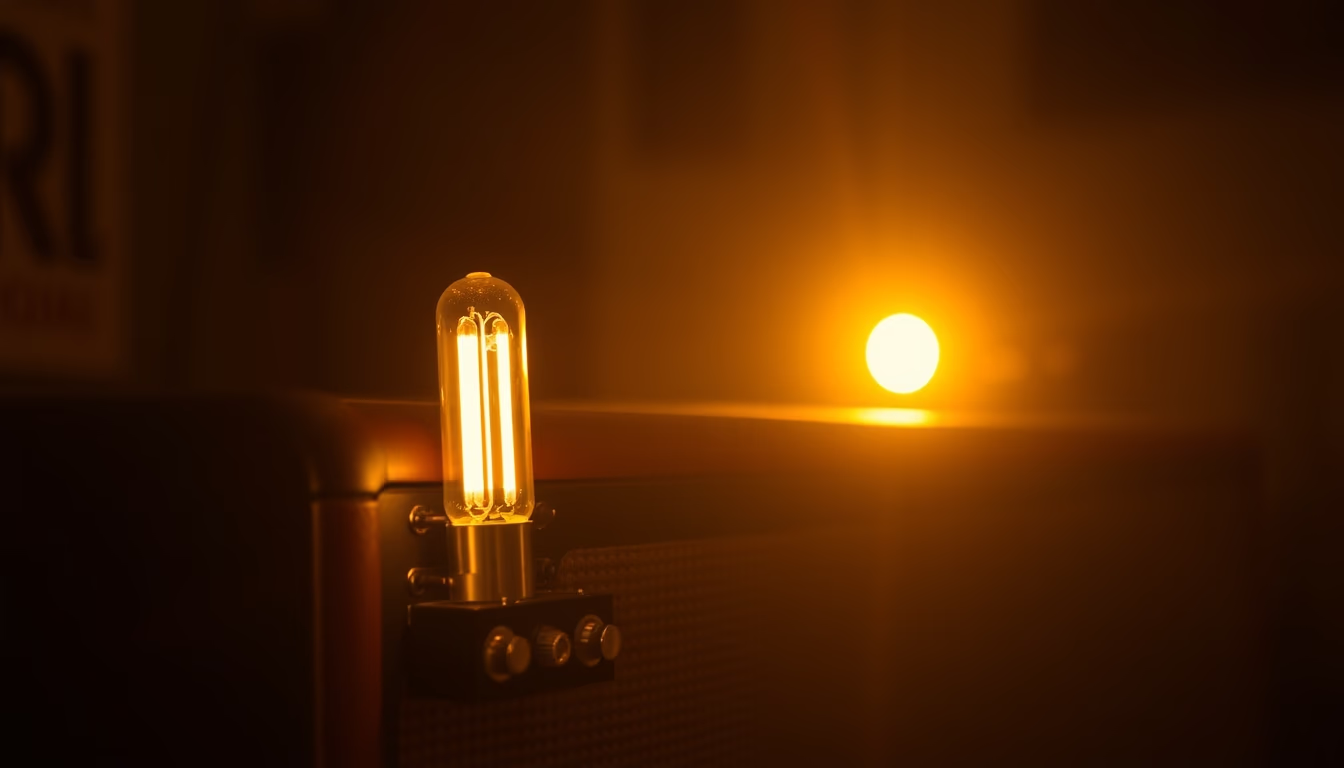
Tube amplifier glowing
1344×768 · AVIF · CC BY 4.0
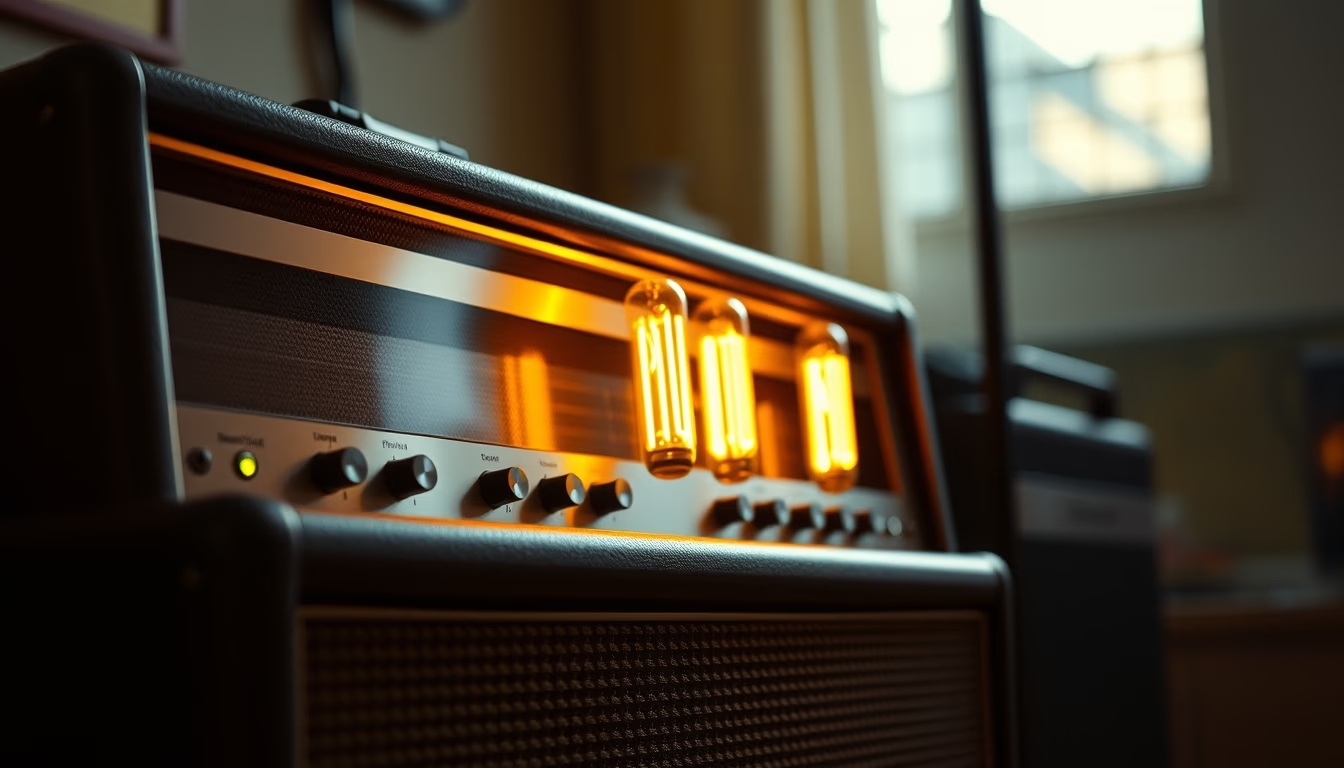
Vacuum tube amplifiers, prized for their warm sound and harmonic distortion, are icons of vintage audio and audiophile culture.
About this subject
Vacuum tube amplifiers use thermionic valves to boost electrical signals, a technology rooted in early 20th-century electronics. They dominated audio until transistors took over in the 1960s, yet tube amps never vanished. Guitarists (e.g., Fender, Marshall) and audiophiles still covet them for their warm, harmonically rich distortion. The iconic glow of the glass tubes has become synonymous with vintage hi-fi and rock music.
Inside a tube amplifier, a heated filament releases electrons that travel through a vacuum to a positively charged plate, controlled by grids. This creates even-order harmonics, perceived as musical and smooth. Classic models like the Marantz 8B (1958) or the Vox AC30 (1959) are revered. The aesthetic appeal is undeniable: the orange glow and visible components make tube amps a favorite subject for documentary photography, symbolizing craftsmanship and analog purity.
Modern production continues, with brands like Audio Research and Primaluna offering contemporary designs. The DIY community thrives, with hobbyists building kits from companies like Elekit or Bottlehead. Tube rolling, swapping tubes to change sound, is a common tweak. In Brazil, vintage brands such as Polyvox and CCE are sought after, alongside imported classics. Tube amplifiers also appear in cinema and music videos as props representing authenticity.
A surprising fact: vacuum tubes were crucial for early computers and radar. Despite low efficiency (high power consumption, heat output), the sonic signature remains unmatched for many. Documentary photography often highlights the incandescent glow, emphasizing the contrast between modern digital clarity and analog warmth. The enduring popularity of tube amplifiers shows that for audio, sometimes older can be better.
Frequently Asked Questions
Why are tube amplifiers considered better than solid-state ones?
They aren't universally 'better', but they produce even-order harmonic distortion (2nd, 4th) that sounds more musical to human ears. Many audiophiles and musicians prefer the warm sound and gradual saturation of tubes, especially for electric guitars and high-fidelity audio.
Do tube amplifiers consume a lot of power?
Yes, they are less efficient than solid-state amplifiers. They generate more heat and have higher electricity consumption because the filaments must be constantly heated. That's why they are mostly used in niche equipment rather than portable devices.
Do vacuum tubes need to be replaced periodically?
Yes, tubes have a limited lifespan (roughly 1,000 to 10,000 hours depending on type). Over time they lose emission or introduce noise. Replacement is relatively simple and allows 'tube rolling' to adjust the sound timbre.
Direct URL
https://pub-c7d6a6ea828543ac903a74a341ccb2e1.r2.dev/imagens/tube-amplifier-glowing-documentary-photography-fresh17.avifHow to credit
Include a visible link back to UtilizAí. Copy one of the snippets below:
<a href="https://xn--utiliza-eza.com/en/midia/imagens/tube-amplifier-glowing-documentary-photography-fresh17">Tube amplifier glowing</a> by <a href="https://xn--utiliza-eza.com">UtilizAí</a>, licensed under <a href="https://creativecommons.org/licenses/by/4.0/">CC BY 4.0</a>.
[Tube amplifier glowing](https://xn--utiliza-eza.com/en/midia/imagens/tube-amplifier-glowing-documentary-photography-fresh17) by [UtilizAí](https://xn--utiliza-eza.com), CC BY 4.0
License: CC-BY-4.0