Tokyo neon street at night
1344×768 · AVIF · CC BY 4.0
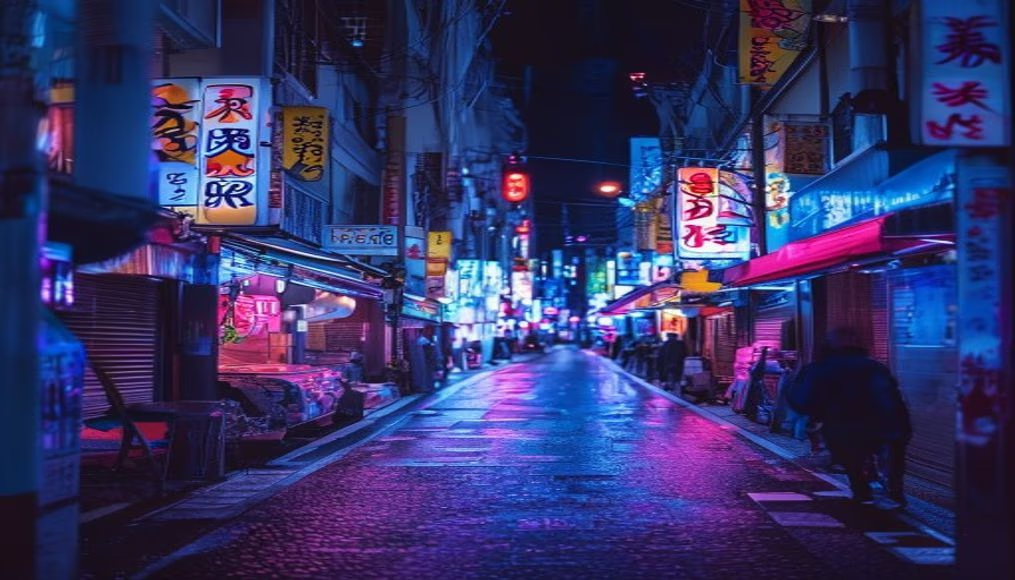
Tokyo's neon-lit streets blend tradition and technology in a nighttime spectacle unique in the world.
About this subject
Tokyo is world-famous for its urban landscapes packed with neon signs, especially in districts like Shinjuku, Shibuya, and Ginza. This profusion of colorful lights gained momentum after World War II, during Japan's rapid economic growth. Companies competed for attention using increasingly elaborate illuminated advertisements, turning the city into a laboratory of visual design and electrical innovation.
Neon signs in Tokyo are not just advertising; they are part of the city's cultural identity. In neighborhoods like Kabukicho in Shinjuku, the lights create a vibrant atmosphere that attracts tourists from around the world. The technology behind these signs has evolved: while traditional neon (inert gas in glass tubes) is still used, many have been replaced by LEDs, which are more efficient and flexible. Even so, the characteristic look of neon remains iconic.
Interestingly, despite its fame, Tokyo is not the city with the most neon in Japan, Osaka also has a strong tradition, especially in the Dotonbori district. Additionally, light pollution has sparked debates about sustainability, and some local governments have imposed rules to turn off signs after midnight. Nonetheless, walking through Tokyo at night is an intense sensory experience, contrasting modern brightness with historic temples that remain suddenly dark.
Neon signs have also influenced art and cinema, appearing in films like 'Blade Runner' and 'Lost in Translation'. The 'cyberpunk' aesthetic of illuminated streets reflects the fusion of tradition and futurism typical of Japan. For visitors, the best spots to appreciate this lighting are the streets around Shinjuku Station, Shibuya Crossing, and Akihabara's commercial street, each with its own unique style.
Frequently Asked Questions
Why does Tokyo have so many neon lights?
The abundance of neon in Tokyo dates back to the post-war era, when companies used illuminated signs to stand out during Japan's economic miracle. The culture of visual competition and lenient regulations allowed signs to proliferate, especially in entertainment districts like Shinjuku and Shibuya.
Are neon signs still popular in Japan?
Yes, many are still used, though LED has become dominant due to cost and versatility. Traditional neon is still appreciated for its glow and vintage aesthetic, especially in historic establishments and nightlife areas.
Which are the best neighborhoods to see neon in Tokyo?
The main ones are Shinjuku (especially Kabukicho), Shibuya (around the crossing), Ginza (main streets), Akihabara (electronics and otaku culture), and Roppongi (nightlife). Each offers a different style, from extravagant to sophisticated.
Direct URL
https://pub-c7d6a6ea828543ac903a74a341ccb2e1.r2.dev/imagens/tokyo-neon-street-at-night-street-photography-v11.avifHow to credit
Include a visible link back to UtilizAí. Copy one of the snippets below:
<a href="https://xn--utiliza-eza.com/en/midia/imagens/tokyo-neon-street-at-night-street-photography-v11">Tokyo neon street at night</a> by <a href="https://xn--utiliza-eza.com">UtilizAí</a>, licensed under <a href="https://creativecommons.org/licenses/by/4.0/">CC BY 4.0</a>.
[Tokyo neon street at night](https://xn--utiliza-eza.com/en/midia/imagens/tokyo-neon-street-at-night-street-photography-v11) by [UtilizAí](https://xn--utiliza-eza.com), CC BY 4.0
License: CC-BY-4.0