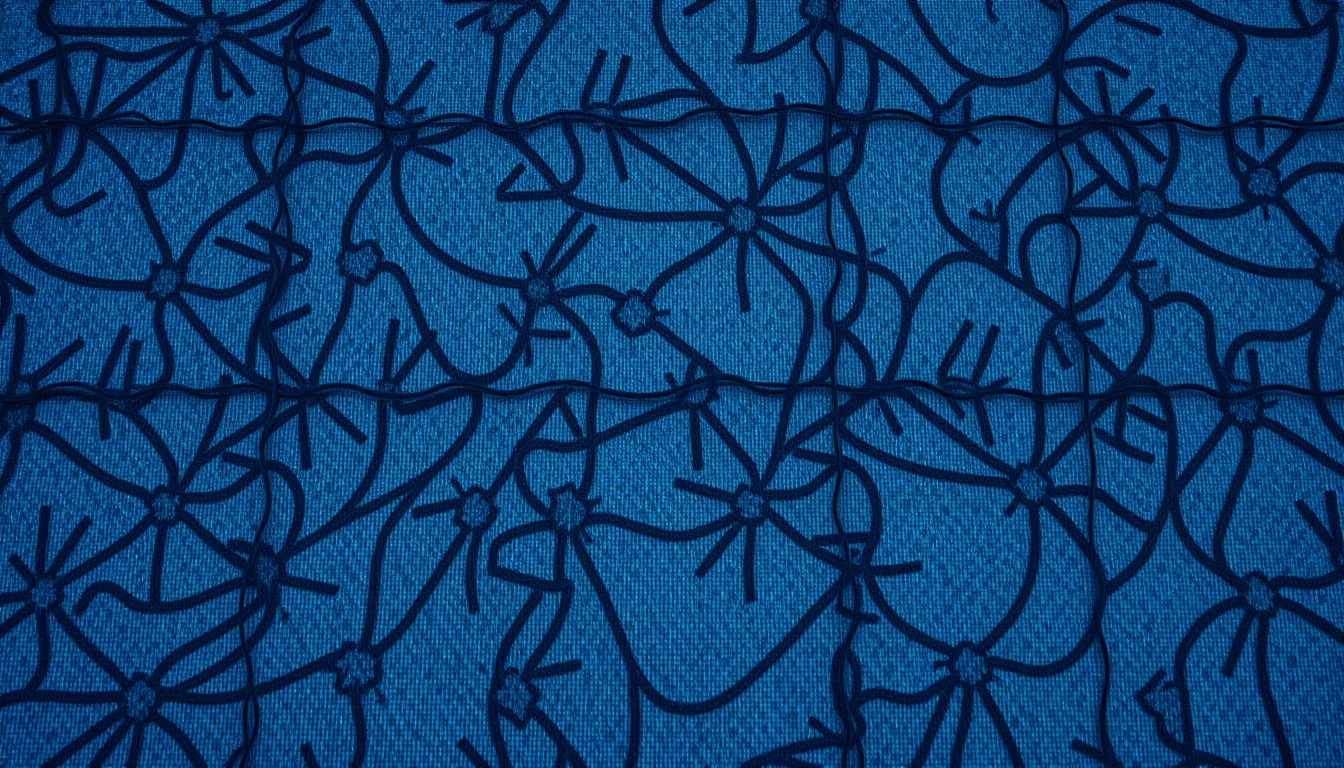
Tapestry medieval flemish
1344×768 · AVIF · CC BY 4.0

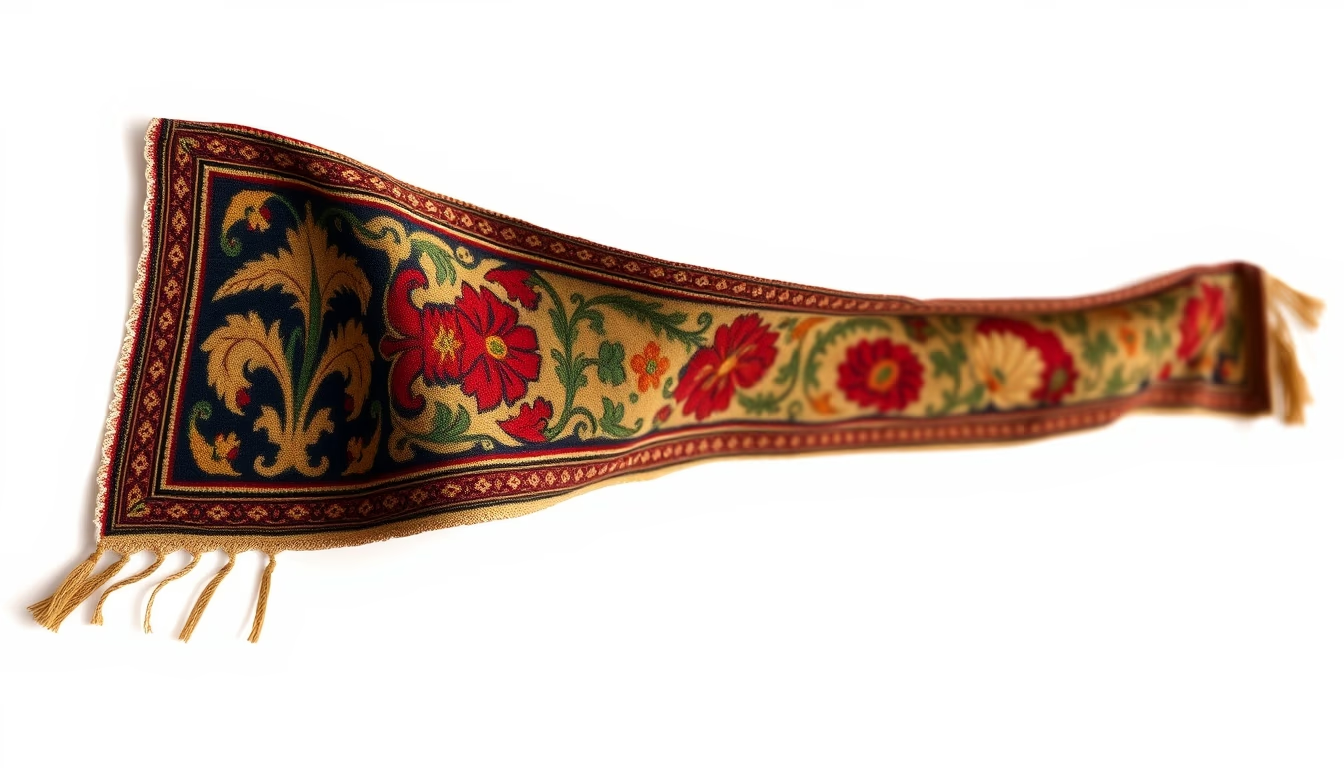
Medieval Flemish tapestry represents one of the pinnacles of European textile art, combining complex technique with historical and mythological narratives.
About this subject
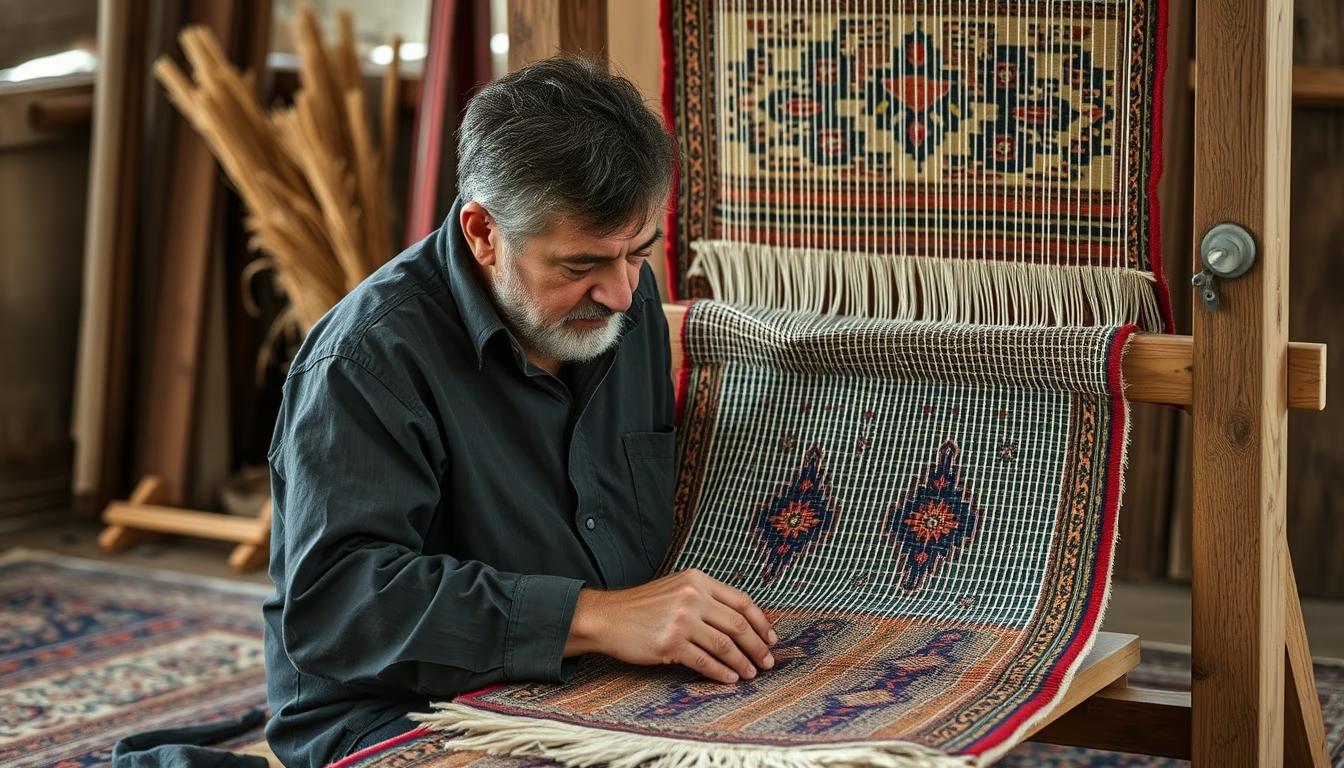
Medieval Flemish tapestries, produced between the 14th and 16th centuries, are renowned for their exceptional technical quality and visual storytelling. The most important production centers were located in cities such as Brussels, Tournai, Arras, and Ghent, which became economic hubs thanks to the trade of fine wool and the skill of their weavers. The creation process involved designers (cartoonists) who prepared the models, often based on paintings by renowned artists like the Early Netherlandish painters. High-warp looms allowed faithful reproduction of complex details using wool yarns dyed with natural colors, silk, and in more luxurious pieces, gold and silver threads.
Themes ranged from religious scenes (such as the 'Apocalypse of Angers' series) to depictions of historical battles, hunts, and mythological allegories. These tapestries were not merely decorative: they served as political propaganda, symbols of wealth and power, and even as thermal insulation in castles and churches. The tapestry 'The Lady and the Unicorn', although French, illustrates the sophistication of the Flemish style that influenced all of Europe. Commissions came from kings, nobles, and ecclesiastical institutions, and the pieces were often transported in processions as part of dowries or diplomatic gifts.
Production declined from the 17th century due to economic and taste changes, but many pieces survive in museum collections such as the Louvre, the Metropolitan Museum of Art, and the National Museum of Ancient Art in Lisbon. Medieval Flemish tapestry is today studied as a testament to the technical skill and artistic creativity of a golden age of European weaving.
Frequently Asked Questions
What distinguished Flemish tapestries from others?
The combination of high-quality wool, advanced high-warp loom techniques, and designs by renowned artists, along with international trade that spread their prestige.
What were the most common themes in medieval Flemish tapestries?
Religious scenes, historical battles, hunts, classical mythology, and courtly life allegories, often carrying political or moral messages.
Where can I see medieval Flemish tapestries today?
In museums such as the Louvre (Paris), the Metropolitan Museum of Art (New York), the National Museum of Ancient Art (Lisbon), and the Musée de Cluny (Paris).
Direct URL
https://pub-c7d6a6ea828543ac903a74a341ccb2e1.r2.dev/imagens/tapestry-medieval-flemish-cinematic-wide-shot-fresh11.avifHow to credit
Include a visible link back to UtilizAí. Copy one of the snippets below:
<a href="https://xn--utiliza-eza.com/en/midia/imagens/tapestry-medieval-flemish-cinematic-wide-shot-fresh11">Tapestry medieval flemish</a> by <a href="https://xn--utiliza-eza.com">UtilizAí</a>, licensed under <a href="https://creativecommons.org/licenses/by/4.0/">CC BY 4.0</a>.
[Tapestry medieval flemish](https://xn--utiliza-eza.com/en/midia/imagens/tapestry-medieval-flemish-cinematic-wide-shot-fresh11) by [UtilizAí](https://xn--utiliza-eza.com), CC BY 4.0
License: CC-BY-4.0