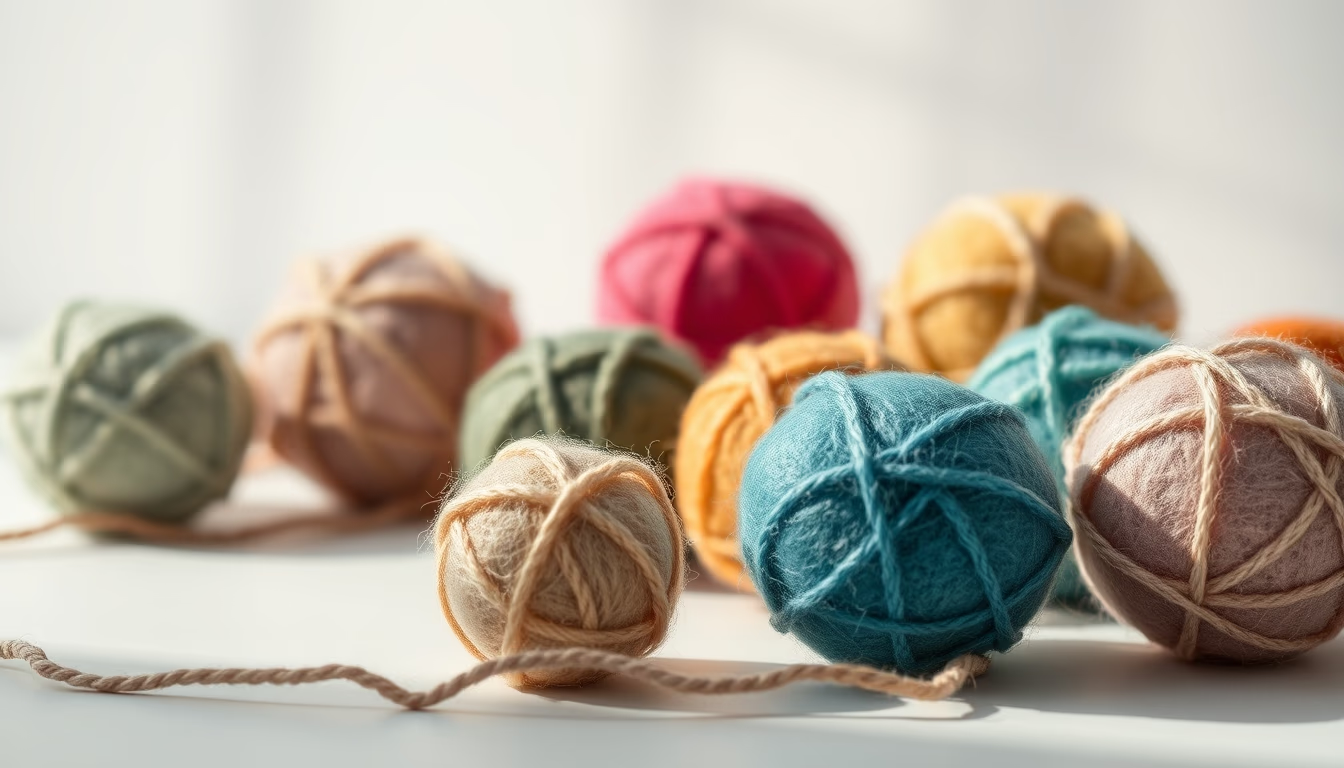
Spinning wheel antique
1344×768 · AVIF · CC BY 4.0

Antique spinning wheel, a tool that revolutionized handcrafted and domestic textile production, a symbol of tradition and manual skill.
About this subject
The spinning wheel is one of the most iconic tools in textile history, used for centuries to transform fibers such as wool, cotton, and flax into continuous threads. Unlike the hand spindle, the spinning wheel mechanizes the twisting and winding process, enabling greater speed and consistency. Originating in the 13th century in India or China, the technology spread through Europe and later to the Americas, adapting to different cultures and materials. In Brazil, the spinning wheel was essential for domestic cloth production until the rise of industrial machinery, especially in rural communities and among traditional artisans. Common models include the Saxony wheel, with its elongated frame and treadle, and the Charkha wheel, associated with Gandhi's Indian independence movement. Each antique spinning wheel carries the marks of its builder, with regional variations in wood types, number of spokes, and bobbin support design. The wheel not only sped up textile production but also influenced household economies, allowing families to generate extra income by selling yarn. Today, antique spinning wheels are prized as collectibles and still used by contemporary spinners who preserve ancestral techniques.
Frequently Asked Questions
How does an antique spinning wheel work?
The spinning wheel converts the motion of a treadle into continuous rotation of a large wheel, which drives a spindle and bobbin. Fiber is fed by hand and twisted by the spindle while being wound onto the bobbin, forming yarn.
What is the difference between a spinning wheel and a hand spindle?
A hand spindle is a simple stick twisted by hand, requiring more effort and time. A spinning wheel automates twisting via treadles and pulleys, allowing faster and more uniform production.
Why is the spinning wheel important in textile history?
It was a technological leap that mechanized spinning, drastically reducing yarn and cloth production time. It was a precursor to textile industrialization and preserved handcraft traditions in many cultures.
Direct URL
https://pub-c7d6a6ea828543ac903a74a341ccb2e1.r2.dev/imagens/spinning-wheel-antique-cinematic-wide-shot-fresh15.avifHow to credit
Include a visible link back to UtilizAí. Copy one of the snippets below:
<a href="https://xn--utiliza-eza.com/en/midia/imagens/spinning-wheel-antique-cinematic-wide-shot-fresh15">Spinning wheel antique</a> by <a href="https://xn--utiliza-eza.com">UtilizAí</a>, licensed under <a href="https://creativecommons.org/licenses/by/4.0/">CC BY 4.0</a>.
[Spinning wheel antique](https://xn--utiliza-eza.com/en/midia/imagens/spinning-wheel-antique-cinematic-wide-shot-fresh15) by [UtilizAí](https://xn--utiliza-eza.com), CC BY 4.0
License: CC-BY-4.0