Rolleiflex tlr vintage
1344×768 · AVIF · CC BY 4.0

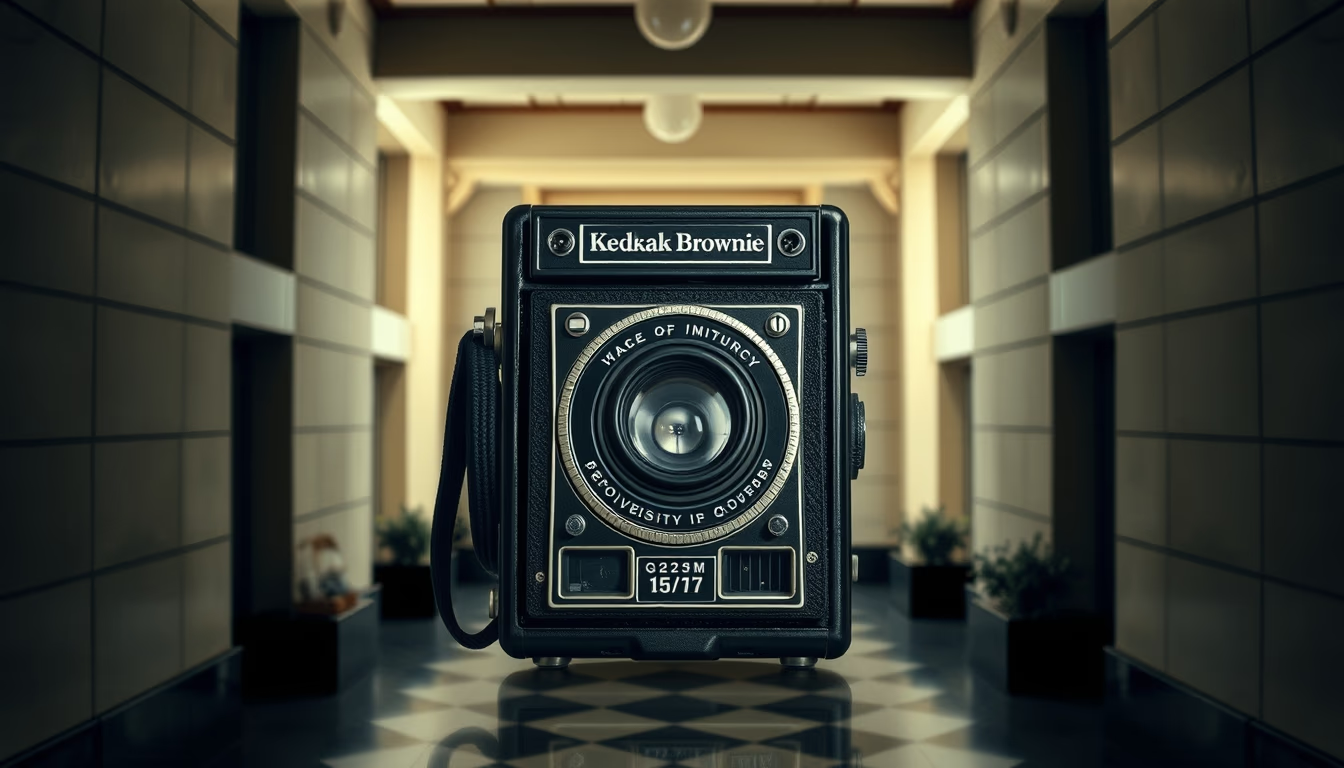
The Rolleiflex TLR is a classic medium format camera, iconic in photojournalism and street photography from the 1950s and 1960s.
About this subject
The Rolleiflex is a twin-lens reflex (TLR) camera manufactured by the German company Franke & Heidecke, later Rollei-Werke, starting in 1929. Its innovative design uses two lenses: one for capturing the image and another for the viewfinder, allowing the photographer to compose at waist level. The camera was acclaimed for its optical quality, especially with Carl Zeiss and Schneider lenses, and its robustness.
During the 1950s and 1960s, the Rolleiflex became the preferred tool of photojournalists such as Robert Capa and Henri Cartier-Bresson, although they also used Leicas. Its square 6x6 cm format produced large, high-definition negatives. The camera was widely used in portraits, weddings, and street photography, becoming a symbol of professionalism.
Important variants include the Rolleiflex Standard, Rolleiflex Automat, and Rolleiflex 2.8 FX. The TL model, introduced in the 1960s, had a built-in light meter. Production ceased in the mid-1990s, but the cameras are still prized by collectors and enthusiasts. Its ergonomics and precise mechanics make it a lasting example of German engineering.
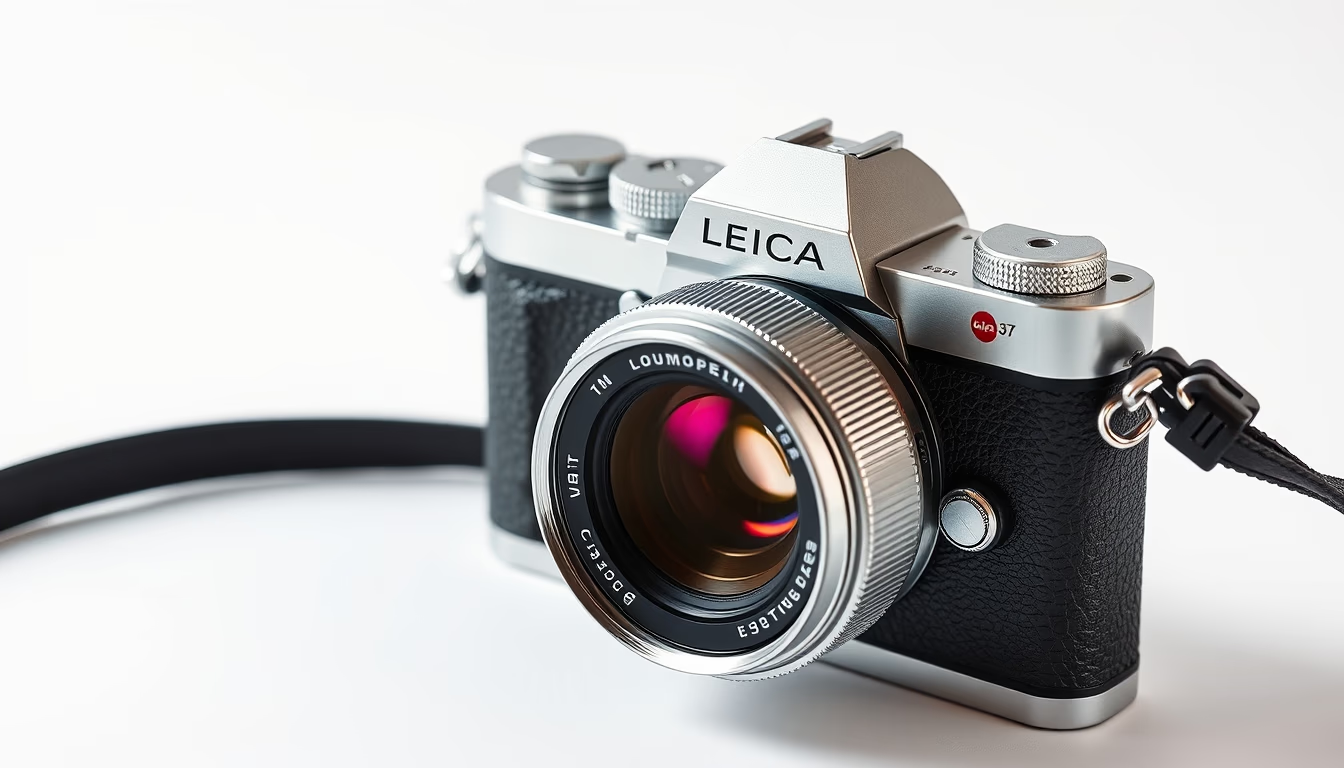
A curiosity: the TLR system allows the photographer to see the scene in real time without the shutter blackout common in SLRs, giving the Rolleiflex an advantage in fast-moving situations. Today, it is appreciated in analog photography circles and inspires modern designs, such as the Lomography LC-A+, which honors its square format.
Frequently Asked Questions
What is the difference between the Rolleiflex and the Rolleicord?
The Rolleicord was a more affordable version, made by the same company, with lower-quality lenses (such as Carl Zeiss Triotar) and fewer automatic adjustments. The Rolleiflex had superior lenses (Planar, Xenotar) and greater mechanical precision.
Is the Rolleiflex still used today?
Yes, many analog photographers and enthusiasts still use it, especially due to the quality of the medium format negative. Parts and repairs are still possible, but prices have risen with collector demand.
How does focusing work on a Rolleiflex TLR?
Focus is adjusted manually by turning a knob on the side of the camera, which moves both lenses simultaneously. The viewfinder shows a laterally inverted image, requiring practice to frame correctly.
Direct URL
https://pub-c7d6a6ea828543ac903a74a341ccb2e1.r2.dev/imagens/rolleiflex-tlr-vintage-cinematic-wide-shot-fresh12.avifHow to credit
Include a visible link back to UtilizAí. Copy one of the snippets below:
<a href="https://xn--utiliza-eza.com/en/midia/imagens/rolleiflex-tlr-vintage-cinematic-wide-shot-fresh12">Rolleiflex tlr vintage</a> by <a href="https://xn--utiliza-eza.com">UtilizAí</a>, licensed under <a href="https://creativecommons.org/licenses/by/4.0/">CC BY 4.0</a>.
[Rolleiflex tlr vintage](https://xn--utiliza-eza.com/en/midia/imagens/rolleiflex-tlr-vintage-cinematic-wide-shot-fresh12) by [UtilizAí](https://xn--utiliza-eza.com), CC BY 4.0
License: CC-BY-4.0