Rare stamp magnifying
1344×768 · AVIF · CC BY 4.0
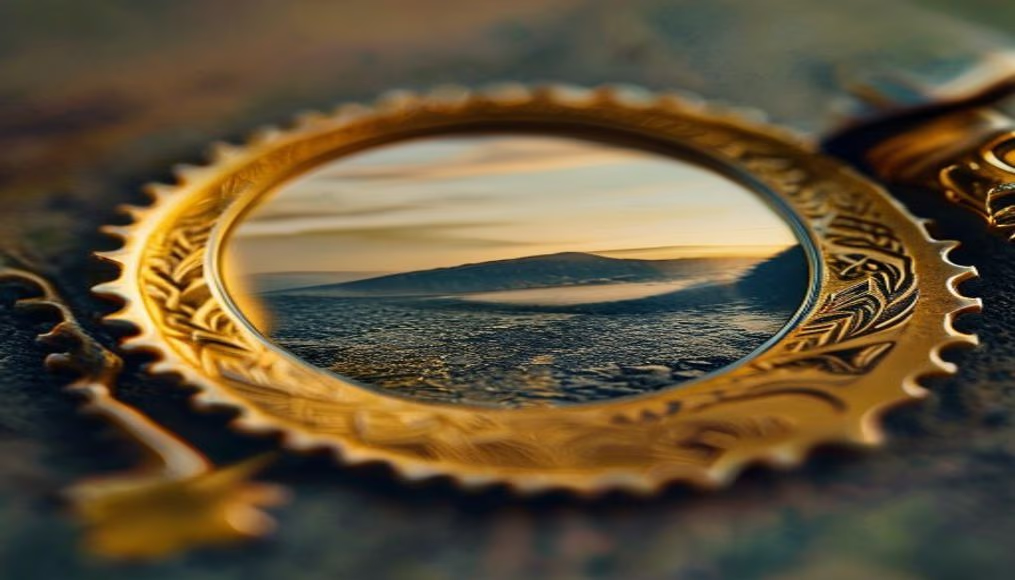
A rare stamp examined with a magnifying glass reveals details of a valuable philatelic piece, combining collecting and travel.
About this subject
Rare stamps are those with limited print runs, printing errors, or historical significance that make them coveted by collectors worldwide. Famous examples include the British Guiana 1c magenta and the Swedish Treskilling Yellow, which have reached million-dollar values at auctions. These tiny pieces of paper tell stories of bygone eras, extinct countries, or landmark events, acting as miniature historical documents.
Evaluating a rare stamp requires meticulous attention, and a magnifying glass is an indispensable tool for philatelists. With it, one can check conservation status, print sharpness, perforation teeth, and possible watermarks or flaws that increase value. Stamps with perfect centering, original color, and no creases or stains are most desired, and even a small defect can drastically reduce their price.
Stamp collecting, or philately, is closely tied to travel. Many collectors acquire stamps as souvenirs from places they visit, either at local post offices, antique fairs, or specialized dealers. Stamps from remote countries or with regional themes, such as flora, fauna, or monuments, become unique records of explored destinations, connecting the joy of travel with the passion for preserving history on paper.
For those wanting to start a collection, the advice is to focus on personal interest themes and learn to use the magnifying glass properly. Additionally, consulting specialized catalogs and joining philatelic associations helps identify rare pieces and avoid forgeries. With every stamp examined, a new discovery awaits, turning a simple hobby into a window to the world.
Frequently Asked Questions
What makes a stamp rare?
Stamps become rare due to limited print runs, printing errors, age, or historical significance. The combination of these factors, along with condition, determines their value in the philatelic market.
How can you tell if a stamp is valuable?
Check its authenticity, rarity, and condition. Consult specialized catalogs like Scott or Michel, and get an expert opinion or use a magnifying glass to examine details such as perforation and watermark.
Why use a magnifying glass to examine stamps?
A magnifying glass enlarges tiny details like perforation teeth, colors, and possible flaws. This allows proper assessment of condition and identification of features that increase or decrease the stamp's value.
Direct URL
https://pub-c7d6a6ea828543ac903a74a341ccb2e1.r2.dev/imagens/rare-stamp-magnifying-travel-photography-p1.avifHow to credit
Include a visible link back to UtilizAí. Copy one of the snippets below:
<a href="https://xn--utiliza-eza.com/en/midia/imagens/rare-stamp-magnifying-travel-photography-p1">Rare stamp magnifying</a> by <a href="https://xn--utiliza-eza.com">UtilizAí</a>, licensed under <a href="https://creativecommons.org/licenses/by/4.0/">CC BY 4.0</a>.
[Rare stamp magnifying](https://xn--utiliza-eza.com/en/midia/imagens/rare-stamp-magnifying-travel-photography-p1) by [UtilizAí](https://xn--utiliza-eza.com), CC BY 4.0
License: CC-BY-4.0