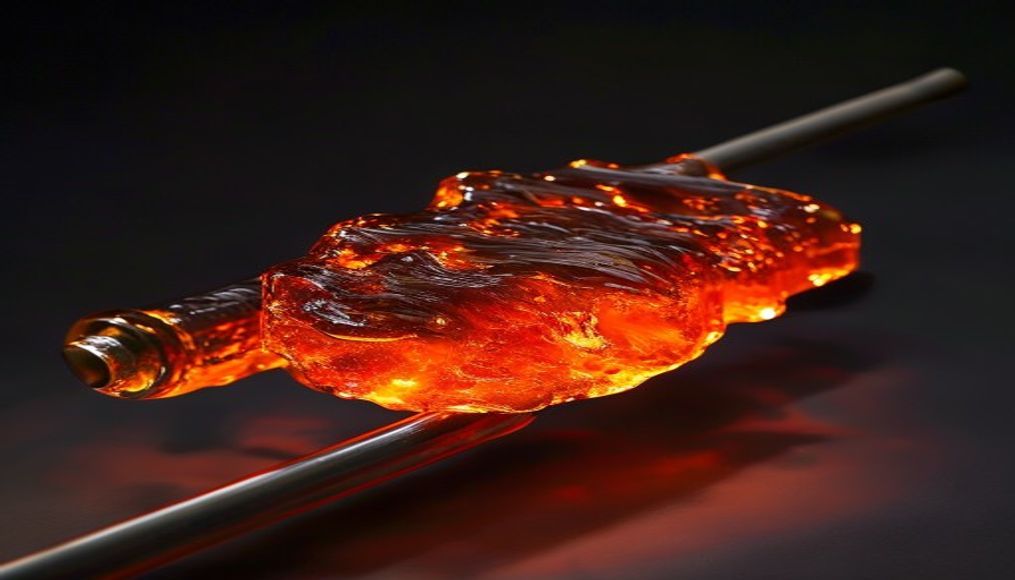
Molten glass on rod
1344×768 · AVIF · CC BY 4.0
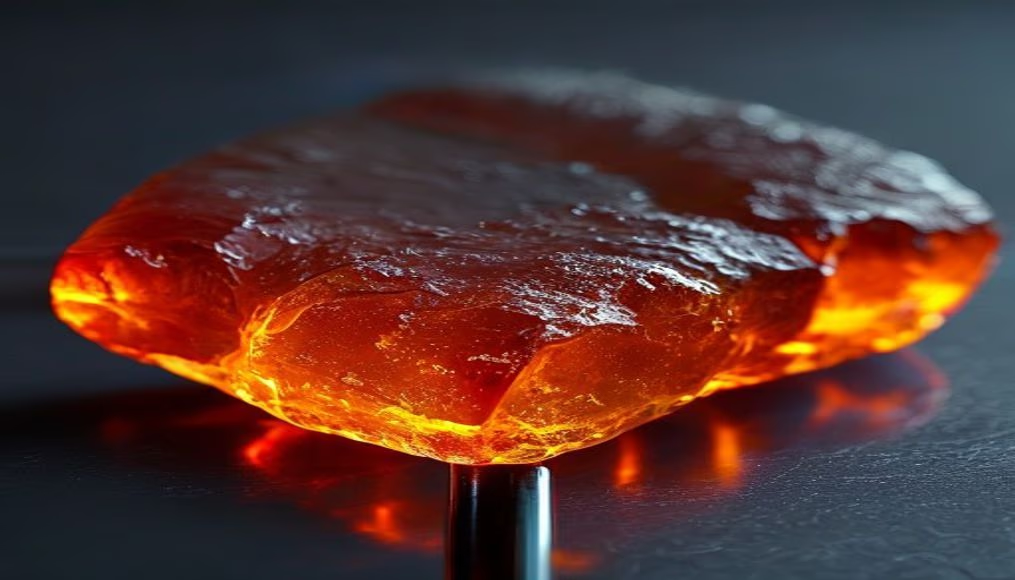
Molten glass manipulated on a metal rod during the artisanal glassblowing process, an ancient technique that transforms sand into art.
About this subject
Glassblowing is one of the oldest manual glassworking techniques, originating around the 1st century BC in Syria. The process begins by gathering molten glass at approximately 1100°C onto the tip of a hollow metal rod, usually made of stainless steel. The artisan blows air through the tube, creating a bubble that is shaped with wooden and metal tools, as well as controlled rotation and gravity. The color of molten glass varies according to added metal oxides: cobalt for blue, chromium for green, gold for ruby. The technique requires precision and experience because the glass cools quickly, losing malleability. After the basic shape, the piece is reheated in an annealing oven to relieve internal stresses, a process called annealing. Blown glass is used for decorative objects, vases, sculptures, and even architectural components. In Brazil, glassblowing is practiced in studios in the interior of São Paulo, such as in Embu das Artes, and in historic mining cities like Ouro Preto. The technique also inspired artistic movements like Studio Glass, which values individual artistic expression. Photography of molten glass on the rod captures a moment of transition between raw material and finished work, highlighting the luminosity and viscosity of glass at high temperatures.
Frequently Asked Questions
What is the temperature of molten glass in glassblowing?
The glass is heated to about 1100°C in the furnace. While working on the rod, the temperature drops gradually, requiring frequent reheating.
What materials are used to color blown glass?
Metal oxides are added to the silica mixture: cobalt (blue), chromium (green), manganese (purple), gold (ruby), and copper (turquoise).
Can blown glass be used in architecture?
Yes, pieces such as stained glass, panels, and decorative elements are produced by blowing. The technique allows organic and translucent forms that enhance natural lighting.
Direct URL
https://pub-c7d6a6ea828543ac903a74a341ccb2e1.r2.dev/imagens/molten-glass-on-rod-architectural-photography-p1.avifHow to credit
Include a visible link back to UtilizAí. Copy one of the snippets below:
<a href="https://xn--utiliza-eza.com/en/midia/imagens/molten-glass-on-rod-architectural-photography-p1">Molten glass on rod</a> by <a href="https://xn--utiliza-eza.com">UtilizAí</a>, licensed under <a href="https://creativecommons.org/licenses/by/4.0/">CC BY 4.0</a>.
[Molten glass on rod](https://xn--utiliza-eza.com/en/midia/imagens/molten-glass-on-rod-architectural-photography-p1) by [UtilizAí](https://xn--utiliza-eza.com), CC BY 4.0
License: CC-BY-4.0