Koto japanese strings
1344×768 · AVIF · CC BY 4.0
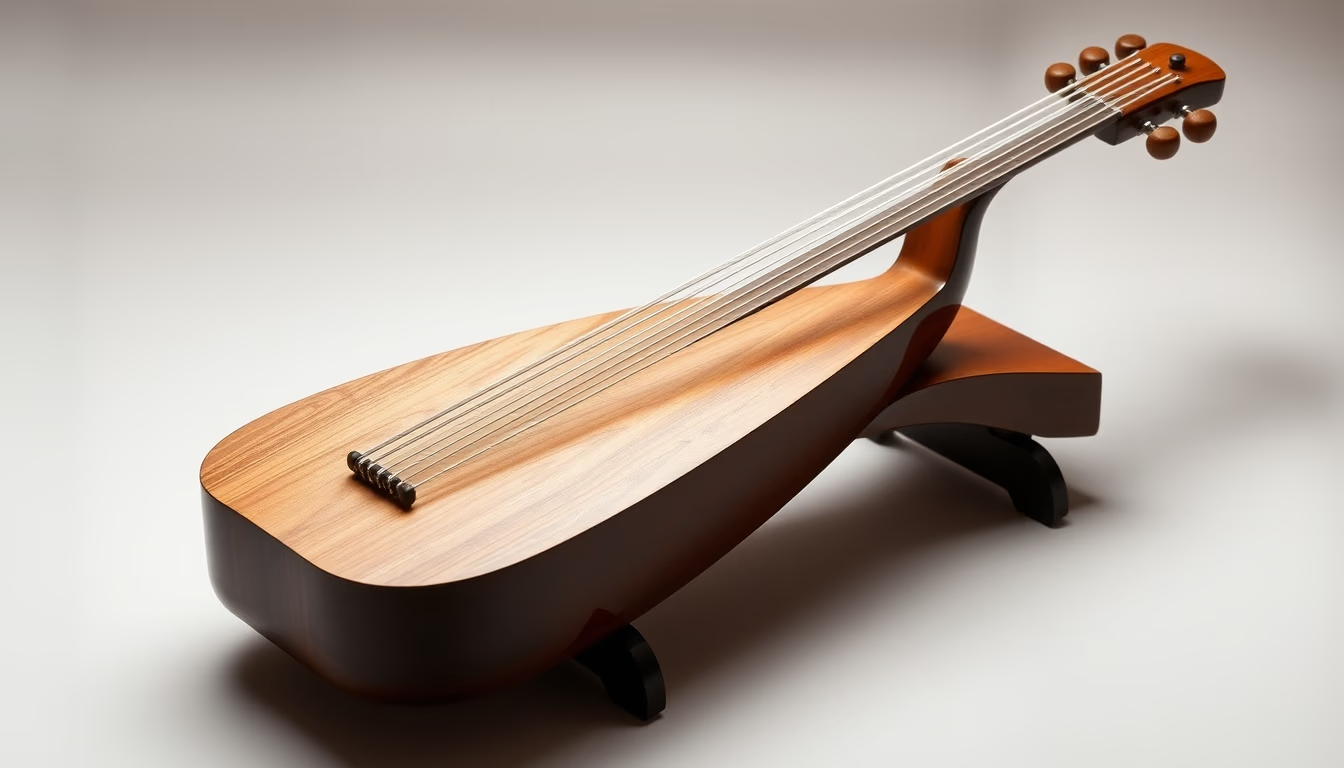
The koto is a traditional Japanese plucked string instrument with 13 strings and a delicate sound, used in classical and contemporary music.
About this subject
The koto is a plucked string instrument originating from Japan, commonly associated with Japanese classical music. It typically has 13 strings stretched over a long, curved body made of paulownia wood, which acts as a resonator. The strings are tuned by movable bridges, allowing scale variations. The instrument is played with fingerpicks made of ivory or plastic on the thumb, index, and middle fingers of the right hand, while the left hand presses the strings to create vibrato and microtonal effects.
Historically, the koto was introduced to Japan from China during the Nara period (8th century), evolving from similar instruments like the Chinese guzheng and Korean gayageum. Initially used in imperial court music (gagaku), the koto gained popularity among the nobility and later the general public. During the Edo period, schools such as Ikuta-ryu and Yamada-ryu emerged, developing distinct repertoires and styles.
In Japanese culture, the koto symbolizes elegance and refinement, often associated with seasonality and classical poetry. Works like "Rokudan" and "Chidori no Kyoku" are iconic in the traditional repertoire. Modern and contemporary composers have also explored the koto in experimental music and fusion with jazz, pop, and electronic music, keeping its relevance alive.
Besides the standard 13-string model, there are variations such as the 17-string koto (jūshichigen), used in modern orchestras. Mastering the instrument requires years of practice due to the complexity of left-hand techniques and precise bridge tuning. Annual festivals and live performances in Japan and abroad continue to celebrate the koto as a cultural treasure.
Frequently Asked Questions
What is the origin of the koto?
The koto was introduced to Japan from China during the Nara period (8th century). It evolved from instruments like the Chinese guzheng and Korean gayageum, adapting to Japanese musical aesthetics.
How many strings does a koto have?
The standard koto has 13 strings, but variations like the 17-string koto (jūshichigen) exist, used in modern orchestras to expand the sound range.
How is the koto played?
The player sits and uses fingerpicks on the thumb, index, and middle fingers of the right hand to pluck the strings. The left hand presses the strings on the opposite side of the bridges to alter pitch, creating vibrato, glissandos, and microtones.
Direct URL
https://pub-c7d6a6ea828543ac903a74a341ccb2e1.r2.dev/imagens/koto-japanese-strings-studio-still-life-p12.avifHow to credit
Include a visible link back to UtilizAí. Copy one of the snippets below:
<a href="https://xn--utiliza-eza.com/en/midia/imagens/koto-japanese-strings-studio-still-life-p12">Koto japanese strings</a> by <a href="https://xn--utiliza-eza.com">UtilizAí</a>, licensed under <a href="https://creativecommons.org/licenses/by/4.0/">CC BY 4.0</a>.
[Koto japanese strings](https://xn--utiliza-eza.com/en/midia/imagens/koto-japanese-strings-studio-still-life-p12) by [UtilizAí](https://xn--utiliza-eza.com), CC BY 4.0
License: CC-BY-4.0