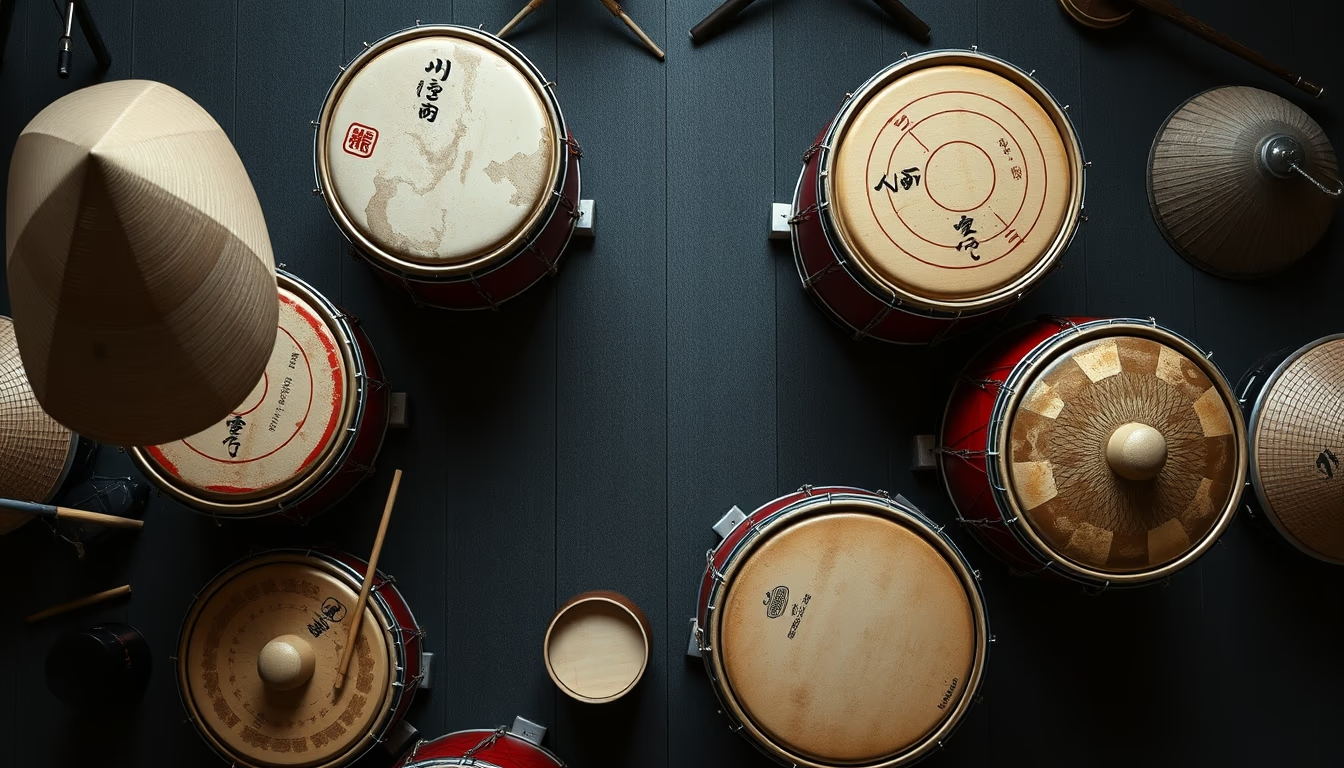
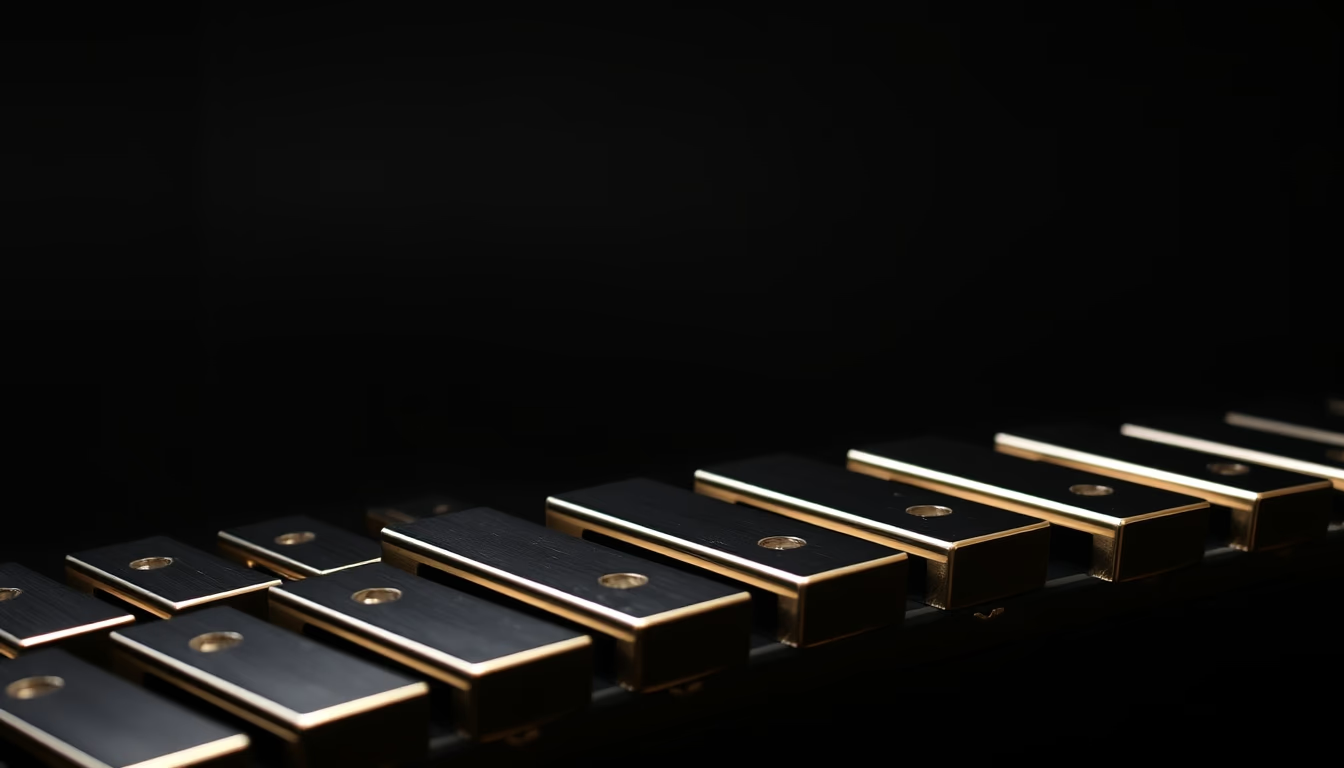
Koto japanese strings
1344×768 · AVIF · CC BY 4.0

The koto is a Japanese stringed instrument with 13 strings and a history spanning over 1,200 years.
About this subject
The koto, often called the "Japanese harp," is a plucked string instrument central to traditional Japanese music. Its elongated body and 13 strings stretched over movable bridges allow a wide range of tunings and expressive techniques. Originating in China as the guzheng, the koto was introduced to Japan during the Nara period (710, 794 AD) and quickly adapted to Japanese musical aesthetics, becoming a symbol of courtly refinement.
Frequently Asked Questions
How many strings does a traditional koto have?
The traditional koto has 13 strings, though modern variations exist with more strings, such as the 17-string koto (jūnangen).
What is the difference between koto and guzheng?
The Japanese koto and Chinese guzheng share origins but differ in size, curvature, string materials, and playing techniques. The koto is generally narrower and strings are tuned with movable bridges.
In what type of music is the koto used?
The koto is used in traditional Japanese classical music (e.g., solo koto pieces), chamber music with shamisen and shakuhachi, as well as contemporary compositions and fusions with jazz and pop.
Direct URL
https://pub-c7d6a6ea828543ac903a74a341ccb2e1.r2.dev/imagens/koto-japanese-strings-lo-fi-disposable-camera-p11.avifHow to credit
Include a visible link back to UtilizAí. Copy one of the snippets below:
<a href="https://xn--utiliza-eza.com/en/midia/imagens/koto-japanese-strings-lo-fi-disposable-camera-p11">Koto japanese strings</a> by <a href="https://xn--utiliza-eza.com">UtilizAí</a>, licensed under <a href="https://creativecommons.org/licenses/by/4.0/">CC BY 4.0</a>.
[Koto japanese strings](https://xn--utiliza-eza.com/en/midia/imagens/koto-japanese-strings-lo-fi-disposable-camera-p11) by [UtilizAí](https://xn--utiliza-eza.com), CC BY 4.0
License: CC-BY-4.0