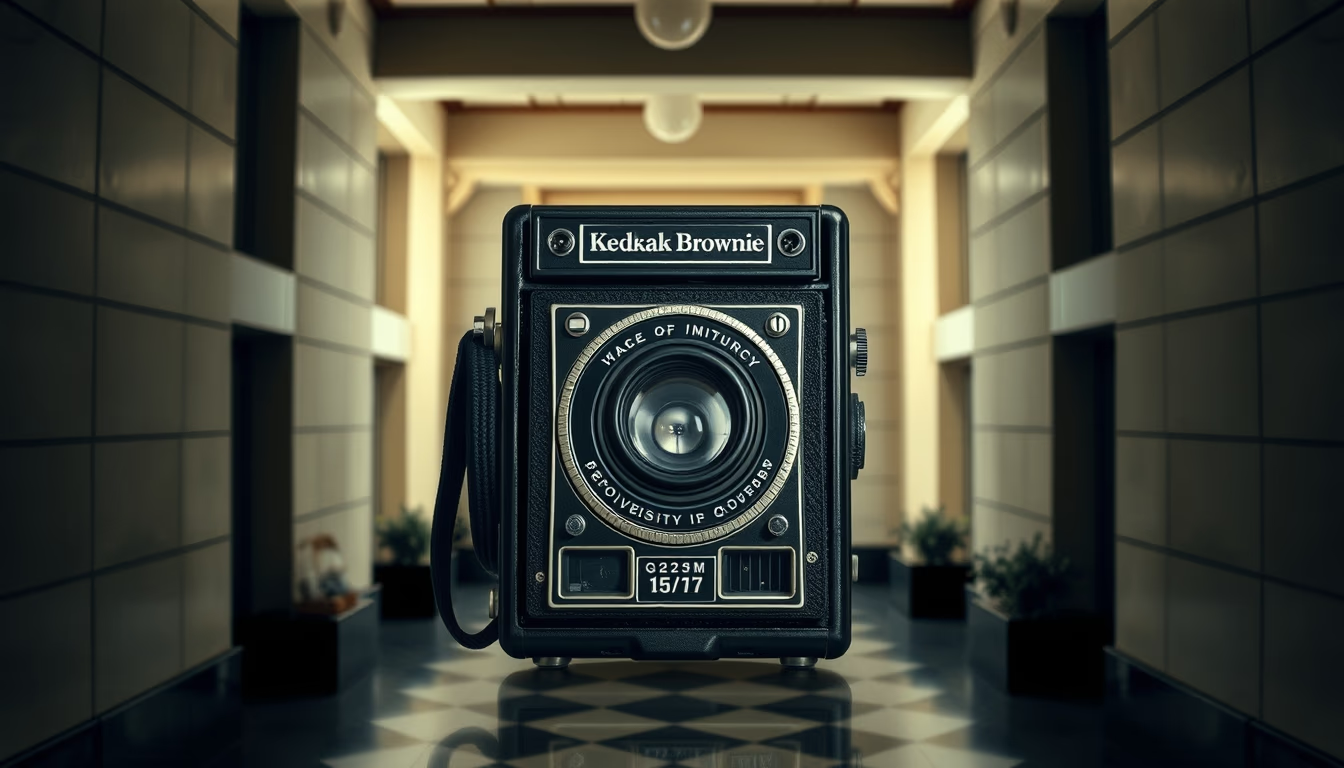
Kodak brownie box camera
1344×768 · AVIF · CC BY 4.0

The Kodak Brownie box camera was a milestone in the democratization of photography, leading the popularization of visual recording among amateurs in the 20th century.
About this subject
The Kodak Brownie box camera, launched in February 1900 by the Eastman Kodak Company, revolutionized access to photography due to its low price and simplicity. It cost only US$ 1, while other cameras at the time cost tens of dollars, and used 117 roll film, producing 6x9 cm negatives. Its design was a cardboard box covered with imitation leather, with a simple meniscus lens and a rotary shutter. It had no viewfinder; framing was done by two marks on the top. Loading the film, pulling the lever, and pressing the button were the only steps required.
The Brownie was conceived as a camera "for everyone," especially children and beginners. Its name was inspired by Palmer Cox's fairy tale characters, the Brownies, associated with fun and simplicity. Kodak's marketing campaign encouraged its use at parties, trips, and daily life recording, creating a new domestic visual culture. Millions of units were sold in the first decades, with production continuing into the 1960s in various versions.
The Brownie's impact goes beyond the consumer market. It solidified the business model based on film sales and processing, making photography a recurring habit. It also allowed ordinary people to document their lives, contributing to the visual history of communities and families. The Brownie played a role in amateur photojournalism and art, being used by photographers such as Jacques Henri Lartigue. Today, it is a collector's item and a symbol of the golden age of analog photography.
Frequently Asked Questions
How much did the original Kodak Brownie cost?
The original Kodak Brownie was launched for US$ 1 in 1900, an extremely affordable price at the time, which helped popularize photography among the masses.
How did the Kodak Brownie work?
It was a simple box camera: you loaded a 117 roll film, pulled a lever to advance the film, and pressed a button to shoot. It had no focus or exposure adjustments, designed for use on sunny days.
Why is the Kodak Brownie so important in the history of photography?
It democratized photography, making it accessible to amateurs and children. Its low cost and ease of use encouraged millions of people to record their daily lives, creating a domestic visual culture and boosting the film and processing industry.
Direct URL
https://pub-c7d6a6ea828543ac903a74a341ccb2e1.r2.dev/imagens/kodak-brownie-box-camera-studio-editorial-portrait-fresh9.avifHow to credit
Include a visible link back to UtilizAí. Copy one of the snippets below:
<a href="https://xn--utiliza-eza.com/en/midia/imagens/kodak-brownie-box-camera-studio-editorial-portrait-fresh9">Kodak brownie box camera</a> by <a href="https://xn--utiliza-eza.com">UtilizAí</a>, licensed under <a href="https://creativecommons.org/licenses/by/4.0/">CC BY 4.0</a>.
[Kodak brownie box camera](https://xn--utiliza-eza.com/en/midia/imagens/kodak-brownie-box-camera-studio-editorial-portrait-fresh9) by [UtilizAí](https://xn--utiliza-eza.com), CC BY 4.0
License: CC-BY-4.0