Kiln pottery firing
1344×768 · AVIF · CC BY 4.0
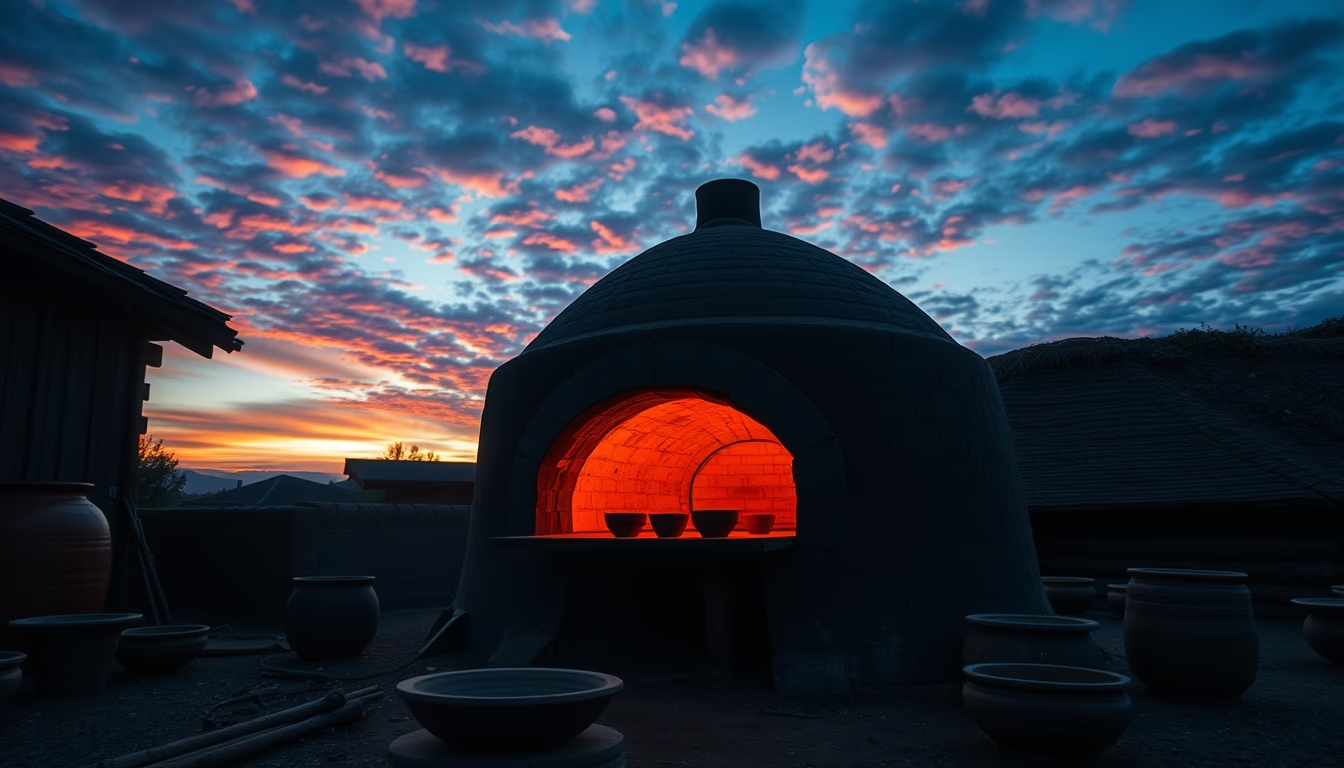
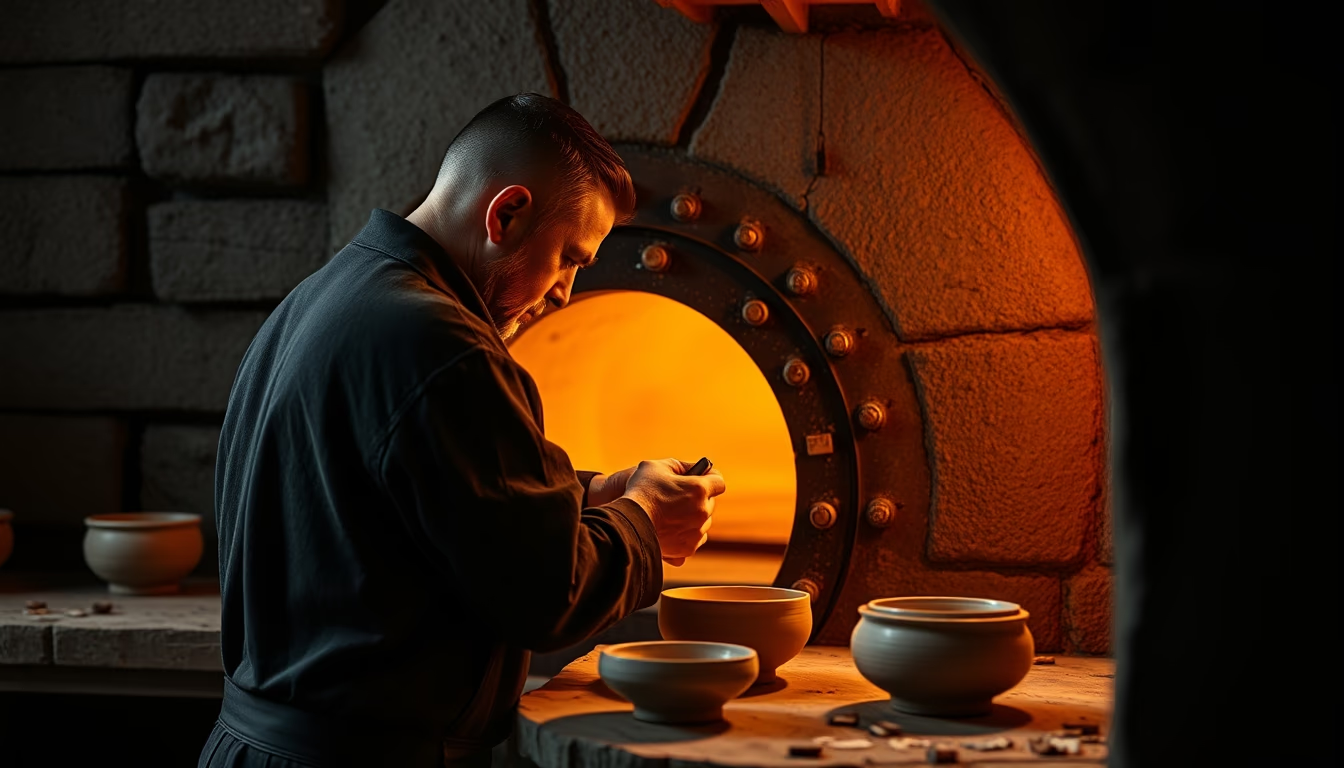
Kiln firing of pottery reaches temperatures over 1000°C, transforming clay into vitrified and durable pieces.
About this subject
Kiln firing is the final and crucial step in pottery production. In this process, dried and shaped clay is subjected to high temperatures, typically between 900°C and 1300°C, depending on the clay type and desired effect. Intense heat triggers chemical reactions that remove chemically bound water, fuse particles, and create a glassy structure, giving the piece strength and impermeability.
There are various kiln types: traditional wood-fired kilns, used for millennia and still employed by artisan potters; electric kilns with digital controllers, popular in modern studios; and gas kilns, which allow reducing or oxidizing atmospheres. Each method affects glaze color and texture. Firing can be divided into bisque firing (first firing at about 900°C) and glaze firing (second firing at higher temperature).
Historically, the earliest pottery kilns appeared over 10,000 years ago in the Middle East and China. Innovation in kiln technology enabled the development of porcelain in China during the Tang dynasty (618, 907 AD), requiring temperatures above 1280°C. In Brazil, indigenous pottery was traditionally fired in open bonfires, a technique still practiced by some communities.
Notably, the word "kiln" derives from Latin culina, meaning kitchen or cooking hearth. Long exposure to consistent heat is essential for uniformity; a poorly regulated kiln can cause cracks or explosions due to uneven thermal expansion. Therefore, cooling must also be slow and controlled.
Frequently Asked Questions
What is the ideal temperature for firing pottery?
It depends on clay and glaze type. Low-fire clays (earthenware) fire between 900°C and 1100°C; stoneware and porcelain require 1200°C to 1300°C.
How long does a kiln firing take?
Heating takes 8 to 24 hours, plus 12 to 24 hours for cooling. Modern electric kilns can have programmed cycles.
What causes pottery to explode in the kiln?
Usually residual moisture in the clay. When heated too fast, water turns to steam and expands, causing breaks. Pieces must be bone-dry before firing.
Direct URL
https://pub-c7d6a6ea828543ac903a74a341ccb2e1.r2.dev/imagens/kiln-pottery-firing-long-exposure-fresh7.avifHow to credit
Include a visible link back to UtilizAí. Copy one of the snippets below:
<a href="https://xn--utiliza-eza.com/en/midia/imagens/kiln-pottery-firing-long-exposure-fresh7">Kiln pottery firing</a> by <a href="https://xn--utiliza-eza.com">UtilizAí</a>, licensed under <a href="https://creativecommons.org/licenses/by/4.0/">CC BY 4.0</a>.
[Kiln pottery firing](https://xn--utiliza-eza.com/en/midia/imagens/kiln-pottery-firing-long-exposure-fresh7) by [UtilizAí](https://xn--utiliza-eza.com), CC BY 4.0
License: CC-BY-4.0