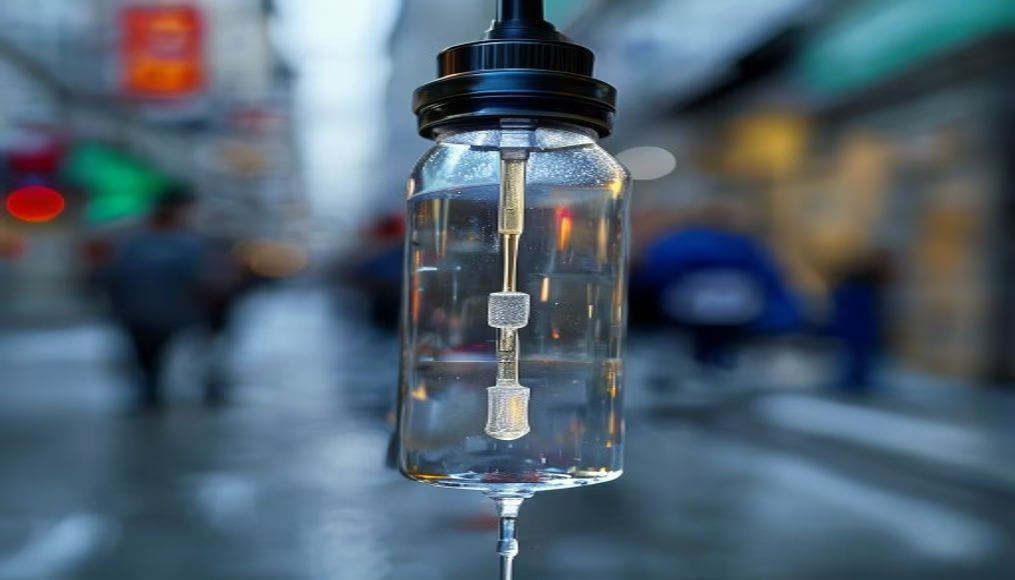
Iv drip bag close-up sterile
1344×768 · AVIF · CC BY 4.0
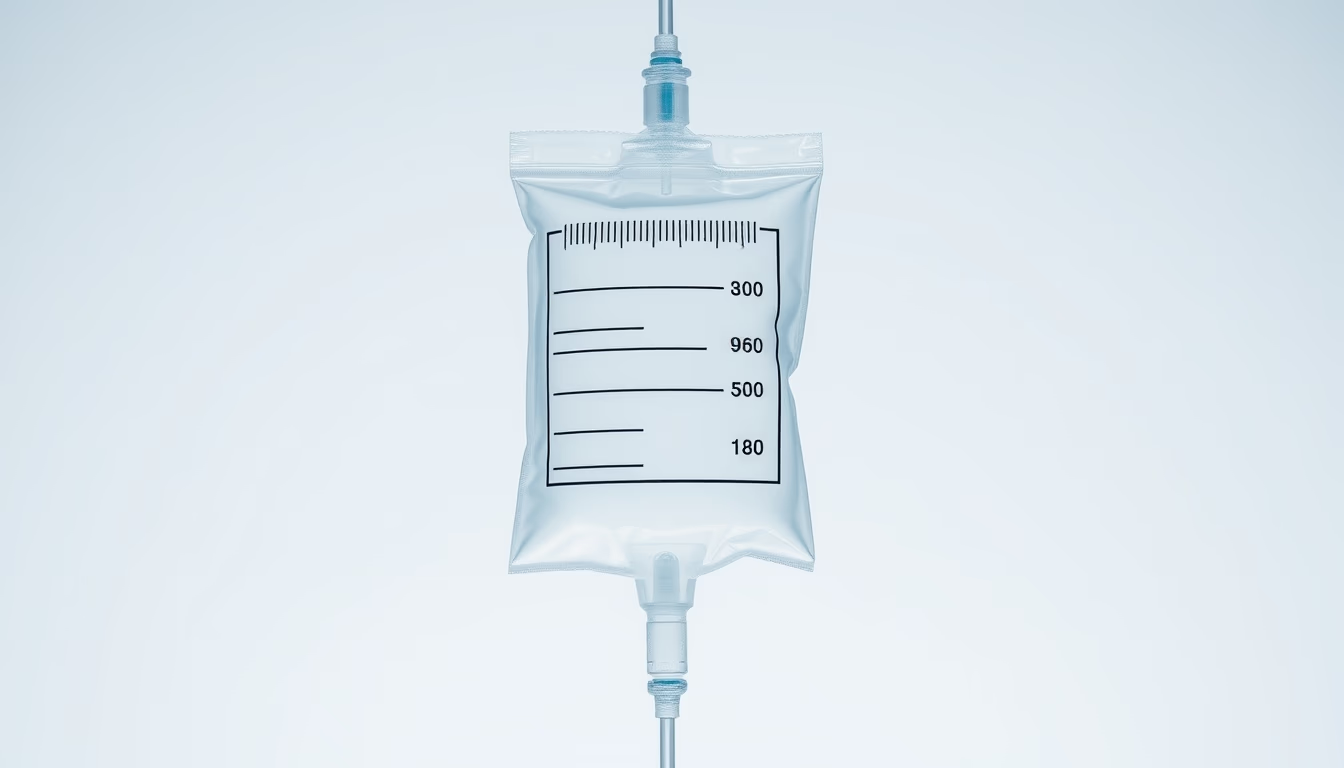
Sterile intravenous (IV) drip bags are essential medical devices for administering fluids and medications directly into the bloodstream.
About this subject
Intravenous (IV) drip bags, also called infusion bags, are flexible, sterile containers designed to hold and deliver IV solutions. Typically made of medical-grade PVC or polyolefin, these bags undergo rigorous sterilization processes such as autoclaving or gamma irradiation to ensure the absence of microorganisms. Capacities range from 50 mL to 1,000 mL, commonly used in hospitals and clinics for hydration, parenteral nutrition, chemotherapy, and antibiotic administration.
The design includes multiple access ports: one for connecting the IV tubing leading to the patient, and others for adding medications via injection. Many modern bags are DEHP-free (phthalate) and latex-free, reducing risks of allergic reactions and toxicity. Clear labeling with solution name, volume, expiration date, and lot number is crucial for safety, in compliance with standards from regulatory agencies like ANVISA and international pharmacopoeias.
Historically, the first IV bag was developed in the 1930s, replacing reusable glass bottles. Since then, technology has evolved into closed systems that minimize contamination. Millions of bags are used daily worldwide, especially in intensive care units and operating rooms. Proper disposal is critical, as biological waste and sharps must be segregated according to environmental regulations.
A curious fact: in Brazil, the term "soro" refers to both crystalloid solutions (such as Ringer's lactate) and colloids. The choice of bag type depends on osmolarity and compatibility with medications. Sets with in-line filters are used to trap particles or microorganisms, enhancing patient safety.
Frequently Asked Questions
What is the difference between a simple IV bag and a closed-system bag?
Simple bags have a single port for tubing connection, while closed systems have multiple ports allowing medication addition without breaking sterility, reducing contamination risks.
Why are some IV bags DEHP-free?
DEHP (phthalate) is a plasticizer used in PVC that can leach into the solution, causing toxic effects in vulnerable patients. DEHP-free bags are recommended for chemotherapy, parenteral nutrition, and pediatric patients.
How is an IV bag sterilized?
Bags are sterilized after sealing, typically by autoclaving (steam under pressure) or gamma irradiation. The method depends on the bag material and solution compatibility.
Direct URL
https://pub-c7d6a6ea828543ac903a74a341ccb2e1.r2.dev/imagens/iv-drip-bag-close-up-sterile-commercial-product-photography-v9.avifHow to credit
Include a visible link back to UtilizAí. Copy one of the snippets below:
<a href="https://xn--utiliza-eza.com/en/midia/imagens/iv-drip-bag-close-up-sterile-commercial-product-photography-v9">Iv drip bag close-up sterile</a> by <a href="https://xn--utiliza-eza.com">UtilizAí</a>, licensed under <a href="https://creativecommons.org/licenses/by/4.0/">CC BY 4.0</a>.
[Iv drip bag close-up sterile](https://xn--utiliza-eza.com/en/midia/imagens/iv-drip-bag-close-up-sterile-commercial-product-photography-v9) by [UtilizAí](https://xn--utiliza-eza.com), CC BY 4.0
License: CC-BY-4.0