Embroidery floss rainbow
1344×768 · AVIF · CC BY 4.0

Embroidery floss arranged in a vibrant rainbow: a chromatic organization that delights crafters and symbolizes diversity.
About this subject
Embroidery is one of the oldest textile arts, with traces dating back to prehistoric China (5th century BC) and ancient Egypt. Embroidery floss, especially mercerized cotton like the renowned DMC Mouliné, consists of six strands that can be separated to adjust stitch thickness. The rainbow arrangement is not merely aesthetic: it follows Newton's color spectrum (red, orange, yellow, green, blue, indigo, violet), widely used in gradient projects such as mandalas and lettering.
In Brazil, embroidery has strong regional traditions, from the cross-stitch of the Northeast (Portuguese influence) to the Richelieu embroidery of the South. Organizing threads by color is a common practice among embroiderers to streamline creation. The rainbow, meanwhile, is a global symbol of hope (as in the biblical flood myth) and, since 1978, represents the LGBTQIA+ movement through the flag designed by Gilbert Baker. Associating embroidery floss with the rainbow merges craftsmanship and cultural meaning.
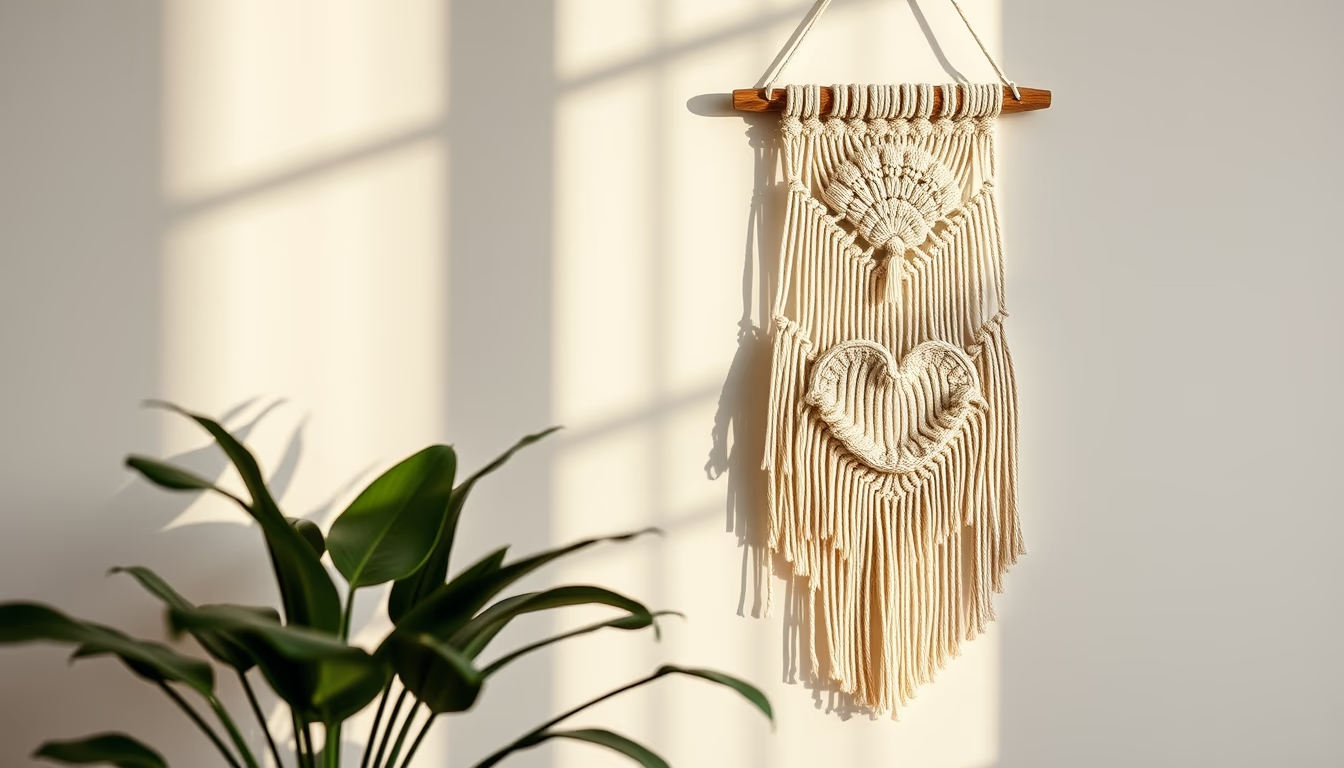
Technical tidbit: DMC thread numbering follows a logical system, warm colors have lower numbers (e.g., 666 is bright red) and cool colors have higher ones (995 is dark blue). The rainbow arrangement simplifies visual location of shades and is often used in haberdashery stores or professional embroiderers' cases. Moreover, organizing threads by color reduces search time and inspires harmonious combinations in patchwork, tapestry, and macramé projects.
Frequently Asked Questions
What is the origin of mercerized cotton embroidery floss?
The mercerization process was patented by John Mercer in 1844 in the UK. It treats cotton with caustic soda, giving it luster and better dye affinity. DMC, founded in 1746 in France, popularized Mouliné thread in the 19th century.
Why is the rainbow used as a symbol in embroidery?
The rainbow represents diversity, hope, and unity. In embroidery, the chromatic order facilitates gradient creation and is used both in decorative projects and LGBTQIA+ flags.
How to efficiently organize embroidery floss by color?
A tip is to use numbered bobbins or organizer cards, grouping by color families (reds, oranges, etc.). Hanging threads on a ring rack or separating them in compartment boxes also helps.
Direct URL
https://pub-c7d6a6ea828543ac903a74a341ccb2e1.r2.dev/imagens/embroidery-floss-rainbow-studio-editorial-portrait-fresh18.avifHow to credit
Include a visible link back to UtilizAí. Copy one of the snippets below:
<a href="https://xn--utiliza-eza.com/en/midia/imagens/embroidery-floss-rainbow-studio-editorial-portrait-fresh18">Embroidery floss rainbow</a> by <a href="https://xn--utiliza-eza.com">UtilizAí</a>, licensed under <a href="https://creativecommons.org/licenses/by/4.0/">CC BY 4.0</a>.
[Embroidery floss rainbow](https://xn--utiliza-eza.com/en/midia/imagens/embroidery-floss-rainbow-studio-editorial-portrait-fresh18) by [UtilizAí](https://xn--utiliza-eza.com), CC BY 4.0
License: CC-BY-4.0