Clarinet keys closeup
1344×768 · AVIF · CC BY 4.0
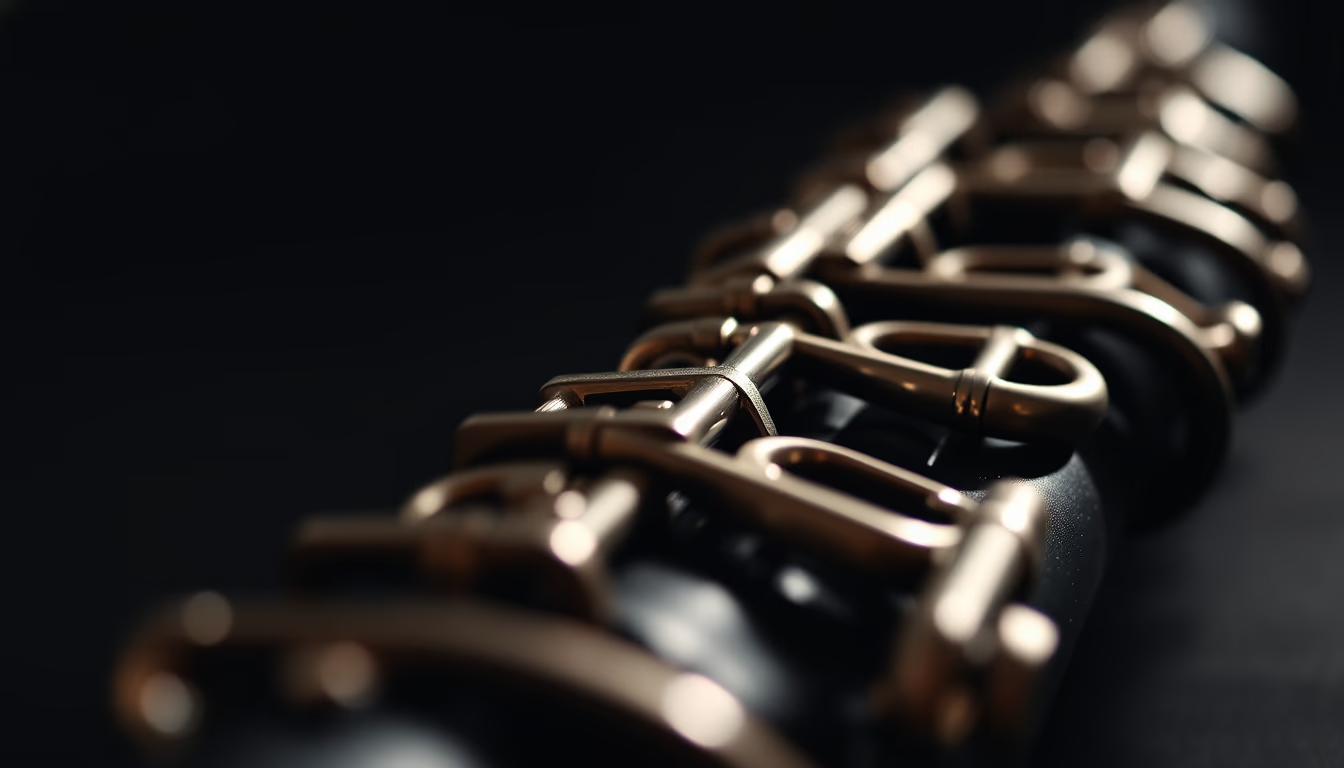
Close-up of clarinet keys: the precise mechanism that allows the musician to control pitch and articulation.
About this subject
The keys of a clarinet form a complex system of levers, springs, and rings that allow the player to cover and uncover tone holes with speed and accuracy. Each key is designed to operate a specific combination of holes, often using linkage mechanisms that connect multiple keys together. The most common materials are nickel-plated or silver-plated metal, chosen for durability and low friction, ensuring smooth and silent action.
Key design varies according to the key system. The Boehm system, predominant in modern clarinets, uses a series of rings and levers that allow simplified fingerings and greater technical ease. The Oehler system, common in Germany and Austria, has a different key arrangement that offers a fuller timbre and better pitch control but requires more complex fingerings. Both systems evolved throughout the 19th and 20th centuries to meet the demands of composers and performers.
Key manufacturing involves precision milling, soldering, and manual adjustment. Traditional brands like Buffet Crampon, Selmer, and Yamaha invest in research to improve ergonomics and key response. Proper key alignment is crucial for good technique, enabling the musician to move quickly between notes and execute ornaments clearly. Even minor wear or misalignment can compromise hole sealing, affecting intonation and tone quality.
Collectors and musicians often appreciate the mechanical design of clarinet keys, which combines functionality and aesthetics. Close-up photography highlights the polished surfaces, delicate springs, and precise articulations, revealing the engineering behind one of the orchestra's most versatile wind instruments.
Frequently Asked Questions
How do clarinet keys work?
Keys are levers that open and close tone holes. When a key is pressed, it activates a spring that moves a pad against the hole, sealing it. Linkage mechanisms connect multiple keys to allow combined fingerings.
What material are clarinet keys made of?
Typically nickel-plated or silver-plated metal. Professional models may use solid silver or gold for better tactile response. The metal is chosen for wear resistance and low friction.
What is the difference between the Boehm and Oehler systems?
The Boehm system, more common, uses movable rings and levers to simplify fingerings. The Oehler system has additional keys and differently positioned holes, providing a darker timbre and greater pitch control, but with more complex mechanics.
Direct URL
https://pub-c7d6a6ea828543ac903a74a341ccb2e1.r2.dev/imagens/clarinet-keys-closeup-fine-art-photography-p12.avifHow to credit
Include a visible link back to UtilizAí. Copy one of the snippets below:
<a href="https://xn--utiliza-eza.com/en/midia/imagens/clarinet-keys-closeup-fine-art-photography-p12">Clarinet keys closeup</a> by <a href="https://xn--utiliza-eza.com">UtilizAí</a>, licensed under <a href="https://creativecommons.org/licenses/by/4.0/">CC BY 4.0</a>.
[Clarinet keys closeup](https://xn--utiliza-eza.com/en/midia/imagens/clarinet-keys-closeup-fine-art-photography-p12) by [UtilizAí](https://xn--utiliza-eza.com), CC BY 4.0
License: CC-BY-4.0