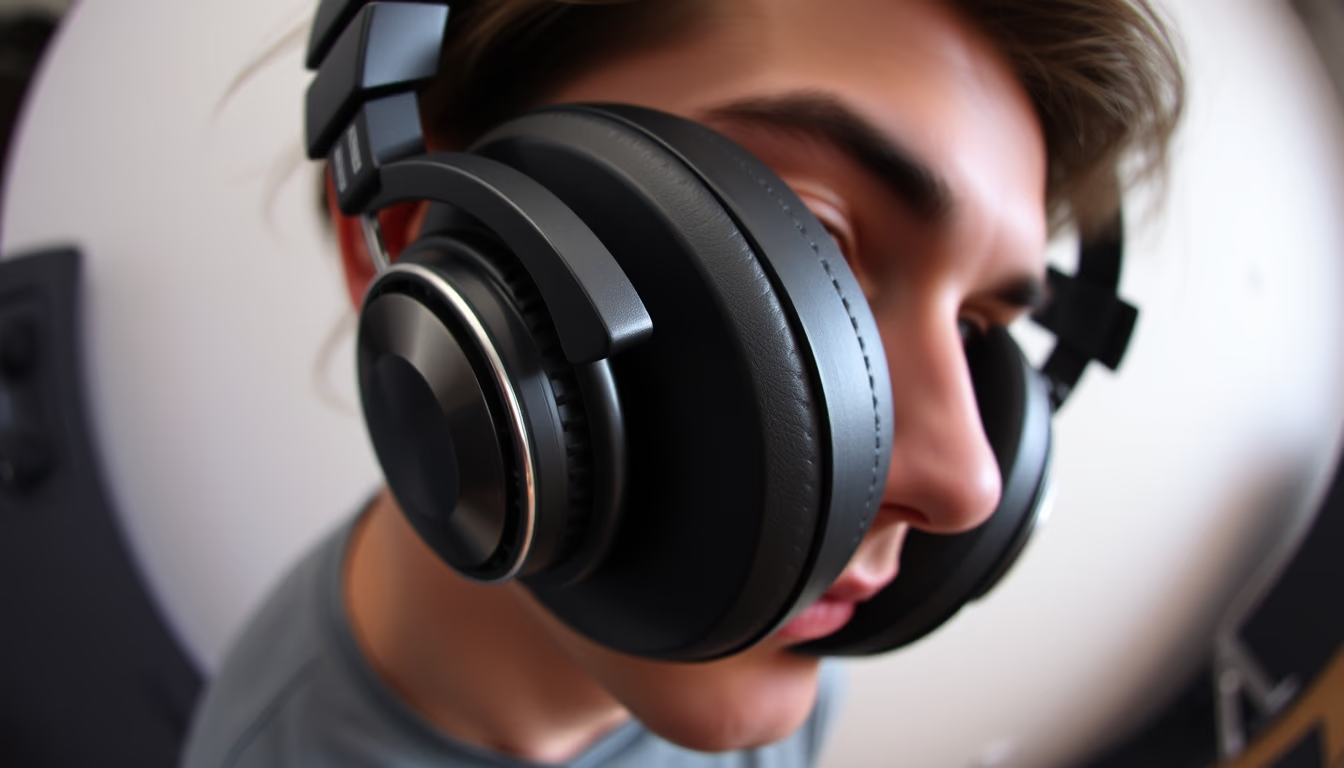
Audiophile headphones planar
1344×768 · AVIF · CC BY 4.0

Planar magnetic headphones are a benchmark in high-fidelity audio, combining low distortion and fast transient response for demanding audiophiles.
About this subject
Planar magnetic headphones use a thin, conductive diaphragm suspended between powerful magnets. Unlike traditional dynamic drivers that rely on a cone and voice coil, the planar diaphragm moves uniformly, resulting in extremely low distortion and near-instantaneous transient response. This design reproduces subtle details across the entire frequency range, from deep, controlled bass to clear, non-fatiguing highs.
The technology dates back to the 1970s when British company Wharfedale introduced the first commercial models, such as the Wharfedale Isodynamic. Since then, brands like Audeze, Hifiman, and Oppo have brought planar headphones to the consumer market, with flagship models often costing several thousand dollars. Construction typically involves neodymium magnets and ultra-thin diaphragms with printed circuits, explaining the relatively high weight and price.
In the audiophile community, planar headphones are regarded as a step above dynamics in terms of fidelity, but they require dedicated amplification due to low sensitivity and high impedance. Models like the Audeze LCD-4 and Hifiman Susvara are performance benchmarks, used in mastering studios and by enthusiasts seeking the closest possible reproduction of the original recording. Despite the cost, their durability and sound quality make them a long-term investment.
Interestingly, unlike electrostatic headphones, planars do not require a high-voltage bias and work with conventional solid-state or tube amplifiers. This versatility contributes to their popularity among audiophiles with existing reference systems. The technology also appears in microphones and loudspeakers, but it truly shines in the headphone segment.
Frequently Asked Questions
What is the difference between planar and dynamic headphones?
Planar headphones use a thin diaphragm with conductors between magnets, while dynamics use a cone and coil. Planares offer lower distortion, faster response, and more detail, but are heavier, more expensive, and require powerful amplification.
Do I need a special amplifier for planar headphones?
Yes, most planar headphones have low sensitivity and high impedance, needing high-current amplifiers. Standard headphone amps may lack sufficient power, causing low volume or distortion.
Which are the most well-known planar headphone brands?
Audeze, Hifiman, Oppo (discontinued), Monolith, and Dan Clark Audio are respected brands. Models like Audeze LCD-X, Hifiman Sundara, and Dan Clark Stealth are popular across different price ranges.
Direct URL
https://pub-c7d6a6ea828543ac903a74a341ccb2e1.r2.dev/imagens/audiophile-headphones-planar-architectural-photography-fresh12.avifHow to credit
Include a visible link back to UtilizAí. Copy one of the snippets below:
<a href="https://xn--utiliza-eza.com/en/midia/imagens/audiophile-headphones-planar-architectural-photography-fresh12">Audiophile headphones planar</a> by <a href="https://xn--utiliza-eza.com">UtilizAí</a>, licensed under <a href="https://creativecommons.org/licenses/by/4.0/">CC BY 4.0</a>.
[Audiophile headphones planar](https://xn--utiliza-eza.com/en/midia/imagens/audiophile-headphones-planar-architectural-photography-fresh12) by [UtilizAí](https://xn--utiliza-eza.com), CC BY 4.0
License: CC-BY-4.0