AI neural network glowing nodes and connections in 3D space
1344×768 · AVIF · CC BY 4.0
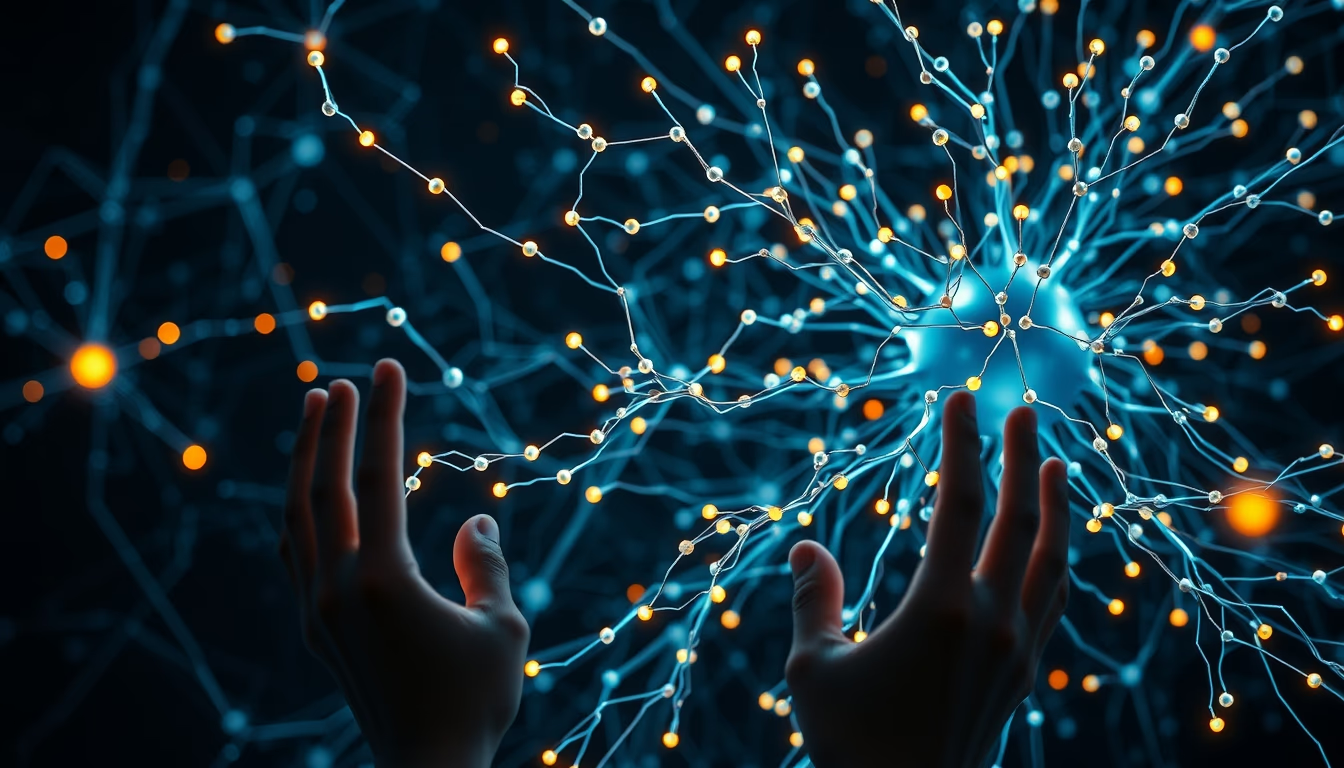
Artificial neural networks are computational models inspired by the human brain, composed of interconnected nodes that process data in layers.
About this subject
An artificial neural network is an information processing system that mimics the behavior of biological neurons. It consists of layers of nodes (artificial neurons) connected by weighted edges, where each connection has an adjustable weight during training. The concept was introduced in the 1940s with the McCulloch-Pitts model, but gained practical traction with the backpropagation algorithm in the 1980s. Today, deep neural networks underpin applications such as image recognition, natural language processing, and autonomous vehicles.
The typical structure includes an input layer, one or more hidden layers, and an output layer. During training, weights are adjusted to minimize the error between predicted and desired output. Neural networks can have millions of parameters, requiring specialized hardware like GPUs for efficient training. A famous example is GPT-3, with 175 billion parameters, capable of generating coherent text.
Culturally, neural networks have transformed sectors such as healthcare (medical imaging), finance (fraud detection), and entertainment (content recommendation). In Brazil, AI research is conducted by institutions like USP and IMPA. Despite advances, challenges remain, including algorithmic bias and energy consumption. The visual representation of glowing nodes and connections is a common metaphor to illustrate the complexity and dynamism of these systems.
Frequently Asked Questions
What is an artificial neural network?
It is a computational model inspired by the brain, composed of interconnected nodes that learn from data by adjusting connection weights.
How is a neural network trained?
Training uses the backpropagation algorithm, which calculates the error gradient and adjusts weights to minimize the difference between predicted and actual output.
What are practical applications of neural networks?
They are used in facial recognition, medical diagnostics, autonomous cars, machine translation, and recommendation systems.
Direct URL
https://pub-c7d6a6ea828543ac903a74a341ccb2e1.r2.dev/imagens/ai-neural-network-glowing-nodes-and-connections-in-3d-space-documentary-photography-overcast-soft-daylight.avifHow to credit
Include a visible link back to UtilizAí. Copy one of the snippets below:
<a href="https://xn--utiliza-eza.com/en/midia/imagens/ai-neural-network-glowing-nodes-and-connections-in-3d-space-documentary-photography-overcast-soft-daylight">AI neural network glowing nodes and connections in 3D space</a> by <a href="https://xn--utiliza-eza.com">UtilizAí</a>, licensed under <a href="https://creativecommons.org/licenses/by/4.0/">CC BY 4.0</a>.
[AI neural network glowing nodes and connections in 3D space](https://xn--utiliza-eza.com/en/midia/imagens/ai-neural-network-glowing-nodes-and-connections-in-3d-space-documentary-photography-overcast-soft-daylight) by [UtilizAí](https://xn--utiliza-eza.com), CC BY 4.0
License: CC-BY-4.0