Zen rock garden
1344×768 · AVIF · CC BY 4.0
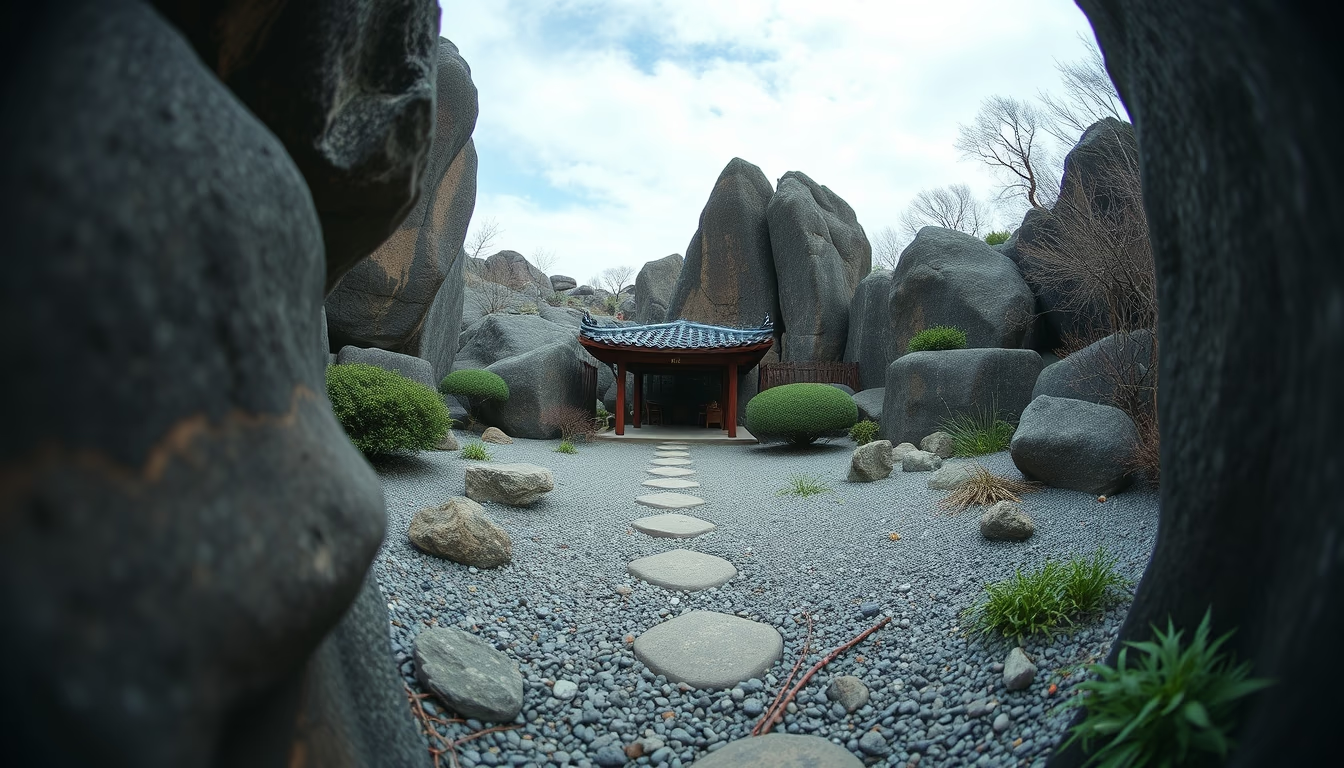
The Zen rock garden is a minimalist expression of Japanese aesthetics, inviting meditation and contemplation of nature.
About this subject
The Zen rock garden, known as karesansui or dry landscape garden, is a form of landscape art originating in Japan during the Muromachi period (14th-16th centuries). Unlike traditional gardens filled with plants and water, karesansui uses sand, gravel, and rocks to represent mountains, rivers, and islands in an abstract and contemplative space. The famous Ryoan-ji temple in Kyoto houses the most iconic example, with 15 stones arranged on raked gravel so that never all 15 are visible from a single viewpoint.
Zen Buddhist principles deeply influence these gardens. Each element is carefully positioned to evoke harmony, simplicity, and balance. The act of raking sand into wavy patterns symbolizes ocean waves or water flow, while stones represent mountains or islands. Traditionally, Zen monks use these gardens as aids to meditation, focusing the mind on geometric arrangement and the impermanence of forms.
Besides Ryoan-ji, other temples like Daisen-in and Tofuku-ji boast notable examples. Karesansui has spread worldwide, inspiring contemporary landscape designs. Maintenance of these gardens requires patience and skill, itself considered a meditative practice. Today, they are symbols of tranquility and minimalism, appreciated by Zen practitioners as well as nature and art lovers.
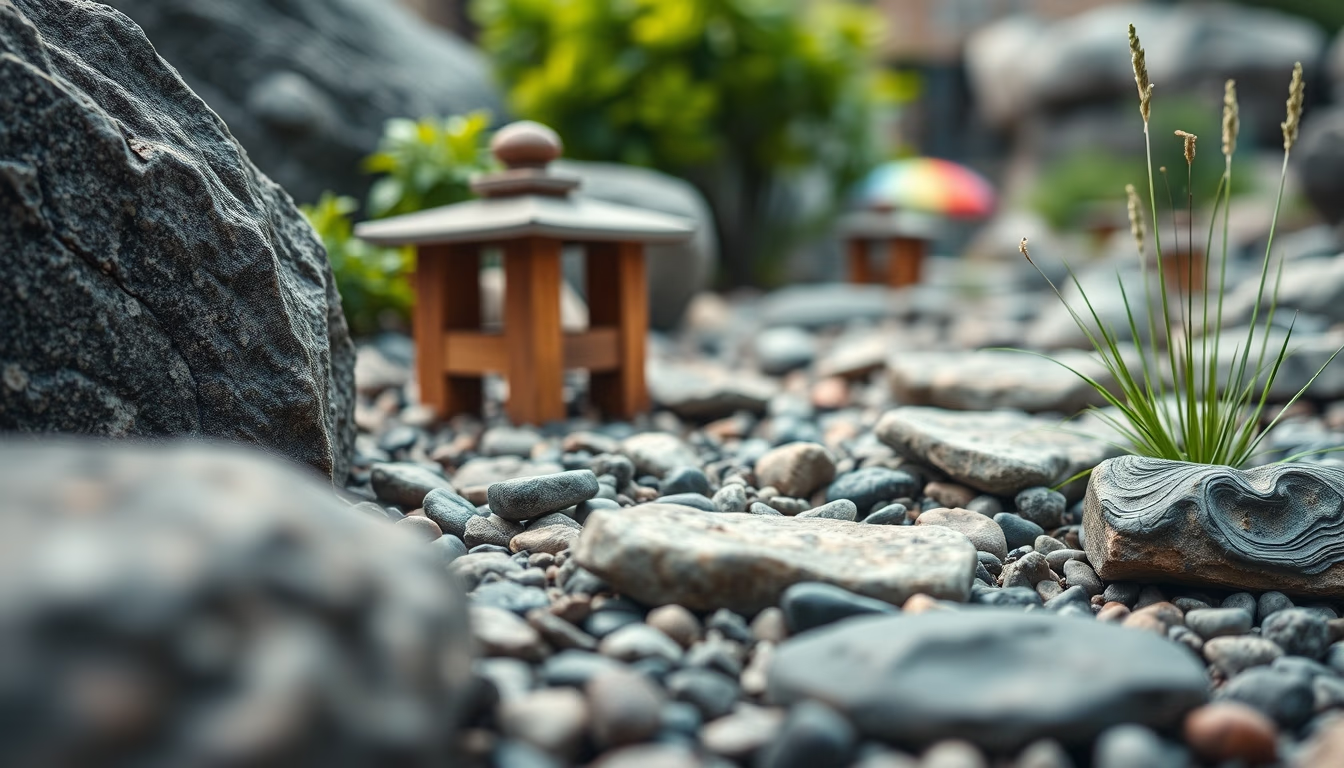
Interestingly, macro photography of garden details, such as sand texture and moss on stones, reveals microcosms that repeat the principles of the macrocosm. This intimate scale invites deeper appreciation of natural materials and subtle design characterizing Japanese aesthetics.
Frequently Asked Questions
What is the meaning of stones in a Zen garden?
Stones represent mountains, islands, or natural elements. Arranged in odd numbers, they create balanced compositions evoking idealized landscapes, serving as focal points for meditation.
Why is sand raked into wavy patterns?
Wavy patterns mimic water currents, waves, or clouds. Raking itself is a meditative act emphasizing impermanence and the garden's order.
Where can I visit an authentic Zen rock garden?
The most famous garden is at Ryoan-ji temple in Kyoto, Japan. Other excellent examples include Daisen-in, Tofuku-ji, and Myoshin-ji temple garden.
Direct URL
https://pub-c7d6a6ea828543ac903a74a341ccb2e1.r2.dev/imagens/zen-rock-garden-macro-closeup-fresh5.avifHow to credit
Include a visible link back to UtilizAí. Copy one of the snippets below:
<a href="https://xn--utiliza-eza.com/en/midia/imagens/zen-rock-garden-macro-closeup-fresh5">Zen rock garden</a> by <a href="https://xn--utiliza-eza.com">UtilizAí</a>, licensed under <a href="https://creativecommons.org/licenses/by/4.0/">CC BY 4.0</a>.
[Zen rock garden](https://xn--utiliza-eza.com/en/midia/imagens/zen-rock-garden-macro-closeup-fresh5) by [UtilizAí](https://xn--utiliza-eza.com), CC BY 4.0
License: CC-BY-4.0