Wolf in snowy forest
1344×768 · AVIF · CC BY 4.0
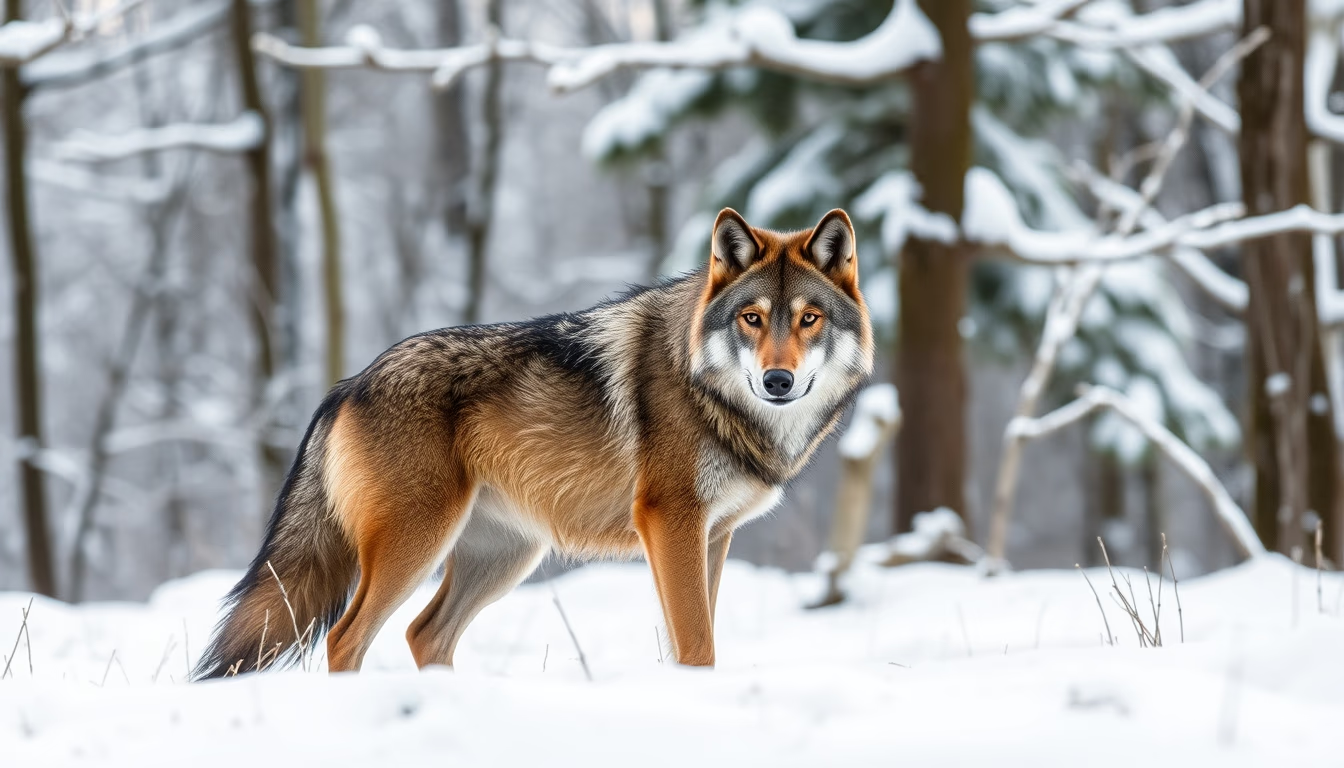
A lone wolf in a snowy forest, a symbol of resilience and adaptation to the harsh winter of the Northern Hemisphere.
About this subject
The wolf (Canis lupus) is one of the most adaptable predators on the planet, inhabiting environments from the boreal forests of Canada to the steppes of Mongolia. During winter, its dense double coat, composed of a waterproof outer layer and an insulating underfur, allows it to withstand temperatures as low as -50°C. Its broad, padded paws act as natural snowshoes, distributing weight and preventing it from sinking into soft snow. This adaptation is crucial for hunting prey such as moose and deer, which also struggle with deep snow.
In popular culture, the lone wolf is often romanticized, but in reality wolves are highly social animals, living in packs with complex hierarchies. However, dispersing young or dominant males may travel alone for hundreds of kilometers in search of new territories, especially during winter when food competition is higher. This image captures that spirit of independence and survival.
The snowy forest is not just a picturesque backdrop but a dynamic ecosystem. Snow reflects sunlight, increasing UV radiation, and wolves have evolved vision adapted to detect movement in low-light conditions. Additionally, snow dampens sound, making hearing even more vital for hunting. Studies show wolves can hear howls up to 10 km away in open terrain, but snow reduces this range, requiring closer proximity among pack members.
Interestingly, the presence of wolves in snowy areas has a positive impact on forest regeneration. By hunting ungulates, they control herbivore populations, allowing young trees to grow without being devastated. This trophic cascade effect was documented in Yellowstone National Park, where wolf reintroduction altered elk behavior, reducing pressure on willows and aspens, which in turn benefited beavers and songbirds.
Frequently Asked Questions
How do wolves survive extreme winter cold?
Wolves have a dense double coat that insulates body heat, broad paws that act as snowshoes, and a layer of subcutaneous fat. They also lower metabolic activity while resting and seek shelter in wooded areas.
Are lone wolves common in the wild?
Although wolves are social animals, young individuals leaving the pack to form new groups may travel alone for long distances. Lone wolves make up about 5-10% of the population in some regions.
Why are wolves important for the snowy forest ecosystem?
Wolves control herbivore populations like moose and deer, preventing overgrazing and allowing tree regeneration. This trophic cascade benefits other species such as beavers and birds.
Direct URL
https://pub-c7d6a6ea828543ac903a74a341ccb2e1.r2.dev/imagens/wolf-in-snowy-forest-national-geographic-style.avifHow to credit
Include a visible link back to UtilizAí. Copy one of the snippets below:
<a href="https://xn--utiliza-eza.com/en/midia/imagens/wolf-in-snowy-forest-national-geographic-style">Wolf in snowy forest</a> by <a href="https://xn--utiliza-eza.com">UtilizAí</a>, licensed under <a href="https://creativecommons.org/licenses/by/4.0/">CC BY 4.0</a>.
[Wolf in snowy forest](https://xn--utiliza-eza.com/en/midia/imagens/wolf-in-snowy-forest-national-geographic-style) by [UtilizAí](https://xn--utiliza-eza.com), CC BY 4.0
License: CC-BY-4.0