Wolf in snowy forest
1344×768 · AVIF · CC BY 4.0
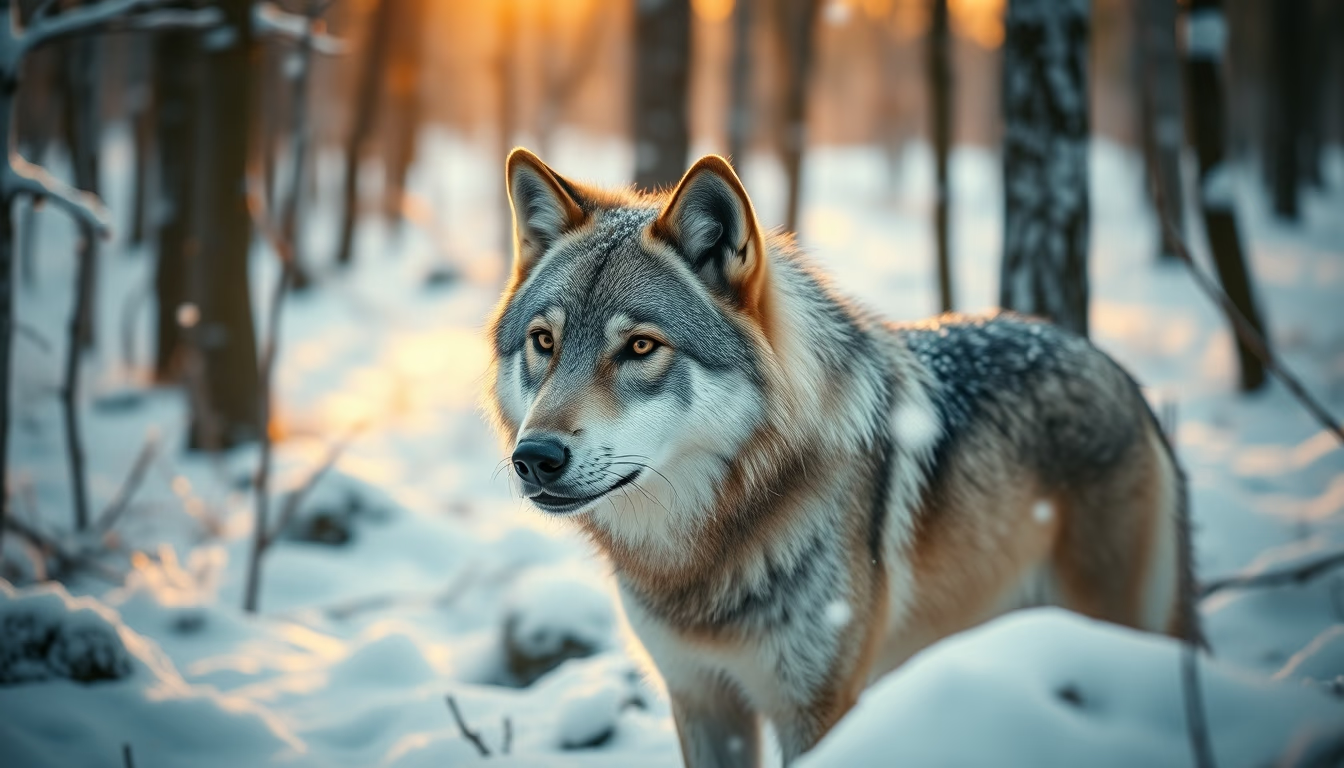
Gray wolves (Canis lupus) are winter-adapted hunters capable of traveling vast distances over snow.
About this subject
The gray wolf, also known as the timber wolf, is the largest wild member of the Canidae family. Its original range covered nearly the entire Northern Hemisphere, from the boreal forests of Canada and Siberia to the steppes of Mongolia. In winter, the wolf develops a thick double coat: the dense underfur traps body heat, while the longer guard hairs repel moisture and wind. This adaptation allows the animal to withstand temperatures as low as -50 °C.
Wolves are social animals living in structured packs, usually composed of a breeding pair and their offspring of various ages. During winter, hunting becomes more challenging, and the pack cooperates to take down large prey such as moose, deer, and bison. Studies show that a wolf can travel over 50 km in a single night in search of food, using the snow as an advantage to pursue prey that sinks into the soft terrain.
Culturally, the wolf holds an ambivalent place in human imagination. In Norse mythology, the wolf Fenrir is a figure of destruction; among Native American peoples, the wolf is often seen as a symbol of loyalty, intelligence, and teamwork. Unfortunately, human persecution has led to the extinction of many subspecies and local populations. Today, conservation and reintroduction programs, such as those in Yellowstone National Park, show that the presence of wolves can restore ecological balance by controlling herbivore populations and benefiting other species.
A fascinating fact: wolves have exceptional night vision, about 20 times more sensitive than humans, and their sense of smell is 100 times sharper. They can detect a carcass from up to 2 kilometers away. Despite the reputation of howling at the moon, howls mainly serve for communication among pack members, especially on winter nights when sound travels farther over snow.
Frequently Asked Questions
How many wolves live in a pack?
A typical pack has 4 to 15 members, but size varies based on prey availability. The average is 6 to 8 individuals.
Do wolves attack humans?
Attacks on humans are extremely rare. Wolves generally avoid people and only attack if provoked or if they are sick (e.g., rabies).
What is the difference between a wolf and a dog?
Wolves and domestic dogs share a common ancestor, but wolves have never been domesticated. Wolves have larger skulls, wider paws, and are more cold-resistant.
Direct URL
https://pub-c7d6a6ea828543ac903a74a341ccb2e1.r2.dev/imagens/wolf-in-snowy-forest-cinematic-wide-shot-v2.avifHow to credit
Include a visible link back to UtilizAí. Copy one of the snippets below:
<a href="https://xn--utiliza-eza.com/en/midia/imagens/wolf-in-snowy-forest-cinematic-wide-shot-v2">Wolf in snowy forest</a> by <a href="https://xn--utiliza-eza.com">UtilizAí</a>, licensed under <a href="https://creativecommons.org/licenses/by/4.0/">CC BY 4.0</a>.
[Wolf in snowy forest](https://xn--utiliza-eza.com/en/midia/imagens/wolf-in-snowy-forest-cinematic-wide-shot-v2) by [UtilizAí](https://xn--utiliza-eza.com), CC BY 4.0
License: CC-BY-4.0