Wine cellar barrel oak
1344×768 · AVIF · CC BY 4.0
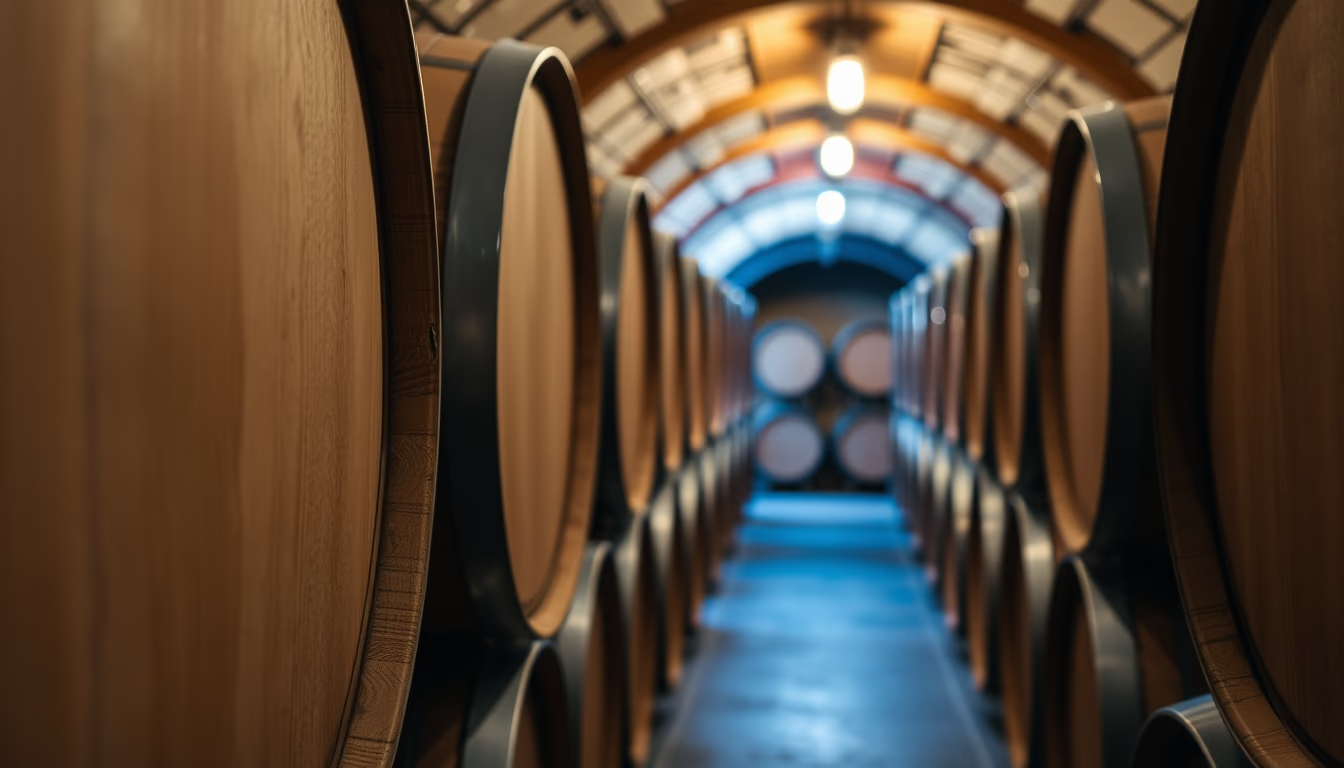
A wine cellar with oak barrels is essential for aging, adding flavor and complexity. Learn about wood types and the process.
About this subject
A wine cellar with oak barrels is the heart of quality winemaking. Oak, whether French (Quercus robur) or American (Quercus alba), is not just a container: it chemically interacts with wine, releasing tannins, lactones, and vanillin. These compounds contribute aromas of vanilla, coconut, clove, and smoke, while softening texture. The toast level (light, medium, heavy) modulates flavor intensity. New barrels impart more wood, while used ones are neutral, ideal for delicate wines.
Temperature and humidity in the cellar are strictly controlled (around 12, 15°C and 70-80% humidity) to prevent excessive evaporation and premature oxidation. Micro-oxygenation through the oak pores allows the wine to breathe, polymerizing harsh tannins and integrating flavors. Aging duration varies: full-bodied reds like Cabernet Sauvignon may spend 18, 24 months, while whites like Chardonnay 6, 12 months.
The choice between French and American oak impacts the final profile. French oak has finer grain, releasing subtler tannins and spice notes. American oak, with wider grain, intensifies vanilla and coconut aromas, common in New World wines. Hungarian or Slavonian oak offer economical alternatives. Barrel reuse is sustainable: after three uses, they are repurposed for spirits or vinegar.
Interestingly, oak barrel production requires wood to be split into quarters and air-dried for 2, 3 years to remove bitterness. Standard capacity is 225 liters (Bordeaux barrique) or 228 liters (Burgundy piece). The tradition of oak aging dates back to the Romans, but was perfected in 18th-century France. Today, it remains a pillar of modern oenology, balancing tradition and science.
Frequently Asked Questions
What is the difference between French and American oak in a wine cellar?
French oak has a finer grain, imparting subtle tannins and spice notes. American oak, with wider grain, intensifies vanilla and coconut aromas, commonly used in New World wines.
How long should wine age in oak barrels?
It varies by style: full-bodied reds spend 18, 24 months, whites like Chardonnay 6, 12 months, and lighter wines may need only 3, 6 months.
What is barrel toast and how does it affect wine?
Toast is the internal heating of the barrel during production. Light toast gives vanilla and coconut notes; medium brings caramel and spices; heavy adds smoke and coffee. It modulates the intensity of oak flavors.
Direct URL
https://pub-c7d6a6ea828543ac903a74a341ccb2e1.r2.dev/imagens/wine-cellar-barrel-oak-magazine-editorial-p1.avifHow to credit
Include a visible link back to UtilizAí. Copy one of the snippets below:
<a href="https://xn--utiliza-eza.com/en/midia/imagens/wine-cellar-barrel-oak-magazine-editorial-p1">Wine cellar barrel oak</a> by <a href="https://xn--utiliza-eza.com">UtilizAí</a>, licensed under <a href="https://creativecommons.org/licenses/by/4.0/">CC BY 4.0</a>.
[Wine cellar barrel oak](https://xn--utiliza-eza.com/en/midia/imagens/wine-cellar-barrel-oak-magazine-editorial-p1) by [UtilizAí](https://xn--utiliza-eza.com), CC BY 4.0
License: CC-BY-4.0