Voice assistant speaker minimalist
1344×768 · AVIF · CC BY 4.0
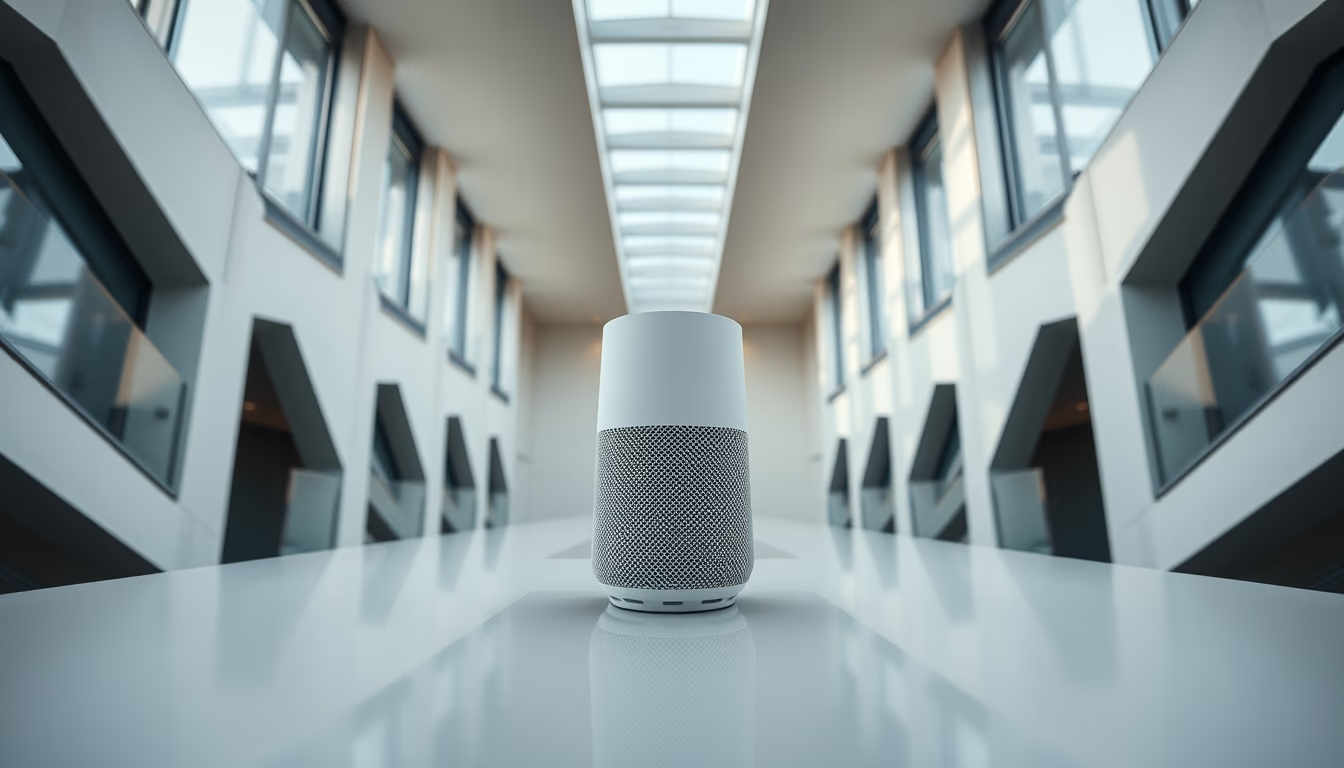
Minimalist smart speaker blends voice assistant, music, and architectural aesthetics into a single home device.
About this subject
Minimalist smart speakers represent the convergence of technology, music, and interior architecture. Since the launch of the Amazon Echo in 2014, these devices have evolved from simple voice-controlled speakers to central hubs for home automation. The minimalist aesthetic, inspired by the Bauhaus movement and Scandinavian design, prioritizes clean lines, natural materials like acoustic fabric and aluminum, and proportions that blend seamlessly into the environment without visual clutter. Companies like Apple (HomePod), Google (Nest Audio), and Sonos (One) have adopted this approach, making the speaker a desirable object both for its functionality and appearance.
In the musical context, the minimalist smart speaker revolutionized how we consume audio at home. With support for services like Spotify, Apple Music, and Tidal, these devices offer high-quality sound in a compact form. Audio is optimized by software, such as the HomePod's adaptive sound processing, which adjusts equalization based on the speaker's position in the room. Moreover, integration with voice assistants (Alexa, Google Assistant, Siri) allows users to control playback, playlists, and even discover new music through natural commands.
Architectural photography of this product highlights its minimalist silhouette, often set against neutral backgrounds or organic textures like concrete and wood, reinforcing the idea that the smart speaker is both a design piece and an electronic device. The 'trending-2026' tag suggests a future where these devices become even more discreet, incorporating sustainable materials and predictive environmental intelligence, capable of anticipating the user's musical preferences based on daily routines.
Frequently Asked Questions
What are the main minimalist smart speakers available on the market?
The most well-known models include the Apple HomePod (2nd generation), Google Nest Audio, Amazon Echo (4th generation), and Sonos One. All feature minimalist design with acoustic fabric and rounded or cylindrical shapes.
How is the acoustics of a minimalist smart speaker optimized for home environments?
Devices like the HomePod use sensors to map the room and automatically adjust equalization, directing sound based on the speaker's position and surrounding surfaces, ensuring a balanced audio experience.
Does minimalist design affect sound quality?
Not necessarily. Engineers design cabinets and drivers to maximize acoustics within a compact form. Acoustic fabrics allow sound passage without distortion, and digital processing software compensates for physical limitations.
Direct URL
https://pub-c7d6a6ea828543ac903a74a341ccb2e1.r2.dev/imagens/voice-assistant-speaker-minimalist-architectural-photography-p2.avifHow to credit
Include a visible link back to UtilizAí. Copy one of the snippets below:
<a href="https://xn--utiliza-eza.com/en/midia/imagens/voice-assistant-speaker-minimalist-architectural-photography-p2">Voice assistant speaker minimalist</a> by <a href="https://xn--utiliza-eza.com">UtilizAí</a>, licensed under <a href="https://creativecommons.org/licenses/by/4.0/">CC BY 4.0</a>.
[Voice assistant speaker minimalist](https://xn--utiliza-eza.com/en/midia/imagens/voice-assistant-speaker-minimalist-architectural-photography-p2) by [UtilizAí](https://xn--utiliza-eza.com), CC BY 4.0
License: CC-BY-4.0