Virus 3d render covid
1344×768 · AVIF · CC BY 4.0
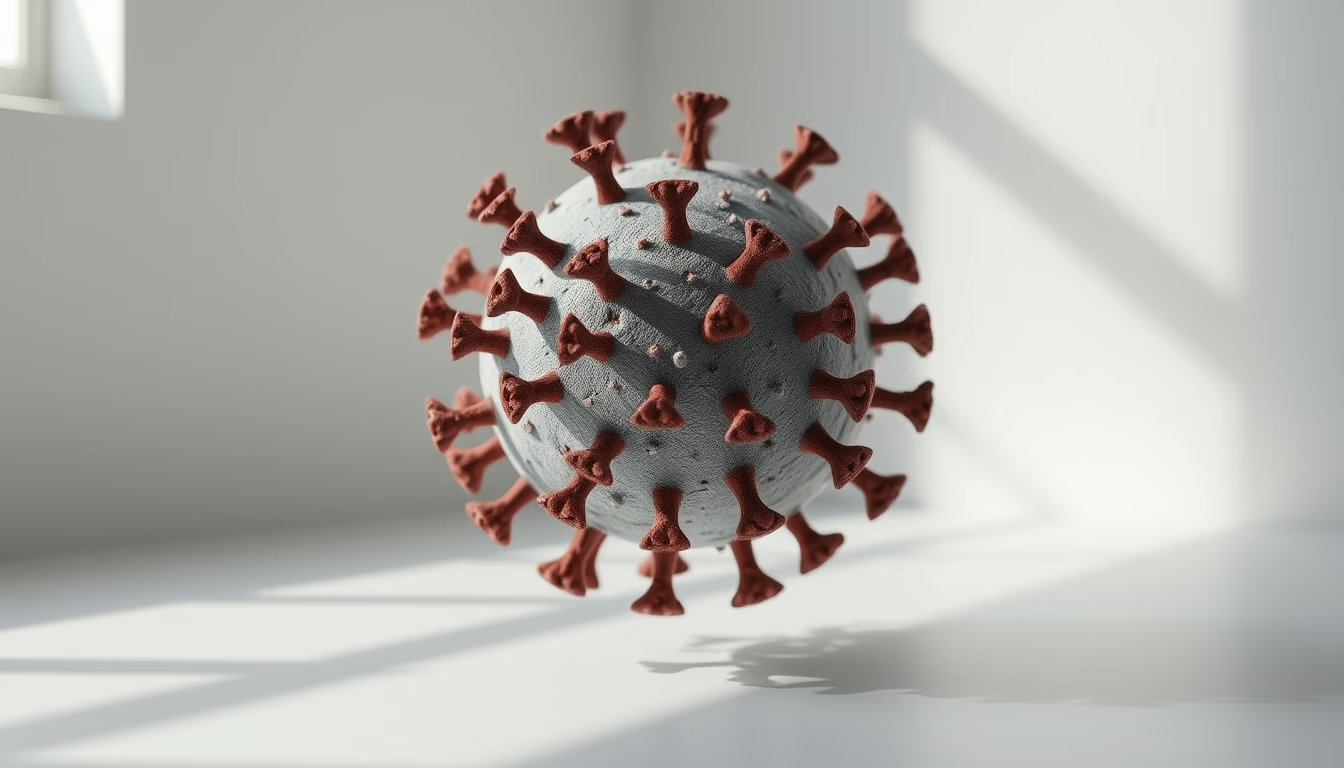
SARS-CoV-2, the virus that causes COVID-19, is an enveloped coronavirus with spike proteins that facilitate entry into human cells.
About this subject
SARS-CoV-2 belongs to the Coronaviridae family, characterized by spherical particles with spike glycoprotein projections that form a crown-like appearance under microscopy. First identified in late 2019 in Wuhan, China, the virus spread globally, leading the World Health Organization to declare a pandemic in March 2020. Transmission occurs primarily through respiratory droplets and aerosols, as well as contact with contaminated surfaces.
The viral structure includes a lipid envelope containing positive-sense single-stranded RNA, encoding essential proteins such as spike (S), envelope (E), membrane (M), and nucleocapsid (N). The spike protein binds to the ACE2 receptor on human cells, particularly in the respiratory tract and lungs, initiating infection. Mutations in this protein have given rise to variants like Alpha, Delta, and Omicron, impacting transmissibility and immune response.
COVID-19 has caused over 6 million deaths globally as of 2023, affecting every continent. Control measures included mask-wearing, social distancing, lockdowns, and mass vaccination. mRNA vaccines (Pfizer-BioNTech and Moderna), viral vector vaccines, and inactivated vaccines were developed in record time, significantly reducing severe cases and fatalities.
Ongoing research focuses on viral evolution, antiviral treatments, and prevention strategies. SARS-CoV-2 can undergo recombination and generate new variants, requiring constant genomic surveillance. Understanding its structure and replication cycle is crucial for preparedness against future pandemics.
Frequently Asked Questions
How does SARS-CoV-2 infect human cells?
The virus binds to the ACE2 receptor on human cells via its spike protein, triggering fusion of the viral envelope with the cell membrane and releasing RNA into the cytoplasm.
What are the main variants of SARS-CoV-2?
Variants of concern include Alpha (B.1.1.7), Beta (B.1.351), Gamma (P.1), Delta (B.1.617.2), and Omicron (B.1.1.529), which carry mutations affecting transmissibility, severity, or immune escape.
Are COVID-19 vaccines still effective against new variants?
Vaccines remain highly effective against severe disease and hospitalization, though efficacy against mild infection may decrease with variants like Omicron. Booster doses are recommended to restore protection.
Direct URL
https://pub-c7d6a6ea828543ac903a74a341ccb2e1.r2.dev/imagens/virus-3d-render-covid-minimalist-composition-p5.avifHow to credit
Include a visible link back to UtilizAí. Copy one of the snippets below:
<a href="https://xn--utiliza-eza.com/en/midia/imagens/virus-3d-render-covid-minimalist-composition-p5">Virus 3d render covid</a> by <a href="https://xn--utiliza-eza.com">UtilizAí</a>, licensed under <a href="https://creativecommons.org/licenses/by/4.0/">CC BY 4.0</a>.
[Virus 3d render covid](https://xn--utiliza-eza.com/en/midia/imagens/virus-3d-render-covid-minimalist-composition-p5) by [UtilizAí](https://xn--utiliza-eza.com), CC BY 4.0
License: CC-BY-4.0