Virus 3d render covid
1344×768 · AVIF · CC BY 4.0
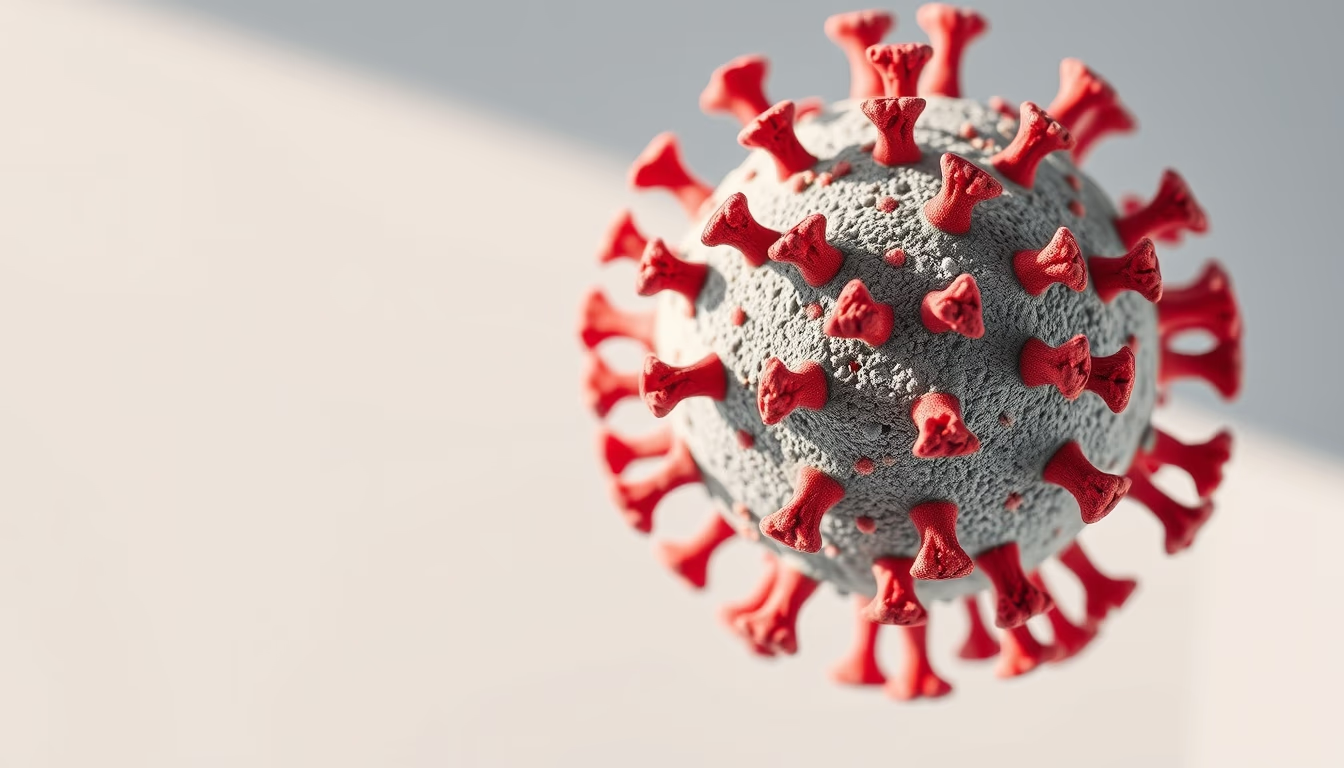
SARS-CoV-2, the virus causing COVID-19, is a coronavirus with spike proteins that give it high transmissibility and constant mutations.
About this subject
SARS-CoV-2 belongs to the Coronaviridae family, subgenus Sarbecovirus. Its viral structure includes single-stranded positive-sense RNA, a lipid envelope, and spike (S), envelope (E), membrane (M), and nucleocapsid (N) proteins. The S proteins are responsible for binding to the ACE2 receptor on human cells, initiating infection. The virus emerged in Wuhan, China, in late 2019, likely of zoonotic origin from bats, with an intermediate host still unconfirmed (pangolins or other mammals). Since then, it spread globally, causing the COVID-19 pandemic, which resulted in over 6 million officially recorded deaths by 2023. The SARS-CoV-2 genome undergoes frequent mutations, leading to concerning variants such as Alpha, Delta, and Omicron. The Omicron variant, detected in November 2021, carried dozens of mutations in the S protein, increasing its immune escape capability. Vaccines developed in record time (mRNA, viral vector, recombinant protein) significantly reduced severe cases and deaths, though protection against infection is lower with new subvariants. The virus can survive on surfaces for hours to days depending on the material, but transmission occurs predominantly via aerosols and respiratory droplets. Measures like mask wearing, social distancing, and ventilation were essential to curb spread. Currently, COVID-19 has become endemic in many countries, with seasonal waves driven by new variants. Research continues to understand long COVID mechanisms and develop effective antiviral treatments.
Frequently Asked Questions
How does SARS-CoV-2 infect human cells?
The virus uses its spike protein to bind to the ACE2 receptor on cell surfaces, mainly in airways and lungs. It then fuses its envelope with the cell membrane and releases its RNA, hijacking cellular machinery to replicate.
What are the main variants of SARS-CoV-2?
The main variants of concern were Alpha, Beta, Gamma, Delta, and Omicron. Omicron is the most mutated and currently dominant, with sublineages such as BA.5, XBB, and JN.1.
Are COVID-19 vaccines still effective against new variants?
Yes, especially in preventing severe disease and death. mRNA vaccines have been updated to target circulating subvariants. Protection against mild infection wanes over time and with new mutations, but cellular immunity remains robust.
Direct URL
https://pub-c7d6a6ea828543ac903a74a341ccb2e1.r2.dev/imagens/virus-3d-render-covid-magazine-editorial-p7.avifHow to credit
Include a visible link back to UtilizAí. Copy one of the snippets below:
<a href="https://xn--utiliza-eza.com/en/midia/imagens/virus-3d-render-covid-magazine-editorial-p7">Virus 3d render covid</a> by <a href="https://xn--utiliza-eza.com">UtilizAí</a>, licensed under <a href="https://creativecommons.org/licenses/by/4.0/">CC BY 4.0</a>.
[Virus 3d render covid](https://xn--utiliza-eza.com/en/midia/imagens/virus-3d-render-covid-magazine-editorial-p7) by [UtilizAí](https://xn--utiliza-eza.com), CC BY 4.0
License: CC-BY-4.0