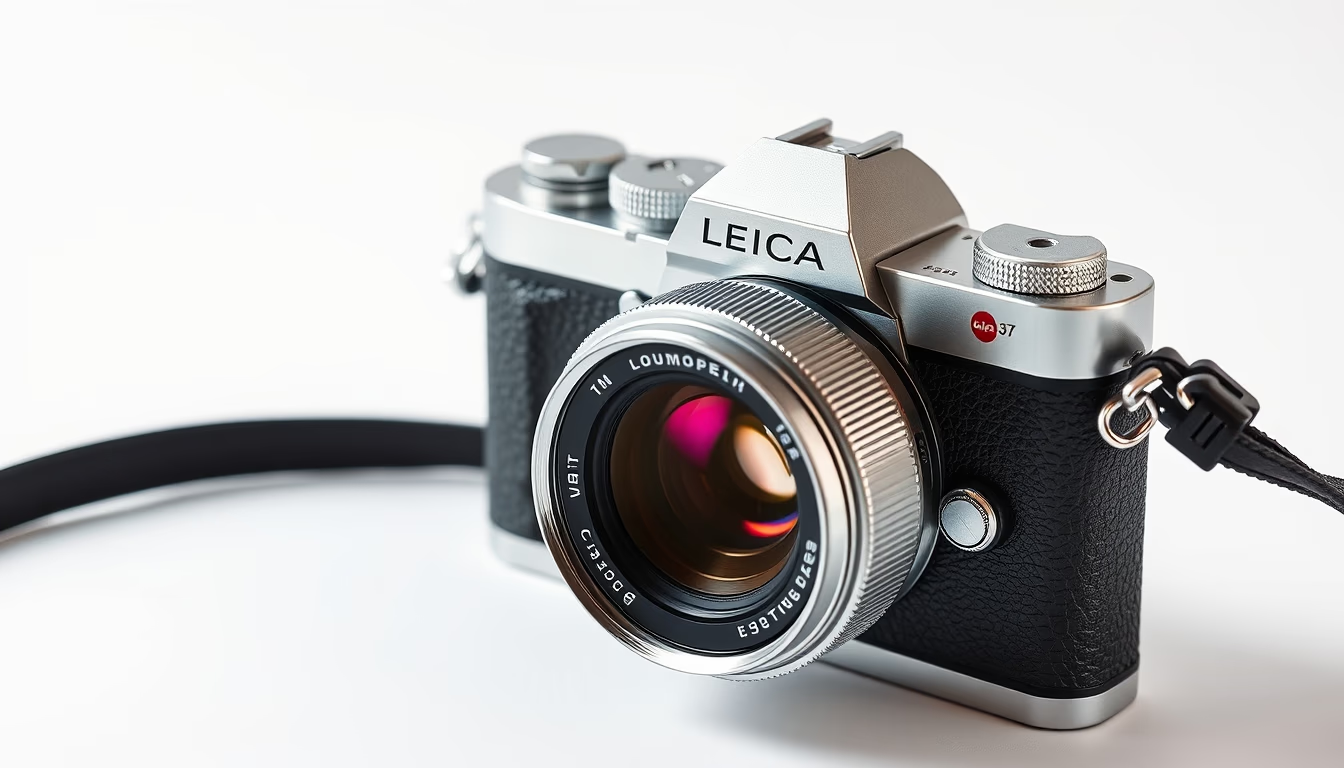
View camera bellows
1344×768 · AVIF · CC BY 4.0
The bellows of a large-format camera enable perspective movements like tilt and shift, essential for architectural photography.
About this subject
The bellows of a large-format camera are a flexible, accordion-like structure, typically made of leather or synthetic material, connecting the front standard (where the lens is mounted) to the rear standard (where film or a digital sensor is located). Their primary function is to seal out light between these two components while allowing the distance between them to be adjusted for focusing. Unlike ordinary cameras where the lens moves back and forth, in bellows cameras it is the camera body itself that extends or contracts, enabling precise control over depth of field and perspective.
Historically, bellows cameras emerged in the 19th century and dominated professional photography until the mid-20th century. They were the preferred tools for architectural, landscape, and studio photographers because the tilt (angling of the lens or film plane) and shift (lateral displacement) movements allowed correction of converging vertical lines in buildings, a common issue with smaller format cameras. Additionally, swing (lateral rotation) and rise/fall (up/down) movements gave photographers nearly limitless control over the image.
In contemporary photography, bellows continue to be used in large-format analog and digital cameras, mainly for work requiring high quality and perspective correction. The so-called "tilt-shift miniature effect" is a technique that uses tilt movements to create an extremely shallow depth of field, making real scenes look like miniature models. Although this effect can be simulated digitally, the original optical version achieved with bellows movements yields more natural results and higher image quality.
Interestingly, the maximum extension of the bellows determines the ability to focus on very close (macro) or very distant objects. Some bellows can extend over 50 centimeters, allowing extreme close-ups. Durability and flexibility of the material are crucial, as damaged bellows can cause light leaks and ruin exposures. Therefore, vintage models require careful maintenance, while modern versions use more resilient and lightweight materials.
Frequently Asked Questions
What are camera bellows?
They are a flexible accordion-like structure connecting the lens to the camera body, sealing light and allowing focus adjustments and perspective movements such as tilt and shift.
What are tilt and shift movements used for?
Tilt tilts the focal plane to control depth of field; shift moves the lens or film sideways to correct perspective, especially in architectural photography.
What is the tilt-shift miniature effect?
It is a technique using tilt movements to create extremely shallow depth of field, making real scenes appear as miniatures. It can be achieved optically with bellows cameras or simulated digitally.
Direct URL
https://pub-c7d6a6ea828543ac903a74a341ccb2e1.r2.dev/imagens/view-camera-bellows-tilt-shift-miniature-fresh4.avifHow to credit
Include a visible link back to UtilizAí. Copy one of the snippets below:
<a href="https://xn--utiliza-eza.com/en/midia/imagens/view-camera-bellows-tilt-shift-miniature-fresh4">View camera bellows</a> by <a href="https://xn--utiliza-eza.com">UtilizAí</a>, licensed under <a href="https://creativecommons.org/licenses/by/4.0/">CC BY 4.0</a>.
[View camera bellows](https://xn--utiliza-eza.com/en/midia/imagens/view-camera-bellows-tilt-shift-miniature-fresh4) by [UtilizAí](https://xn--utiliza-eza.com), CC BY 4.0
License: CC-BY-4.0