View camera bellows
1344×768 · AVIF · CC BY 4.0

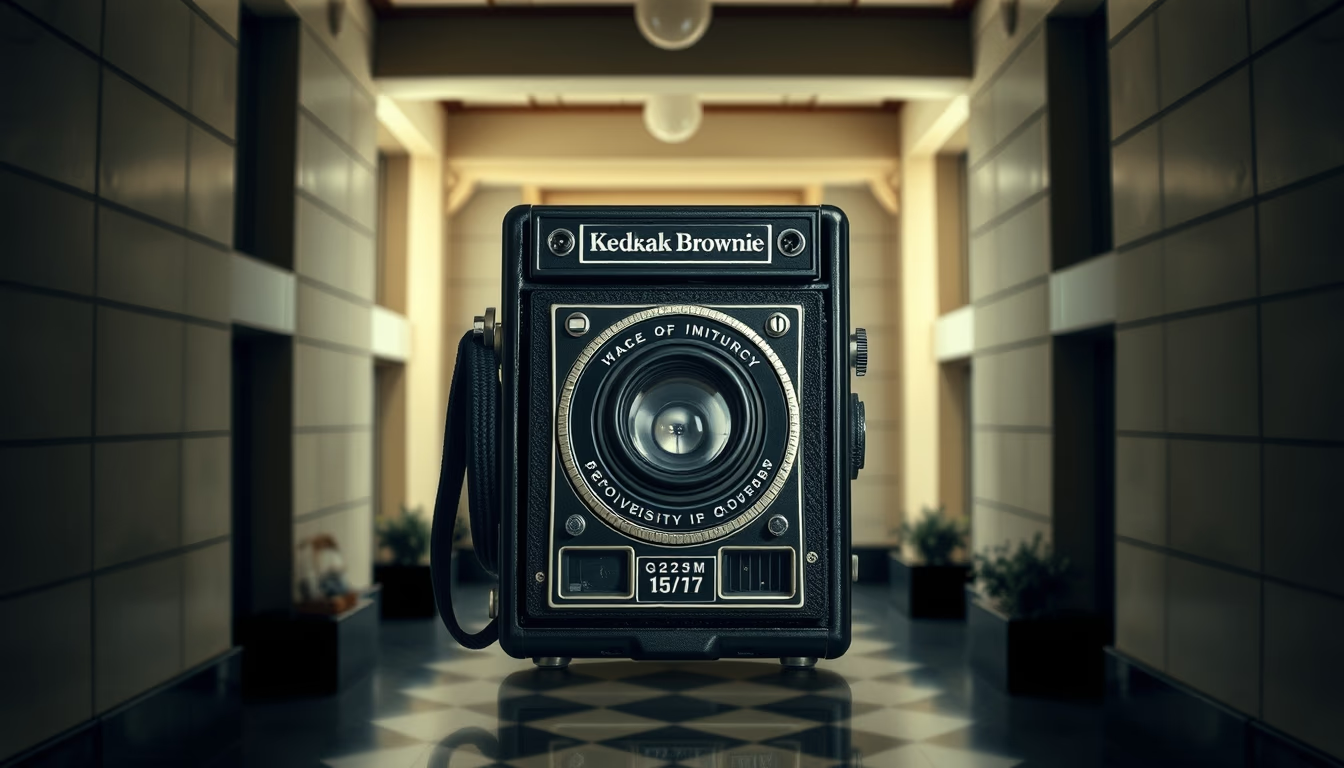
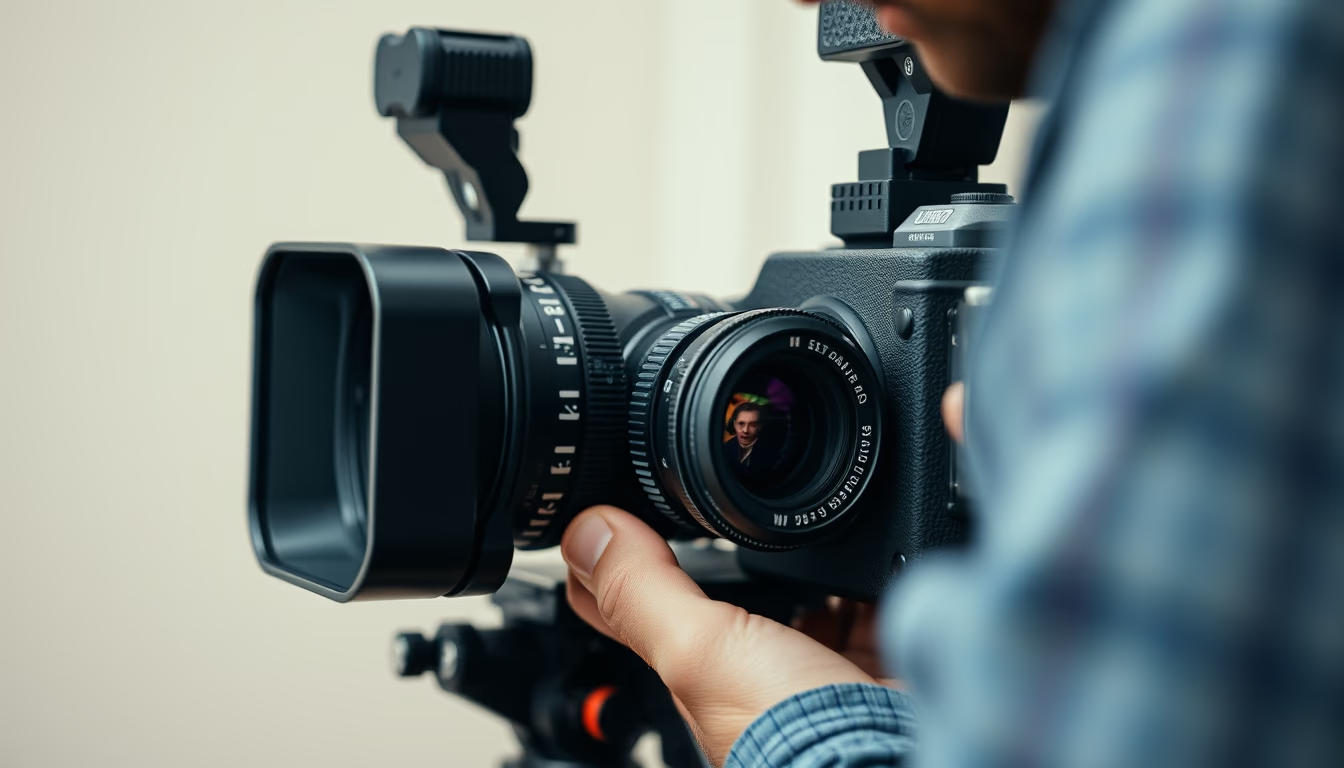
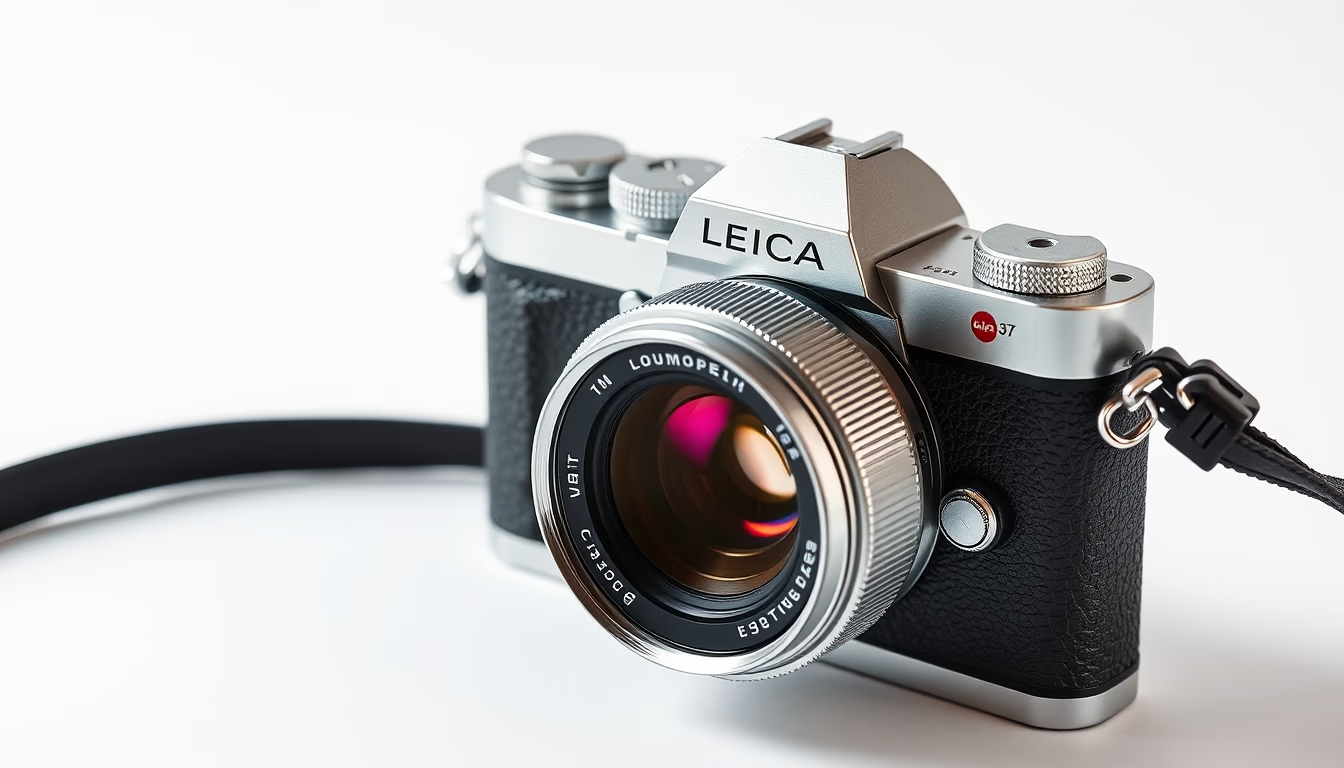
View camera bellows enable perspective and focus adjustments, essential for large format photography, dating back to the 19th century.
About this subject
View camera bellows are expandable components of large format cameras, traditionally made of leather or synthetic materials. They connect the front and rear standards, enabling movements such as tilt, shift, and swing. These adjustments allow precise control over perspective and depth of field, essential for architectural, still life, and studio portrait photography. The invention of the view camera dates back to the early days of photography, around 1850, when photographers like Frederick Scott Archer and Gustave Le Gray popularized the use of wet plate collodion, requiring sturdy and versatile cameras.
Bellows are manufactured in various lengths and formats, adapting to lenses of different focal lengths. In modern cameras such as the Sinar or Linhof, bellows can be interchanged to accommodate extreme wide-angle to telephoto lenses. The design of the bellows directly affects the camera's flexibility: longer bellows allow greater magnification in macro photography, while shorter bellows favor wide-angle lenses. The aesthetic of the bellows, with their folds and stitching, is an icon of classic photographic equipment.
Today, large format photographers value bellows for their ability to correct distortions, such as converging lines in buildings, without relying on post-processing. Although the use of view cameras has declined with the advent of digital, many photographers still use digital backs on view cameras for superior image quality. Bellows are also used in bellows-type enlargers and document copiers. Maintenance of the bellows is critical: tears or light leaks compromise exposure, requiring repair or replacement.
Frequently Asked Questions
What is the main function of bellows in a view camera?
Bellows allow the front and rear standards to move independently, enabling adjustments of perspective, focus, and depth of field without distorting the image.
Are all view camera bellows the same size?
No, they vary in length and shape. Longer bellows are used for telephoto and macro lenses, while shorter bellows accommodate wide-angle lenses. Specific models exist for each camera system.
How do I care for leather or synthetic bellows?
Avoid prolonged exposure to sun and moisture. Clean with a dry, soft cloth. If drying occurs, use a leather conditioner or silicone for synthetics. Tears should be repaired immediately to prevent light leaks.
Direct URL
https://pub-c7d6a6ea828543ac903a74a341ccb2e1.r2.dev/imagens/view-camera-bellows-studio-editorial-portrait-fresh8.avifHow to credit
Include a visible link back to UtilizAí. Copy one of the snippets below:
<a href="https://xn--utiliza-eza.com/en/midia/imagens/view-camera-bellows-studio-editorial-portrait-fresh8">View camera bellows</a> by <a href="https://xn--utiliza-eza.com">UtilizAí</a>, licensed under <a href="https://creativecommons.org/licenses/by/4.0/">CC BY 4.0</a>.
[View camera bellows](https://xn--utiliza-eza.com/en/midia/imagens/view-camera-bellows-studio-editorial-portrait-fresh8) by [UtilizAí](https://xn--utiliza-eza.com), CC BY 4.0
License: CC-BY-4.0