View camera bellows
1344×768 · AVIF · CC BY 4.0
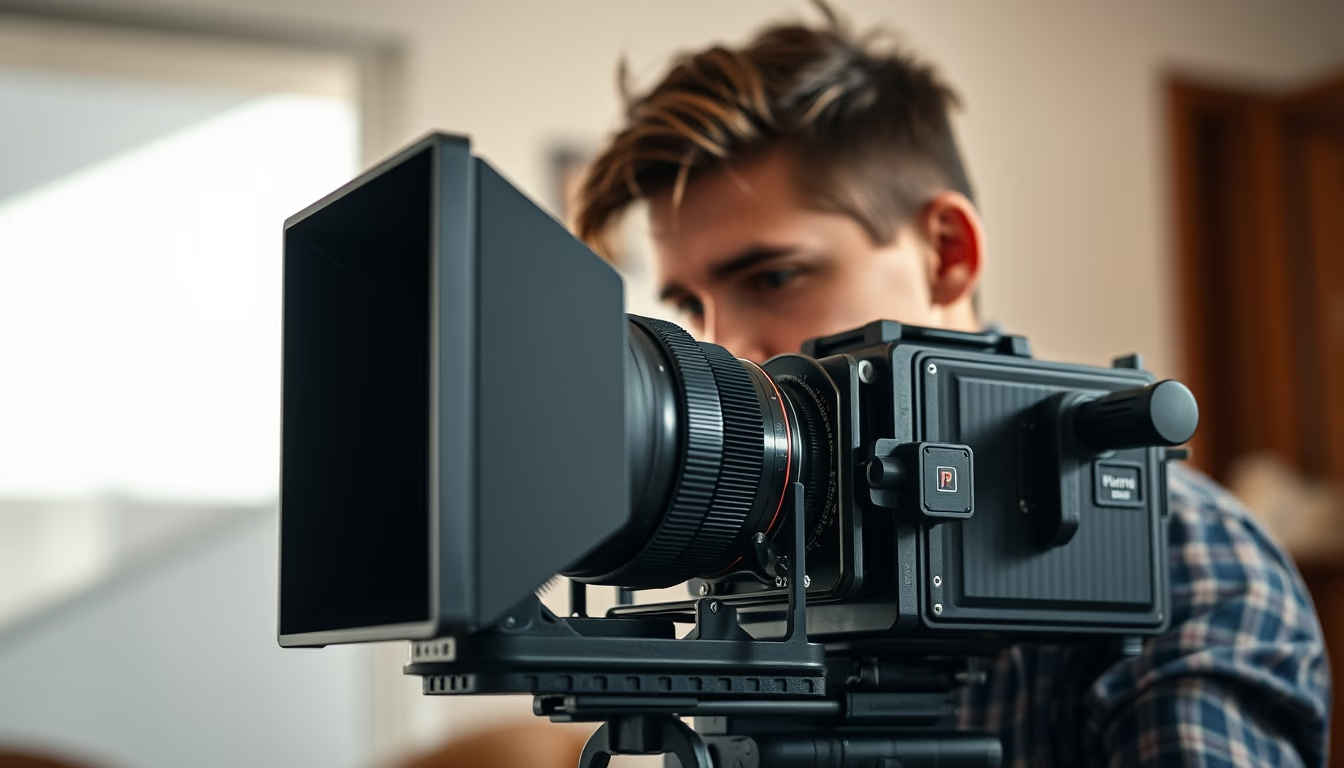
The bellows of a large format view camera allow perspective and focus adjustments, essential for documentary and architectural photography.
About this subject
Bellows are the flexible part of a large format view camera, connecting the lens to the body or film plane. Typically made of leather or synthetic foldable materials, they form an accordion-like tube that expands and contracts, enabling movements such as tilt, swing, rise, fall, and shift. These movements are crucial for controlling perspective and depth of field, a valuable feature in documentary and architectural photography.
In view cameras, bellows allow the use of the Scheimpflug principle, which aligns the plane of focus with the subject plane even when they are not parallel. This enables, for example, photographing a building without converging lines, keeping the entire façade sharp. In documentary work, the technique is used to create images with overall sharpness from foreground to background, or to direct the viewer's eye with selective focus zones.
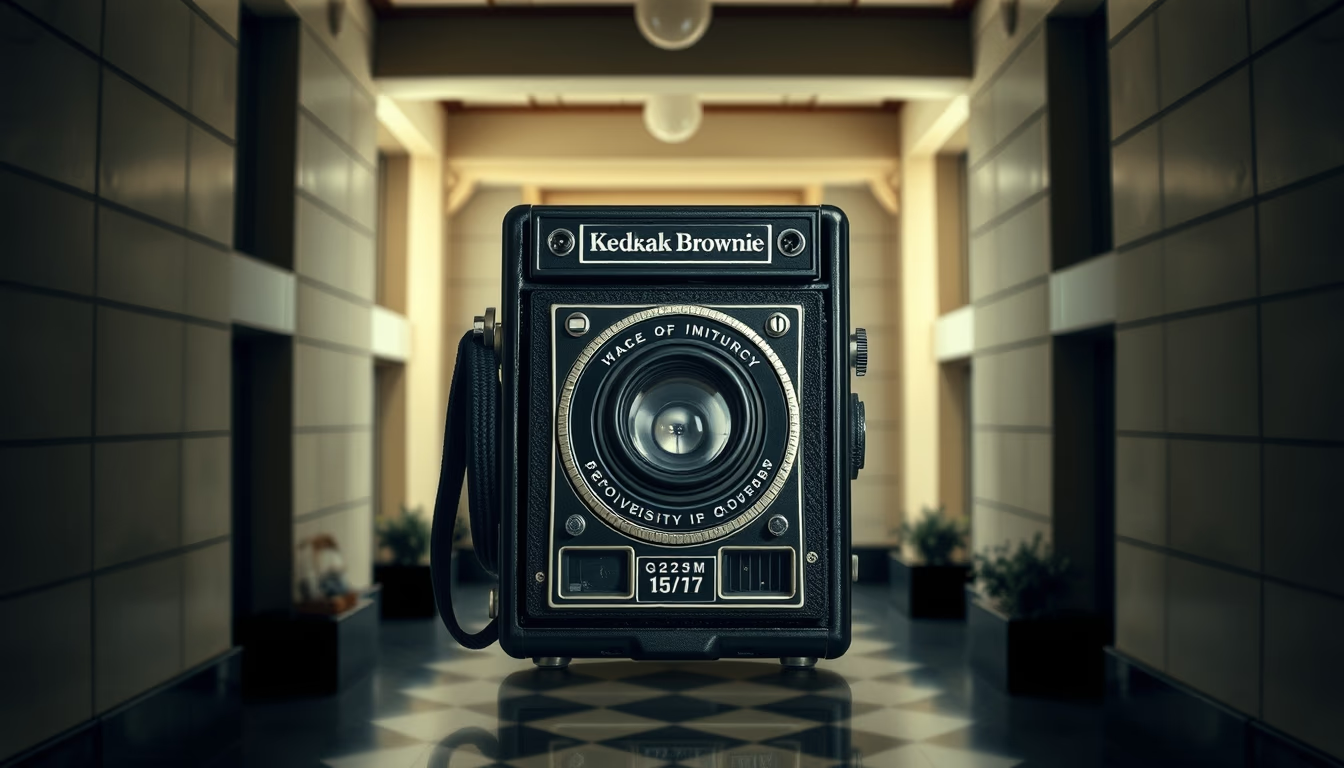
Historically, bellows appeared in 19th-century bellows cameras, such as field cameras and folding cameras. With the rise of digital cameras, the use of view cameras has declined, but they remain popular among professional photographers who demand maximum control. Replacement bellows are handcrafted, and different lengths exist for short or long focal length lenses, ranging from a few centimeters to over half a meter.
Frequently Asked Questions
Why are bellows used in large format cameras?
Bellows allow the photographer to perform perspective and focus movements, such as tilt and swing, controlling sharpness and geometry without relying solely on aperture.
What is the difference between leather and synthetic bellows?
Leather bellows are more durable and traditional but can dry out. Synthetic ones are lighter and resistant to mold, common in modern cameras.
How to choose the bellows length for a lens?
The bellows must extend enough to focus close objects with long lenses. For wide-angle lenses, a bellows that allows maximum compression is needed. Manufacturers typically specify the extension range.
Direct URL
https://pub-c7d6a6ea828543ac903a74a341ccb2e1.r2.dev/imagens/view-camera-bellows-documentary-photography-fresh6.avifHow to credit
Include a visible link back to UtilizAí. Copy one of the snippets below:
<a href="https://xn--utiliza-eza.com/en/midia/imagens/view-camera-bellows-documentary-photography-fresh6">View camera bellows</a> by <a href="https://xn--utiliza-eza.com">UtilizAí</a>, licensed under <a href="https://creativecommons.org/licenses/by/4.0/">CC BY 4.0</a>.
[View camera bellows](https://xn--utiliza-eza.com/en/midia/imagens/view-camera-bellows-documentary-photography-fresh6) by [UtilizAí](https://xn--utiliza-eza.com), CC BY 4.0
License: CC-BY-4.0