View camera bellows
1344×768 · AVIF · CC BY 4.0

View camera bellows are essential components in large format photography, enabling precise perspective and focus adjustments, from the 19th century to the present day.
About this subject
View camera bellows, also called bellows, are flexible accordion-like structures that connect the lens to the camera body or focal plane. Traditionally made of leather, rubber, or synthetic materials, they allow the photographer to independently move the lens and film, enabling perspective corrections, depth of field control, and focus adjustments on tilted planes. This capability is fundamental in architectural, landscape, and still life photography, where correcting parallel line distortion or maximizing sharpness is crucial.
The origin of view cameras dates back to the 19th century, with early bellows cameras developed by photographers like William Henry Fox Talbot and later refined by manufacturers such as Deardorff and Sinar. Bellows allow the camera to perform movements like tilt, shift, swing, and rise/fall, features that distinguish view cameras from ordinary cameras. Each movement has specific applications, such as correcting converging vertical lines in buildings or extending depth of field without stopping down the aperture excessively.
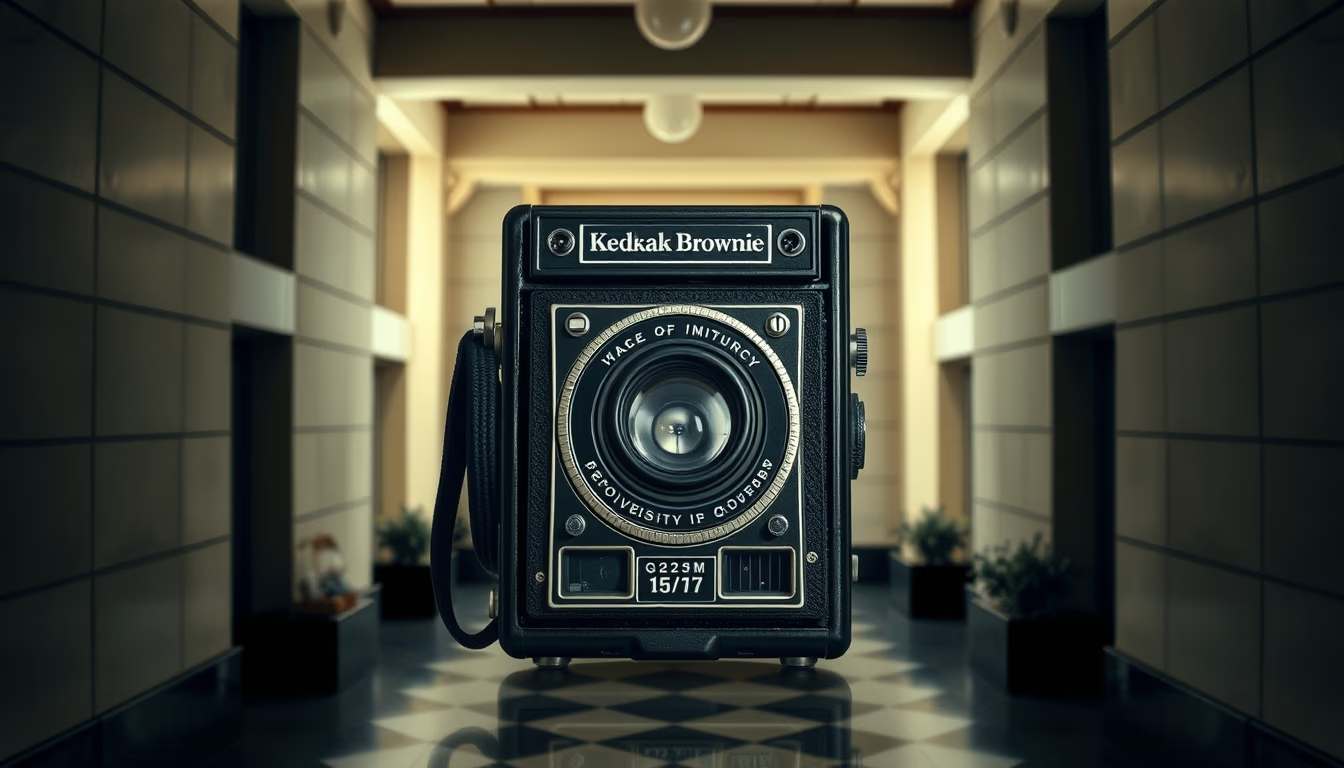
Bellows construction varies in size and material, affecting rigidity and lifespan. Leather bellows were common in antique cameras, but today coated polyester and neoprene dominate, offering light resistance and durability. The pleated design allows expansion and contraction without light leaks, provided it is in good condition. Holes or tears can compromise exposure, requiring repair or replacement, a skill valued among vintage camera enthusiasts.
In practice, bellows also influence ergonomics and portability. View cameras with long bellows allow greater extension for macro photography, while short bellows are used in more compact models. Despite the advent of digital cameras, view cameras with bellows continue to be used by professional photographers and artists seeking absolute control over the image, and are also popular in the analog and large format photography movement.
Frequently Asked Questions
What are view camera bellows?
Bellows are flexible accordion-like structures that connect the lens to the camera body, allowing perspective and focus adjustments without light leaks.
What materials are used to make bellows?
Historically leather, today coated polyester and neoprene are common, offering light resistance and durability. Material choice affects stiffness and lifespan.
Why are view cameras still used today?
They provide total control over perspective and depth of field, irreplaceable for architecture and art photography. The large format analog movement also maintains appeal among enthusiasts.
Direct URL
https://pub-c7d6a6ea828543ac903a74a341ccb2e1.r2.dev/imagens/view-camera-bellows-documentary-nature-style-fresh15.avifHow to credit
Include a visible link back to UtilizAí. Copy one of the snippets below:
<a href="https://xn--utiliza-eza.com/en/midia/imagens/view-camera-bellows-documentary-nature-style-fresh15">View camera bellows</a> by <a href="https://xn--utiliza-eza.com">UtilizAí</a>, licensed under <a href="https://creativecommons.org/licenses/by/4.0/">CC BY 4.0</a>.
[View camera bellows](https://xn--utiliza-eza.com/en/midia/imagens/view-camera-bellows-documentary-nature-style-fresh15) by [UtilizAí](https://xn--utiliza-eza.com), CC BY 4.0
License: CC-BY-4.0