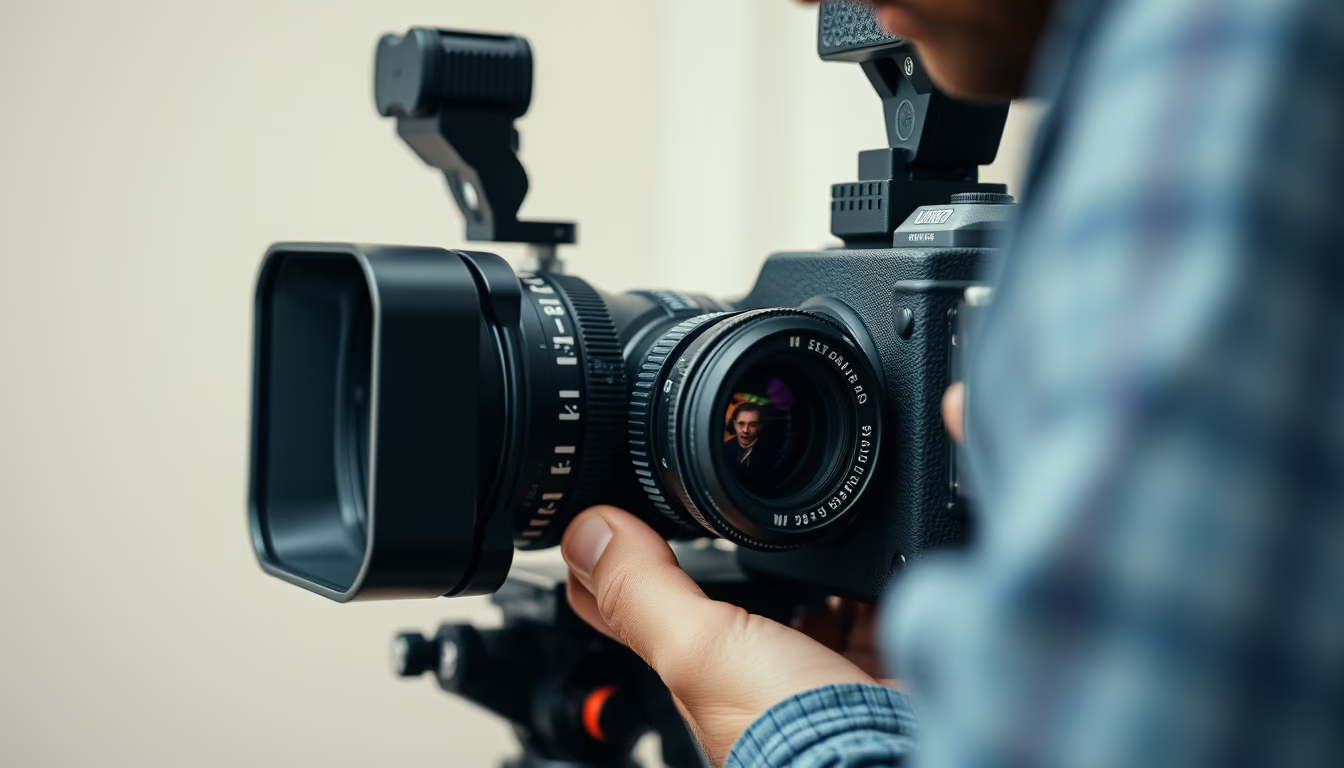
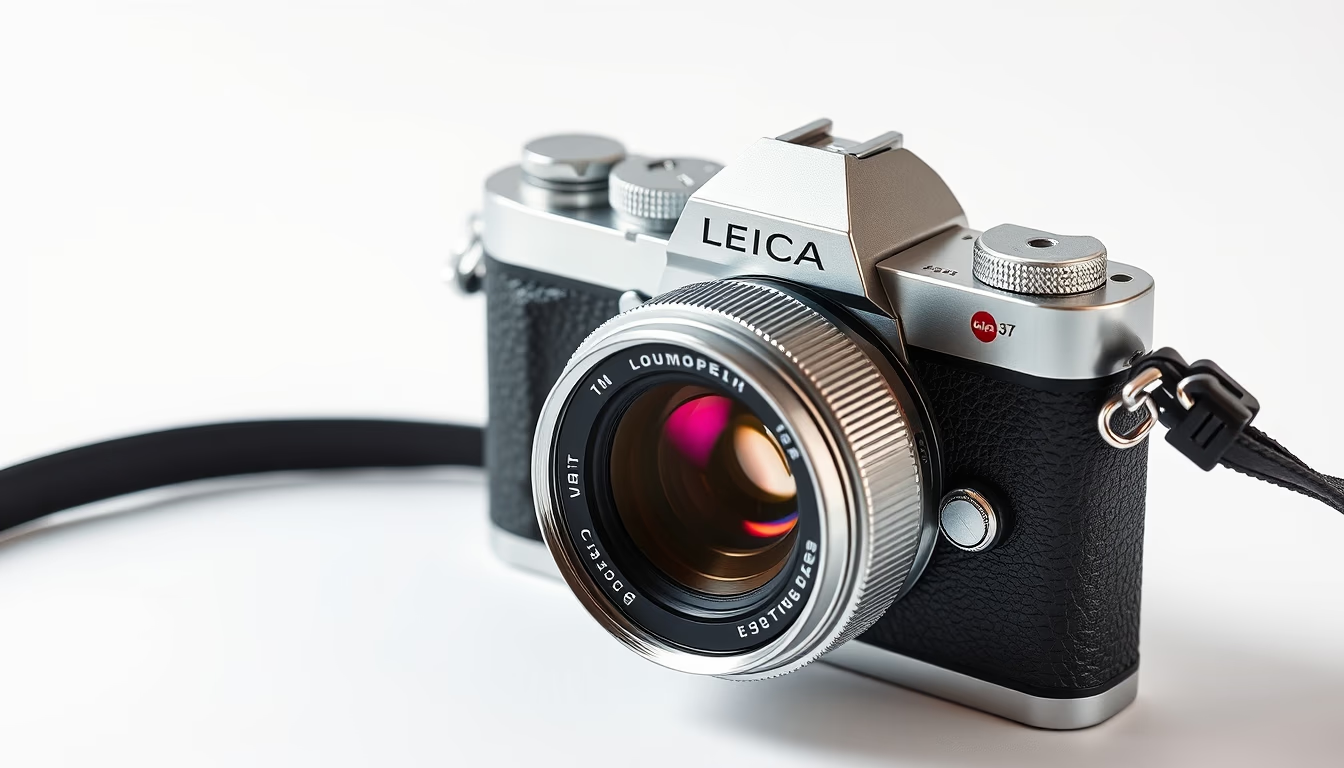
View camera bellows
1344×768 · AVIF · CC BY 4.0
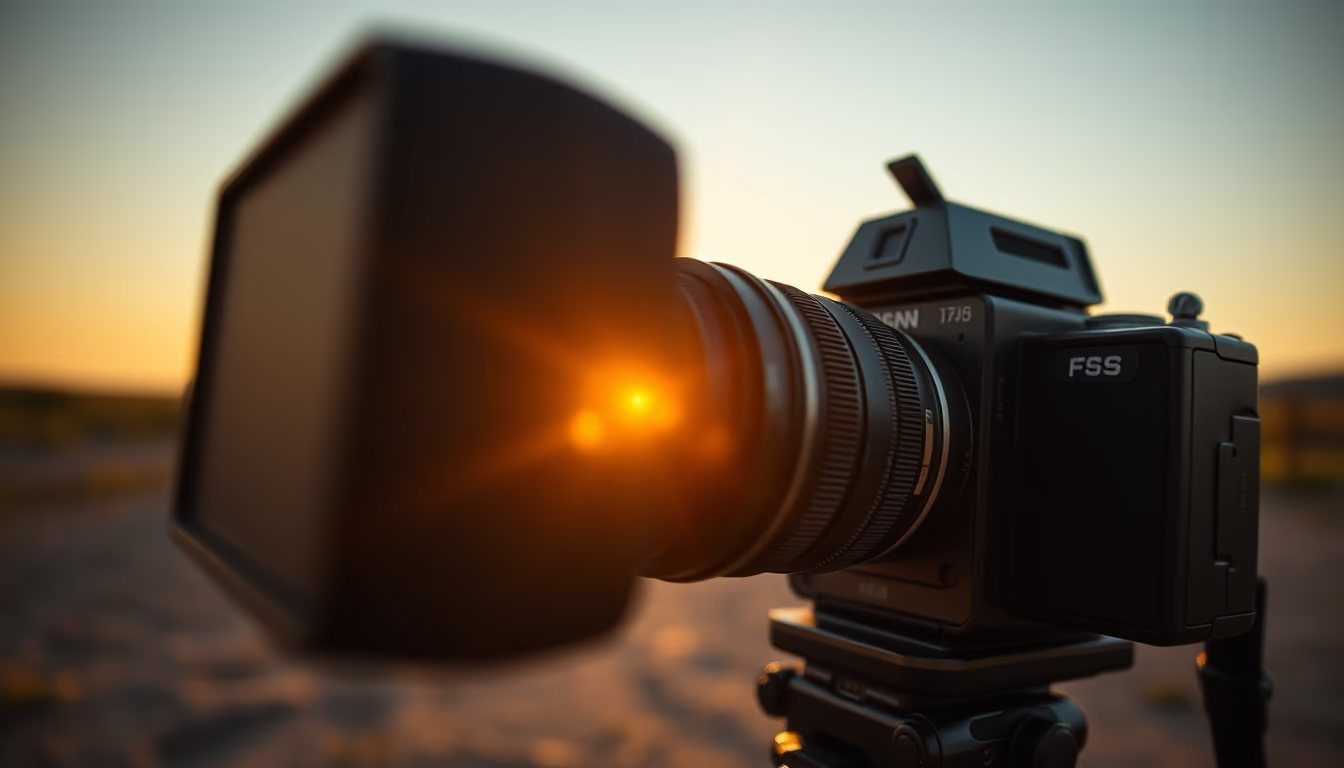
View camera bellows: a flexible structure enabling perspective and focus movements in large-format photographic equipment.
About this subject
The bellows of a large-format camera, such as those used in photographic studios since the 19th century, are essential components that connect the front standard (where the lens is mounted) to the rear standard (where the film or sensor is placed). Traditionally made from varnished leather, canvas, or synthetic materials like nylon, these bellows allow the distance between standards to be altered for focusing, as well as enabling movements such as tilt, shift, and swing to correct perspective distortions and increase depth of field. The accordion-like pleated construction provides strength and light sealing, maintaining darkness during long exposures.
Historically, bellows were refined by manufacturers such as Deardorff, Gandolfi, and Linhof, who produced wooden and metal cameras with handcrafted bellows. Each bellows type has specific extension capabilities: some models reach over 60 cm, allowing macrophotography with long focal length lenses. Flexibility is measured by the number of pleats and material thickness, directly influencing portability and equipment lifespan.
In photographic practice, bellows are responsible for one of the key advantages of large-format cameras: plane of focus control. By tilting or shifting the standards, the photographer can align the focus plane with the subject, even in complex angles, without excessive aperture. This feature is widely used in architecture, landscape, and product photography, where straight lines must be kept without convergence. Bellows maintenance includes dry cloth cleaning and checking for small holes, which can cause film fogging.
Interestingly, the term "bellows" derives from the musical wind instrument due to the similar folded shape. In modern digital cameras, the bellows principle is replicated in tilt-shift adapters, but the original mechanism remains irreplaceable for those seeking maximum image quality and creative control in large formats, such as 4x5 or 8x10 inches.
Frequently Asked Questions
What is the main function of bellows in a large-format camera?
Bellows connect the front and rear standards, enabling focus adjustments and perspective movements (tilt, shift, swing) without light leaks.
What materials are camera bellows traditionally made from?
Traditionally made from varnished leather or canvas, but synthetic materials like nylon and polyester are now common, offering greater durability and lightness.
How do bellows help correct perspective distortions?
By tilting or shifting the standards, the photographer alters the focus plane, allowing parallel lines to remain straight without convergence, essential in architectural photography.
Direct URL
https://pub-c7d6a6ea828543ac903a74a341ccb2e1.r2.dev/imagens/view-camera-bellows-cinematic-wide-shot-fresh7.avifHow to credit
Include a visible link back to UtilizAí. Copy one of the snippets below:
<a href="https://xn--utiliza-eza.com/en/midia/imagens/view-camera-bellows-cinematic-wide-shot-fresh7">View camera bellows</a> by <a href="https://xn--utiliza-eza.com">UtilizAí</a>, licensed under <a href="https://creativecommons.org/licenses/by/4.0/">CC BY 4.0</a>.
[View camera bellows](https://xn--utiliza-eza.com/en/midia/imagens/view-camera-bellows-cinematic-wide-shot-fresh7) by [UtilizAí](https://xn--utiliza-eza.com), CC BY 4.0
License: CC-BY-4.0