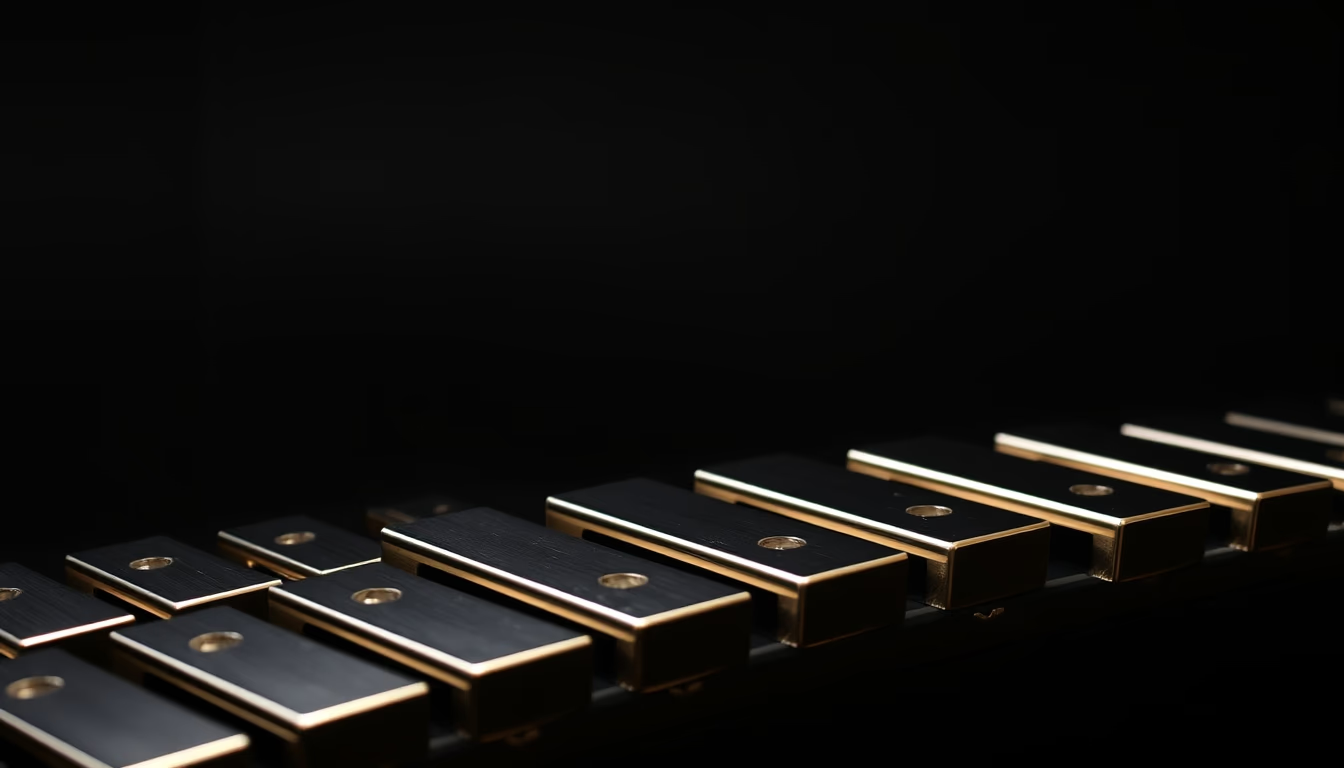
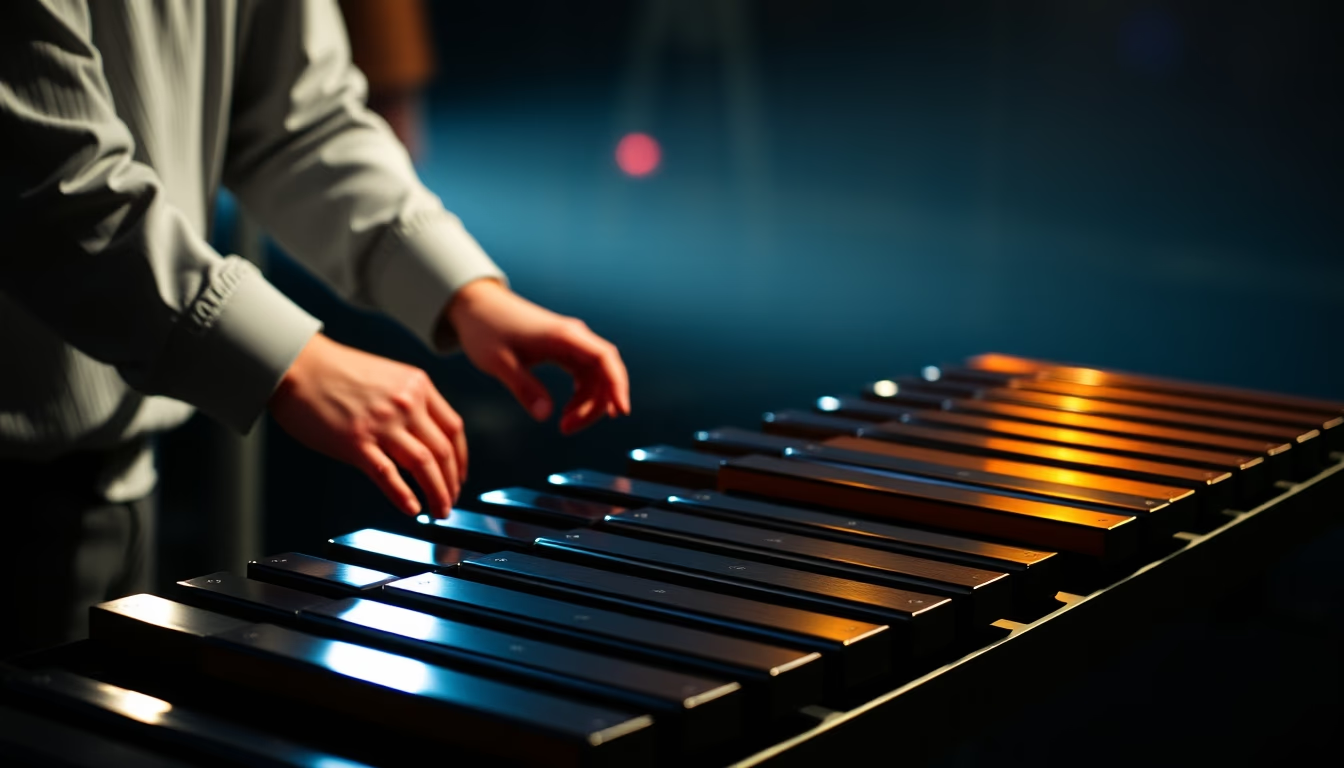
Vibraphone metallic bars
1344×768 · AVIF · CC BY 4.0

Metallic bars of a vibraphone, a percussion instrument with aluminum keys and tubular resonators.
About this subject
The vibraphone is a tuned percussion instrument consisting of metallic bars arranged in a chromatic keyboard layout, typically made of aluminum. Under each bar, a tubular resonator amplifies the sound. A special mechanism, driven by an electric motor, spins disks inside the resonators, creating a characteristic vibrato effect that gives the instrument its name.
Developed in the United States in the early 1920s, the vibraphone was patented by Henry Schluter in 1927. It quickly gained popularity in jazz, becoming essential in big bands and small combos. Musicians such as Milt Jackson (Modern Jazz Quartet), Gary Burton, and Lionel Hampton elevated the instrument to new expressive heights. Unlike the xylophone, which uses wooden bars, and the marimba, which also has wooden bars but longer resonators, the vibraphone produces a soft, metallic timbre often described as ethereal.
In the orchestral realm, the vibraphone appears in works by composers like Olivier Messiaen and Steve Reich. It is also used in popular music, film scores, and even solo performances. Playing techniques involve mallets of different materials (yarn, rubber, cord) and the use of a sustain pedal that allows notes to ring. The bars are tuned precisely, usually in equal temperament, and are shaped in an arch to achieve the correct pitch.
A fun fact: the vibraphone is sometimes called a "vibraharp," a trade name used by the Deagan company. Although visually similar to other metallophones, its motorized vibrato system sets it completely apart. Modern instruments feature silent motors and adjustable vibrato speed, enabling a range from subtle tremolo to a more intense effect.
Frequently Asked Questions
What is the difference between a vibraphone and a marimba?
The main difference is the bar material: a vibraphone uses metal bars (aluminum) while a marimba uses wooden bars (usually rosewood). Additionally, the vibraphone has a motorized vibrato system that the marimba lacks.
How is vibrato produced on a vibraphone?
Vibrato is produced by rotating disks inside the resonator tubes, driven by an electric motor. As the disks spin, they partially open and close the tube openings, modulating the volume and creating the vibrato effect.
Which famous musicians play the vibraphone?
Notable vibraphonists include Milt Jackson of the Modern Jazz Quartet; Gary Burton, a pioneer in four-mallet technique; and Lionel Hampton, who popularized the instrument in swing and jazz.
Direct URL
https://pub-c7d6a6ea828543ac903a74a341ccb2e1.r2.dev/imagens/vibraphone-metallic-bars-fine-art-photography-p3.avifHow to credit
Include a visible link back to UtilizAí. Copy one of the snippets below:
<a href="https://xn--utiliza-eza.com/en/midia/imagens/vibraphone-metallic-bars-fine-art-photography-p3">Vibraphone metallic bars</a> by <a href="https://xn--utiliza-eza.com">UtilizAí</a>, licensed under <a href="https://creativecommons.org/licenses/by/4.0/">CC BY 4.0</a>.
[Vibraphone metallic bars](https://xn--utiliza-eza.com/en/midia/imagens/vibraphone-metallic-bars-fine-art-photography-p3) by [UtilizAí](https://xn--utiliza-eza.com), CC BY 4.0
License: CC-BY-4.0