Vibraphone metallic bars
1344×768 · AVIF · CC BY 4.0
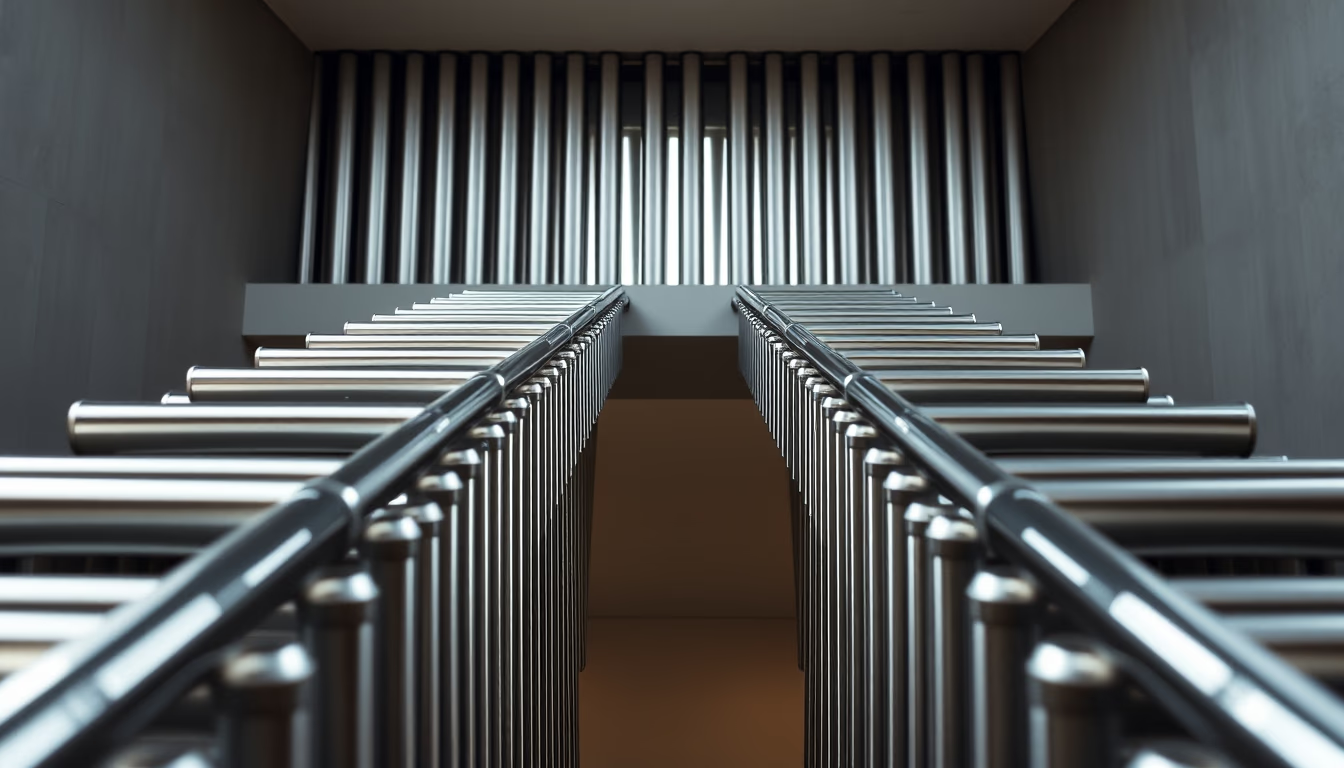
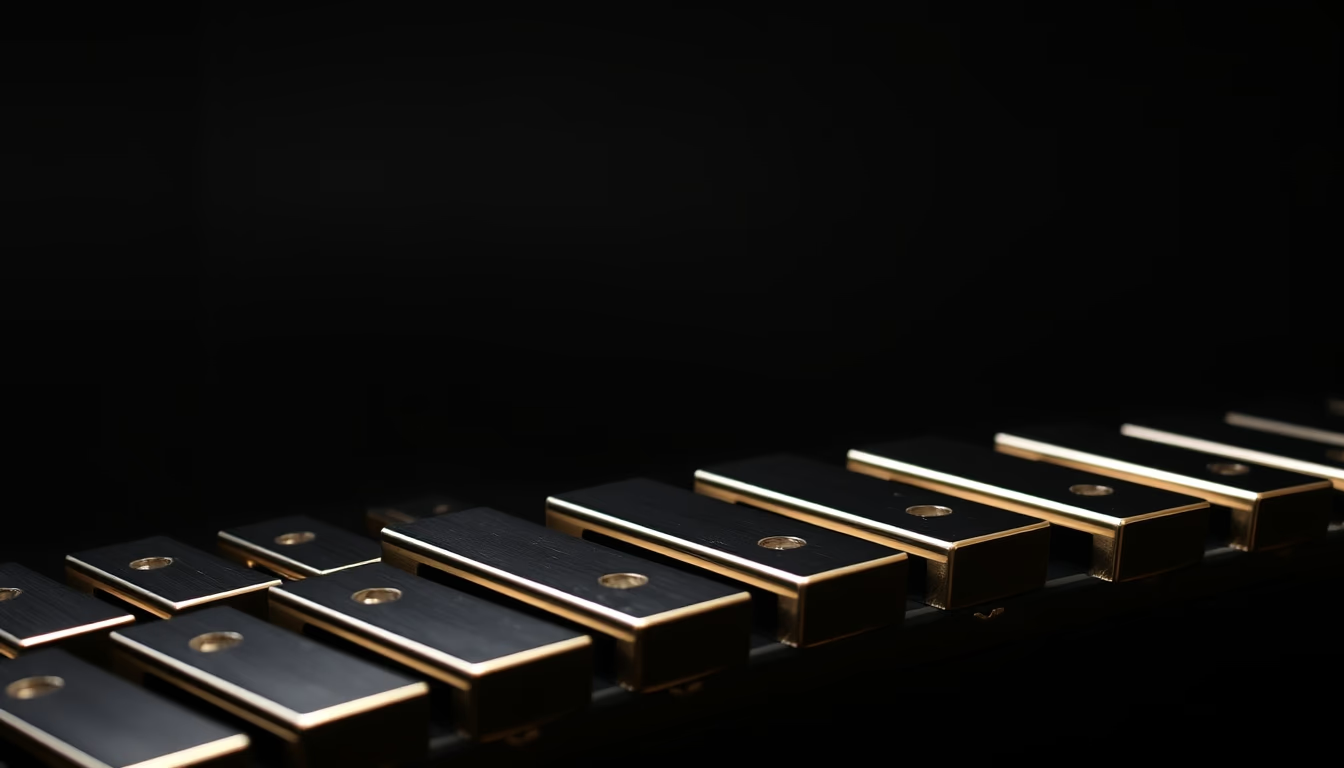
The metallic bars of the vibraphone, typically made of aluminum alloy, produce sound when struck, with a soft, sustained timbre thanks to resonators and a sustain pedal.
About this subject
The vibraphone is a melodic percussion instrument classified as an idiophone, consisting of metallic bars arranged chromatically like a piano keyboard. Unlike the xylophone (wooden bars) and marimba (wooden bars with resonators), the vibraphone uses tempered aluminum bars, giving it a brighter, more sustained tone. Each bar is precisely cut and tuned to a specific pitch, suspended over a tubular resonator that amplifies and shapes the sound. A pedal mechanism controls a damper bar, which allows the player to sustain or dampen notes, a crucial feature for musical articulation.
Invented in the United States around 1921 by the Leedy Manufacturing Company, the vibraphone quickly gained popularity in jazz and popular music. Players use mallets of varying hardness (usually wool or rubber) to strike the bars. The standard range is three octaves (F3 to F6) or three and a half octaves (C3 to F6), with lower bars being wider and longer. Techniques include using two to four mallets, enabling chords and complex passages.
In classical repertoire, composers such as Olivier Messiaen (e.g., 'Couleurs de la Cité Céleste' and 'Des Canyons aux Étoiles...') and Pierre Boulez featured the vibraphone in orchestral works. In jazz, pioneers like Lionel Hampton, Milt Jackson, and Gary Burton elevated it to solo instrument status. The vibraphone is also used in pop bands, film scores, and experimental music, thanks to its timbral versatility and blendability.
The tuning of the bars is an acoustic engineering process: thickness and length determine the fundamental frequency, while the undercut (arch) on the bottom adjusts harmonics. The resonators, open metal tubes, are length-tuned to the bar's fundamental, boosting volume. An optional electric motor spins discs at the top of the resonators to produce a vibrato effect, a trademark of the instrument.
Frequently Asked Questions
How does the vibraphone differ from the xylophone and marimba?
The vibraphone uses aluminum bars, while the xylophone and marimba use wooden bars. It has a sustain pedal and resonators with rotating discs for vibrato, producing a softer, more sustained sound. The marimba has tubular resonators but no pedal, and the xylophone typically lacks resonators.
Which famous classical composer used the vibraphone in his works?
Olivier Messiaen is one of the most notable classical composers to feature the vibraphone, especially in works such as Couleurs de la Cité Céleste and Des Canyons aux Étoiles....
What is the standard range of a vibraphone?
Most vibraphones have a three-octave range (F3 to F6) or three and a half octaves (C3 to F6). Some professional models may extend to four octaves.
Direct URL
https://pub-c7d6a6ea828543ac903a74a341ccb2e1.r2.dev/imagens/vibraphone-metallic-bars-architectural-photography-p9.avifHow to credit
Include a visible link back to UtilizAí. Copy one of the snippets below:
<a href="https://xn--utiliza-eza.com/en/midia/imagens/vibraphone-metallic-bars-architectural-photography-p9">Vibraphone metallic bars</a> by <a href="https://xn--utiliza-eza.com">UtilizAí</a>, licensed under <a href="https://creativecommons.org/licenses/by/4.0/">CC BY 4.0</a>.
[Vibraphone metallic bars](https://xn--utiliza-eza.com/en/midia/imagens/vibraphone-metallic-bars-architectural-photography-p9) by [UtilizAí](https://xn--utiliza-eza.com), CC BY 4.0
License: CC-BY-4.0