Urban skyscraper glass facade
1344×768 · AVIF · CC BY 4.0
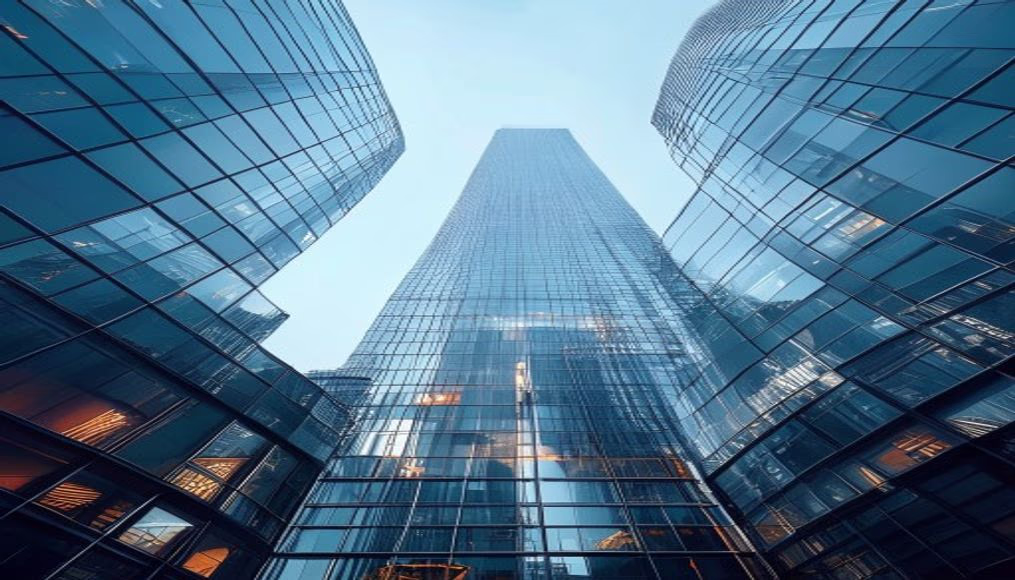
Glass facades on urban skyscrapers blend modern aesthetics with energy efficiency, symbolizing sustainable development in metropolises.
About this subject
Glass facades on urban skyscrapers represent one of the greatest architectural innovations of the 20th century. Popularized by the modernist movement, especially by architects like Mies van der Rohe at the Seagram Building (New York, 1958), they enabled lightweight, transparent structures that maximize natural light. Today, over 60% of commercial buildings above 20 stories in major cities use curtain wall glass facade systems.
The benefits go beyond aesthetics. High-performance glass, such as low-emissivity (low-e) coatings, can reduce HVAC energy consumption by up to 30% while blocking UV rays. The One World Trade Center in New York, for instance, uses laminated glass that reflects heat and improves acoustic insulation. Furthermore, transparency creates healthier work environments, increasing productivity by up to 15%, according to studies from the Harvard T.H. Chan School of Public Health.
However, significant challenges exist. Maintaining glass facades in highly polluted regions like São Paulo or Shanghai requires frequent robotic cleaning, raising operational costs. Recent innovations include photovoltaic glass, which generates clean energy, and electrochromic glass, which automatically tints based on sunlight. In Brazil, the Farol Santander building (São Paulo) and Rio Sul Center (Rio de Janeiro) exemplify the adaptation of these technologies to tropical climates.
The future trend is intelligent facades integrated with sensors and building automation systems. With LEED certification and other green labels, skyscrapers with glass facades are becoming benchmarks in sustainable architecture, balancing transparency, comfort, and energy efficiency.
Frequently Asked Questions
What are the main advantages of glass facades in commercial buildings?
Glass facades provide ample natural light, reduced energy consumption for lighting and HVAC, acoustic insulation, and a modern aesthetic. Low-e coated glass can cut air conditioning costs by up to 30%.
How do glass facades contribute to sustainability?
They improve energy efficiency, allow the use of photovoltaic glass for electricity generation, and can earn LEED certifications. Transparency also reduces the need for artificial lighting during daytime.
What are the maintenance challenges of a glass facade in large urban centers?
Pollution and grime require frequent cleaning using robotic systems or industrial climbers. Additionally, repair costs for cracks or breakage can be high, and installing high-performance glass demands specialized labor.
Direct URL
https://pub-c7d6a6ea828543ac903a74a341ccb2e1.r2.dev/imagens/urban-skyscraper-glass-facade-commercial-product-photography-v9.avifHow to credit
Include a visible link back to UtilizAí. Copy one of the snippets below:
<a href="https://xn--utiliza-eza.com/en/midia/imagens/urban-skyscraper-glass-facade-commercial-product-photography-v9">Urban skyscraper glass facade</a> by <a href="https://xn--utiliza-eza.com">UtilizAí</a>, licensed under <a href="https://creativecommons.org/licenses/by/4.0/">CC BY 4.0</a>.
[Urban skyscraper glass facade](https://xn--utiliza-eza.com/en/midia/imagens/urban-skyscraper-glass-facade-commercial-product-photography-v9) by [UtilizAí](https://xn--utiliza-eza.com), CC BY 4.0
License: CC-BY-4.0