Turntable needle macro
1344×768 · AVIF · CC BY 4.0
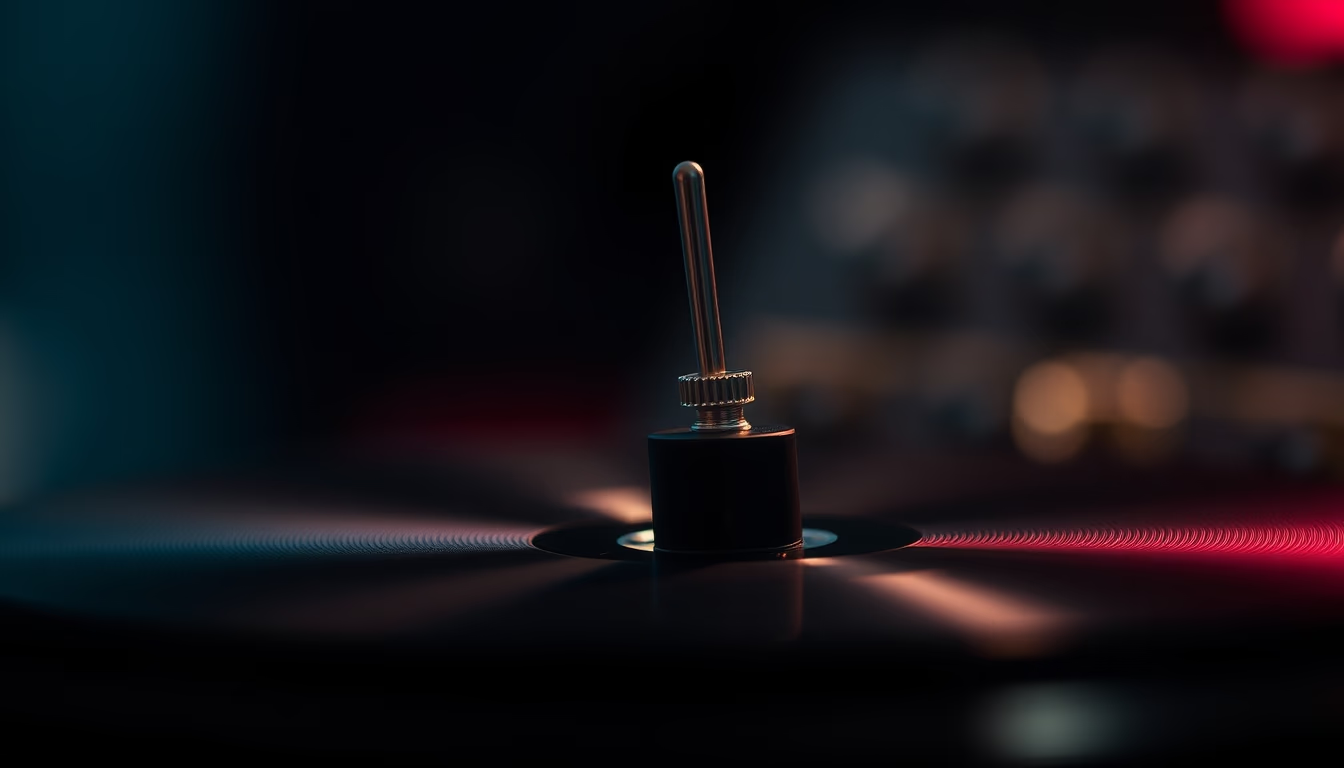
Macro shot of a turntable stylus reveals the precision of vinyl playback: diamond tip, cantilever, and alignment determine sound quality.
About this subject
The turntable stylus, or needle, is the component that rides the vinyl grooves and converts mechanical vibrations into an electrical signal. Modern styli are made of synthetic diamond or sapphire, mounted on a cantilever (shaft) of aluminum, boron, or ruby. The tip shape varies: spherical (conical), elliptical, or micro-linear, each offering different groove contact area, directly affecting frequency response and noise reduction. Precise alignment of the stylus in the cartridge is crucial to avoid premature wear and distortion.
Historically, early needles were steel and had to be replaced every 78 RPM record. With the advent of 33⅓ RPM and 45 RPM vinyl, manufacturers shifted to diamond, which lasted hundreds of hours. Tracking force must be adjusted per manufacturer recommendation, typically 1.5 to 3 grams, to balance tracking and record preservation. Worn styli can damage grooves, causing hiss and loss of definition.
Stylus cleaning uses special brushes and isopropyl fluid, never common alcohol which can dissolve cantilever glue. In dusty environments, residue accumulates like sandpaper, reducing lifespan. The tip shape affects contact area: spherical tips are more forgiving of misalignment but lose high-frequency detail; micro-line (or line contact) retrieves more information but requires precise setup.
The vinyl revival since the 2010s has spurred new turntable models and high-performance styli. Enthusiasts use microscopes to inspect wear, and brands like Ortofon, Shure, and Audio-Technica offer interchangeable styli that elevate sound quality. Macro photography of the stylus reveals this micrometric engineering, where every detail impacts the music we hear.
Frequently Asked Questions
What is the difference between spherical and elliptical styli?
Spherical (conical) styli have a rounded tip with smaller groove contact, more forgiving of misalignment but less detailed. Elliptical styli have an oval shape, larger contact area, and better high-frequency response, but require precise alignment.
How to properly clean a turntable stylus?
Use a dedicated stylus brush with soft bristles, lightly moistened with isopropyl cleaning fluid (never common alcohol). Gently brush from back to front, avoiding sideways pressure to prevent cantilever damage.
How long does a diamond stylus last?
Under ideal conditions, a diamond stylus lasts 500, 1000 hours of playback. Factors like dust, excessive tracking force, and dirty records shorten lifespan. Replace after 800 hours or when you notice increased hiss or distortion.
Direct URL
https://pub-c7d6a6ea828543ac903a74a341ccb2e1.r2.dev/imagens/turntable-needle-macro-fine-art-photography-p2.avifHow to credit
Include a visible link back to UtilizAí. Copy one of the snippets below:
<a href="https://xn--utiliza-eza.com/en/midia/imagens/turntable-needle-macro-fine-art-photography-p2">Turntable needle macro</a> by <a href="https://xn--utiliza-eza.com">UtilizAí</a>, licensed under <a href="https://creativecommons.org/licenses/by/4.0/">CC BY 4.0</a>.
[Turntable needle macro](https://xn--utiliza-eza.com/en/midia/imagens/turntable-needle-macro-fine-art-photography-p2) by [UtilizAí](https://xn--utiliza-eza.com), CC BY 4.0
License: CC-BY-4.0