Turkish coffee copper pot
1344×768 · AVIF · CC BY 4.0
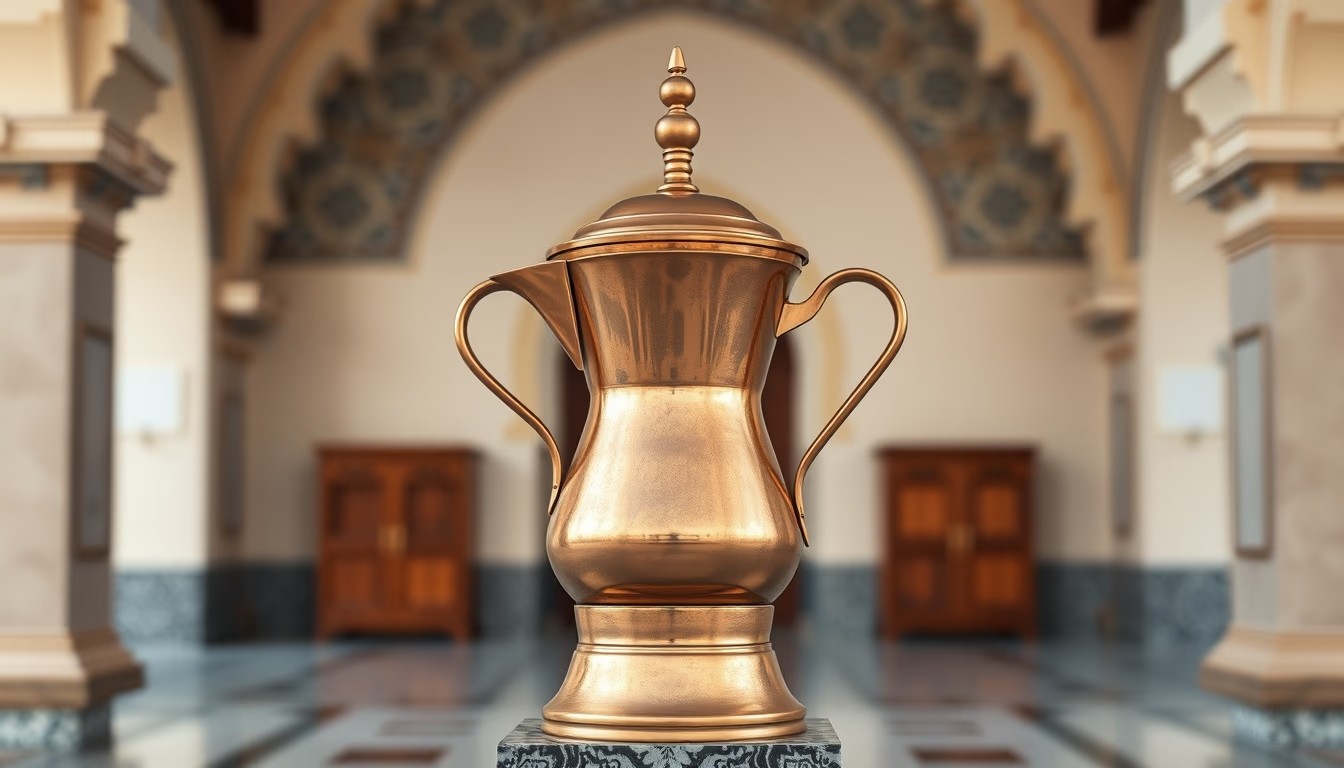
The copper cezve is the traditional vessel used to prepare Turkish coffee, recognized by UNESCO as an intangible cultural heritage of humanity.
About this subject
The copper cezve, also known as ibrik, is an essential utensil for preparing Turkish coffee, a practice dating back to the 16th century Ottoman Empire. Traditionally made of hammered copper with an inner tin lining to prevent oxidation, the cezve features a functional design: a wide base for even heating, a narrow neck that retains aroma, and a long spout for pouring without spilling the ground coffee. The long handle, often made of wood or metal, protects the user from heat.
Turkish coffee is prepared over low heat, often on hot sand, by mixing very finely ground coffee, water, and sugar (optional). The process requires patience: the cezve is slowly heated until foam forms, then removed from the heat before boiling, repeated several times. The tradition includes serving in small cups without filtering, allowing the grounds to settle at the bottom. Reading the coffee grounds is a related cultural practice.
In 2013, UNESCO inscribed Turkish coffee culture on the Representative List of the Intangible Cultural Heritage of Humanity, highlighting the cezve as a symbol of hospitality and social gathering. The utensil is handcrafted in regions like Gaziantep and Istanbul, where artisans hammer copper by hand, creating both decorative and functional pieces. Each cezve can take hours to make, with details such as engravings and carved handles.
Today, the copper cezve is used not only in Turkey but worldwide by coffee enthusiasts. Its popularity grows among manual method aficionados who value control over temperature and beverage texture. Although modern versions exist in steel or ceramic, copper is preferred for its superior thermal conductivity, distributing heat evenly, essential for the characteristic foam of Turkish coffee.
Frequently Asked Questions
What is the difference between a cezve and an ibrik?
Both names refer to the same vessel. 'Cezve' is Turkish, while 'ibrik' comes from Arabic and is used in Greece, the Balkans, and the Middle East.
Why is a copper cezve preferred for making Turkish coffee?
Copper conducts heat quickly and evenly, which is crucial for slowly heating the mixture and forming the characteristic foam without burning the coffee.
How do you care for a copper cezve?
Wash with warm water and mild soap, dry immediately to avoid spots. The inner tin lining may require periodic retinning by a professional.
Direct URL
https://pub-c7d6a6ea828543ac903a74a341ccb2e1.r2.dev/imagens/turkish-coffee-copper-pot-architectural-photography-p0.avifHow to credit
Include a visible link back to UtilizAí. Copy one of the snippets below:
<a href="https://xn--utiliza-eza.com/en/midia/imagens/turkish-coffee-copper-pot-architectural-photography-p0">Turkish coffee copper pot</a> by <a href="https://xn--utiliza-eza.com">UtilizAí</a>, licensed under <a href="https://creativecommons.org/licenses/by/4.0/">CC BY 4.0</a>.
[Turkish coffee copper pot](https://xn--utiliza-eza.com/en/midia/imagens/turkish-coffee-copper-pot-architectural-photography-p0) by [UtilizAí](https://xn--utiliza-eza.com), CC BY 4.0
License: CC-BY-4.0