Tube amplifier glowing
1344×768 · AVIF · CC BY 4.0
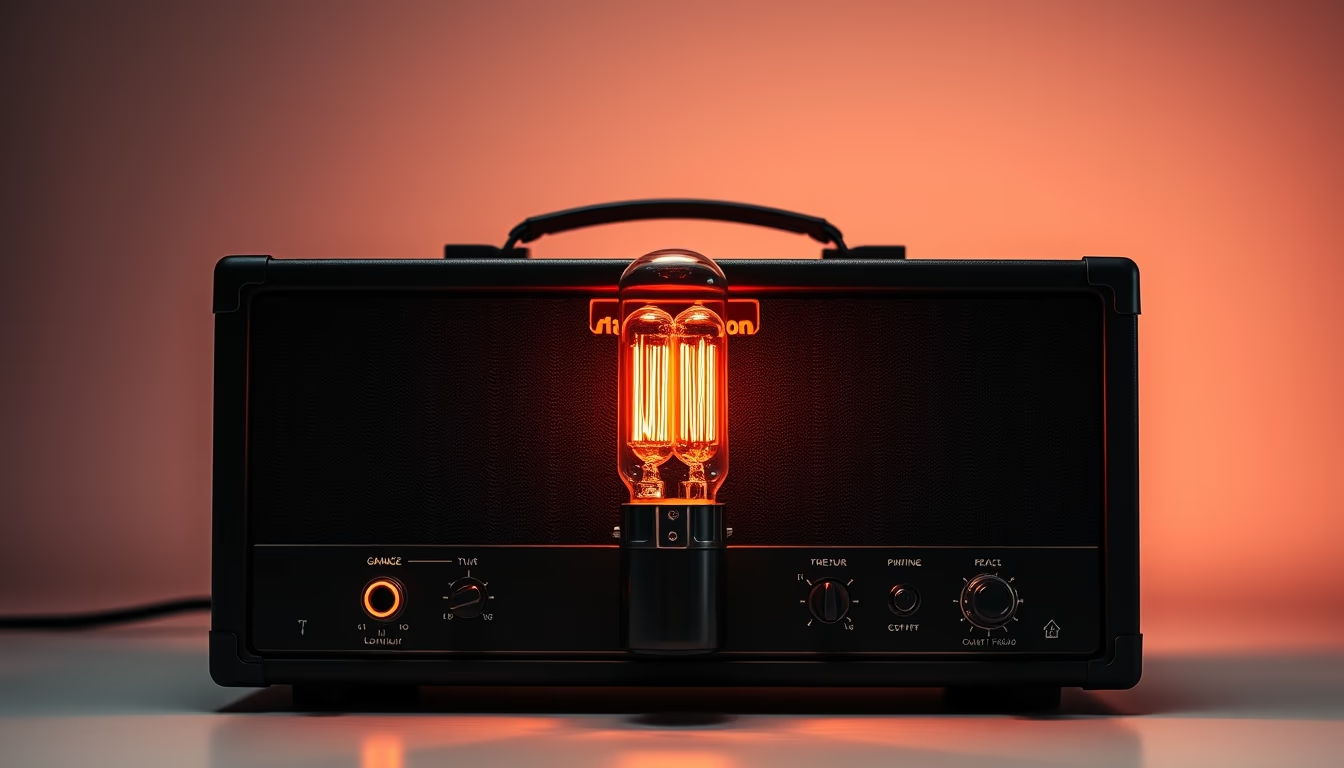
Vacuum tube amplifiers glow with heat, delivering a warm sound and harmonic distortion prized by musicians and audiophiles.
About this subject
Vacuum tube amplifiers, also known as valve amplifiers, use vacuum tubes to amplify electrical signals. Invented in the early 20th century, they were the dominant audio technology until the rise of transistors in the 1960s. Despite being less efficient and more fragile than solid-state amplifiers, tube models remain popular in electric guitars, high-fidelity systems, and recording studios due to their characteristic sound.
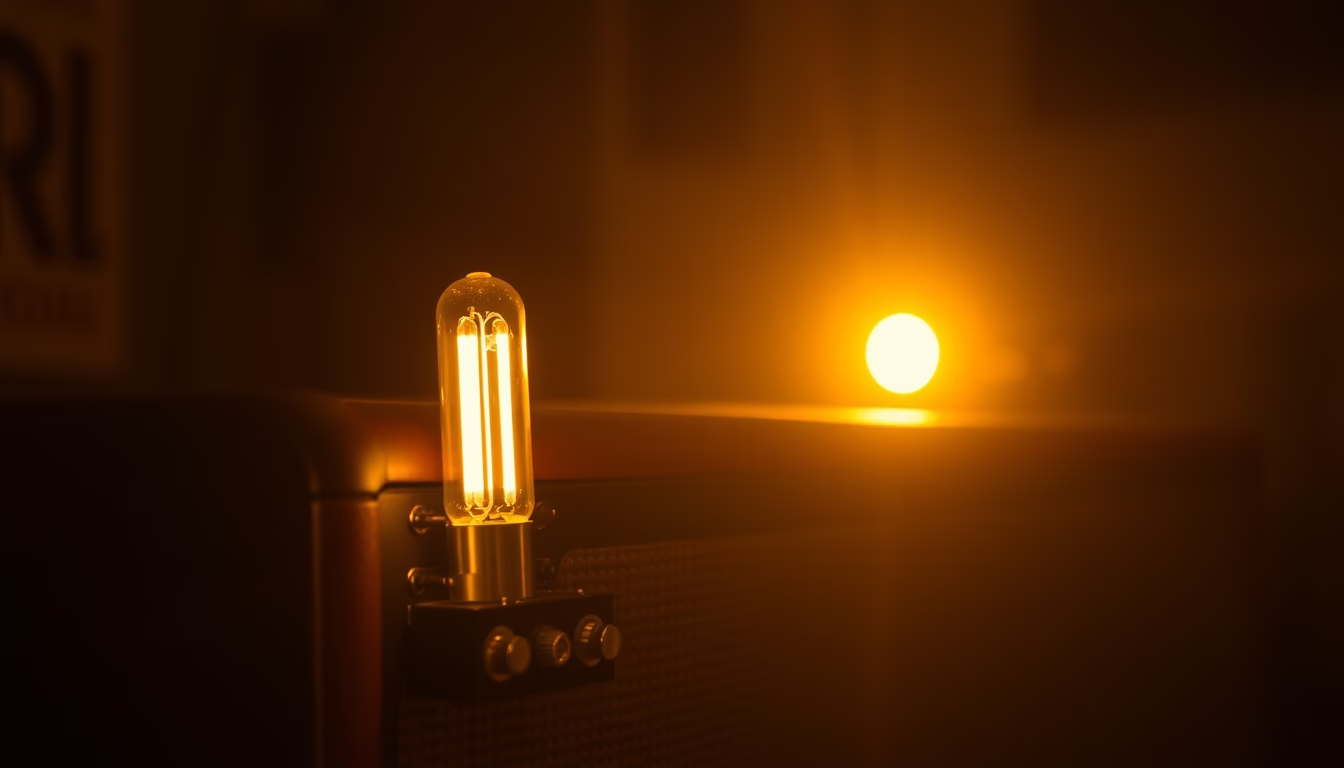
The operating principle involves heating a filament (cathode) that emits electrons via thermionic emission. These electrons are attracted to a positively charged plate (anode), while a control grid modulates the flow, producing amplification. When powered, the tubes emit a distinctive orange or red glow, visible in many models with windows or open chassis. This glow signals that the tubes are heating and ready to operate.
Culturally, tube amplifiers are icons of rock and roll, blues, and jazz. Models like the Fender Twin Reverb, Marshall Plexi, and Vox AC30 defined the sound of generations. In high fidelity, brands such as McIntosh and Audio Research continue the tradition, with some equipment commanding high prices. The warming of tubes also requires a stabilization period, known as warm-up, which many audiophiles consider part of the listening experience.
Interestingly, the glow of tubes is not just aesthetic: it indicates the filament is at temperatures between 700 and 1000°C. The typical lifespan of a vacuum tube is about 10,000 hours, but it can vary with usage. Tube replacement and matching are common practices among enthusiasts. Despite the emergence of digital technologies, tube amplifiers maintain a dedicated niche, celebrated for their organic and nonlinear sound.
Frequently Asked Questions
Why do tube amplifiers glow?
The glow comes from the filament (cathode) heated to high temperatures to emit electrons via thermionic emission, essential for the vacuum tube's operation.
What is the difference between a tube amplifier and a transistor amplifier?
Tube amplifiers use vacuum tubes, tend to have a warmer sound and harmonic distortion; transistorized ones are more efficient, lighter, and have a more linear response.
How long does a vacuum tube in an amplifier last?
Typical lifespan is around 10,000 hours, but it can vary with usage and tube quality. To prolong life, avoid drops and voltage spikes.
Direct URL
https://pub-c7d6a6ea828543ac903a74a341ccb2e1.r2.dev/imagens/tube-amplifier-glowing-studio-still-life-fresh11.avifHow to credit
Include a visible link back to UtilizAí. Copy one of the snippets below:
<a href="https://xn--utiliza-eza.com/en/midia/imagens/tube-amplifier-glowing-studio-still-life-fresh11">Tube amplifier glowing</a> by <a href="https://xn--utiliza-eza.com">UtilizAí</a>, licensed under <a href="https://creativecommons.org/licenses/by/4.0/">CC BY 4.0</a>.
[Tube amplifier glowing](https://xn--utiliza-eza.com/en/midia/imagens/tube-amplifier-glowing-studio-still-life-fresh11) by [UtilizAí](https://xn--utiliza-eza.com), CC BY 4.0
License: CC-BY-4.0